
Alfalfa leafminer
Agromyza frontella
Description
How to identify
The alfalfa leafminer (Agromyza frontella) is a small dipteran fly belonging to the Agromyzidae family. Adult flies measure approximately 2–3 mm in length and possess a black, shiny body.
A distinctive feature of this species is the yellowish color of the head, which helps in field identification. Their wings are transparent and characterized by a specific vein pattern common to the family.
Larvae are legless, maggot-like organisms that are white to creamy in color. Their entire larval development occurs internally within the plant leaves, protecting them from many external threats.
Pupation typically occurs either inside the leaf mines or in the top layer of the soil. The pupae are dark brown, oval-shaped, and represent the overwintering stage of the pest.
These flies are multivoltine, meaning they produce multiple generations in a single growing season, depending on local climate conditions and available host plants.
What it damages
The primary host for this pest is alfalfa (lucerne). The damage is caused specifically by the larvae, which feed on the mesophyll tissue located between the leaf epidermal layers.
As the larvae feed, they create meandering tracks or "mines" within the leaf. This feeding activity disrupts photosynthesis, leading to leaf yellowing, tissue necrosis, and premature drop.
Heavy infestations significantly reduce the biomass of the alfalfa crop. Furthermore, the loss of leaf tissue results in lower protein content and decreased nutritional value of the hay.
In addition to yield losses, alfalfa leafminer damage can stress the plants, making them more susceptible to subsequent environmental stress or secondary pathogens.
Management is crucial as both the first and subsequent cuttings of alfalfa can be severely impacted if the population density remains unchecked throughout the summer.
When it appears
Adult flies emerge in the spring once temperatures consistently reach or exceed 15°C. They begin searching for suitable alfalfa host plants to lay their eggs.
The peak of activity generally occurs during the late spring and early summer, aligning with the vegetative growth phase of the alfalfa crop when succulent leaves are abundant.
Depending on regional temperatures, the insect can complete three to four generations per season. Rapid development allows for significant population explosions in mid-summer.
As autumn arrives and temperatures drop, the metabolic activity of the leafminers declines. The final generation pupates to overwinter in soil or leaf debris, awaiting the following spring.
Monitoring seasonal patterns is essential for precision timing of control applications, as the window of vulnerability to insecticides is limited to larval activity within the leaves.
Signs of infestation
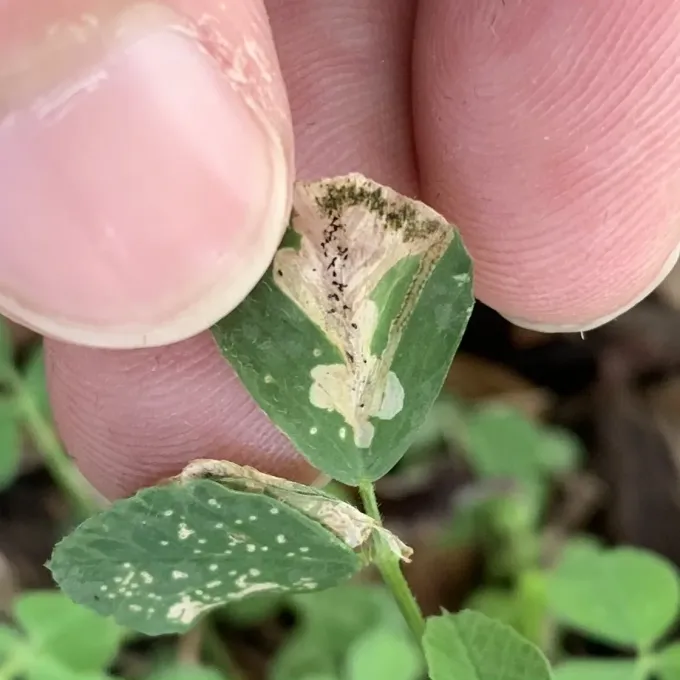
The most prominent sign of infestation is the appearance of white, serpentine, or winding tunnels visible on the surface of the alfalfa leaves.
These mines start as thin, faint lines and widen as the larva grows larger. Small dark specks, which are larval frass (excrement), may be observed inside these tunnels.
If larval density is high, multiple mines can coalesce, causing large portions of the leaf to wilt, turn white or brown, and eventually wither away entirely.
- Winding white tracks on the leaf surface.
- Leaf chlorosis and premature browning.
- Stunted growth of the plant due to reduced photosynthetic area.
Early scouting is critical; looking for the first appearance of these tunnels allows producers to intervene before widespread damage occurs across the field.
Control measures
Early harvest of the alfalfa crop is the most effective cultural control method, as it disrupts the larval life cycle by removing the leaf tissue before pupation can occur.
Maintaining crop rotation and keeping new plantings spatially separated from older, infested fields can significantly reduce the pressure from emerging spring populations.
Chemical control is warranted if the economic threshold is met. Systemic insecticides are preferred because they are absorbed into the leaf tissue where the larvae feed.
Biological control agents, such as parasitoid wasps, play a vital role in natural population suppression and should be encouraged by minimizing broad-spectrum pesticide use.
Always adhere to the pre-harvest interval (PHI) for all chemical applications to ensure the hay remains safe for livestock consumption and follows regulatory safety standards.
Taxonomy
- Latin name
- Agromyza frontella
- Order
- Diptera (flies)
- Family
- Agromyzidae
- EPPO code
- AGMYFR
Discussion
No discussions yet — be the first.