
Agalliopsis
Agalliopsis
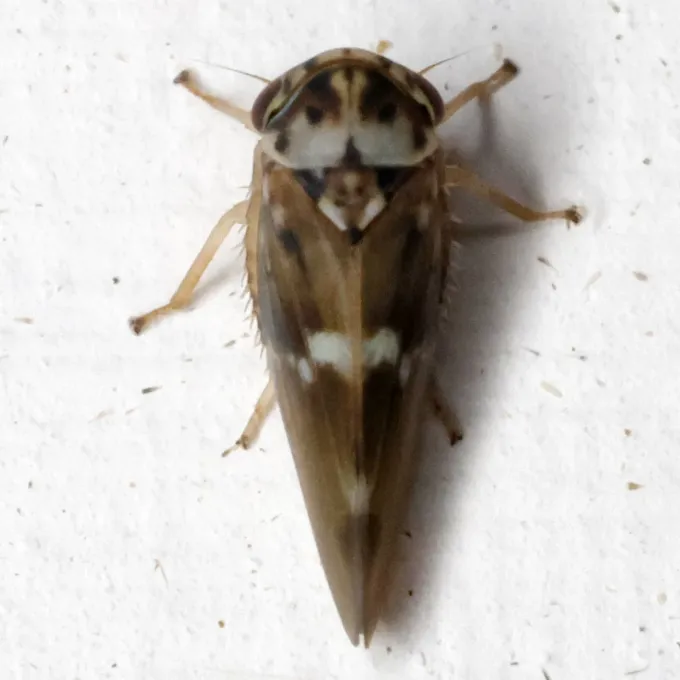
Description
How to identify
Agalliopsis is a genus of insects belonging to the family Cicadellidae (leafhoppers), within the order Hemiptera. These small insects are common agricultural pests that can cause significant damage if left unchecked.
Adult leafhoppers are typically 3 to 5 mm long with slender bodies. They are known for their powerful hind legs, which allow them to jump rapidly when threatened, making them difficult to catch or observe.
The nymphs resemble adults but lack fully developed wings. They are highly active and typically reside on the underside of leaves, where they feed on plant sap while remaining sheltered from predators.
Their coloration is often camouflaged, ranging from light green to brownish, matching the plant foliage. This evolutionary adaptation makes it difficult for farmers to identify early-stage infestations.
The head is relatively broad with distinct eyes, allowing them to detect movement in their surroundings. As true bugs, they possess specialized mouthparts designed for piercing and sucking.
What it damages
Agalliopsis affects a diverse range of crops, including vegetables, legumes, and ornamental plants. Both adults and nymphs feed on the phloem of host plants, depleting essential nutrients.
The direct physical damage includes the withdrawal of sap, which stunts plant growth and reduces vigor. This feeding process often leaves the plant susceptible to secondary infections.
A critical aspect of their harmfulness is their role as vectors for phytoplasmas and plant viruses. By transmitting these pathogens between plants, Agalliopsis can ruin entire fields even with low population densities.
Symptoms of their feeding include yellowing, stunting, and deformation of leaves. In severe cases, particularly with young seedlings, the entire plant may wither and die due to constant sap loss.
The reduction in photosynthetic capacity caused by heavy feeding directly correlates with significant yield losses, affecting both the quality and market value of the harvested produce.
When it appears
The activity of Agalliopsis is highly dependent on temperature and host plant availability. They typically appear in the spring as temperatures rise, signaling the start of their active season.
During the growing season, multiple generations can emerge. Optimal conditions, such as warm weather and high humidity, lead to rapid population growth that can overwhelm agricultural plots.
They overwinter in various life stages, often hiding in crop residues, weeds, or leaf litter. Proper sanitation of fields is crucial to disrupting their survival cycle for the following season.
The population peak usually occurs mid-summer, when the plants are at their most vulnerable stage of development, demanding close attention from agricultural monitors.
As autumn approaches, the insects gradually move toward overwintering sites. Farmers should prioritize field cleaning after harvest to minimize the number of overwintering individuals.
Signs of infestation
Early signs of infestation appear as minute stippling or white spots on the upper leaf surface, caused by the insects piercing the tissues and removing chlorophyll.
Leaves may exhibit curling, yellowing, or generalized chlorosis. These signs are often confused with nutrient deficiencies, which is why close inspection of the leaf underside is necessary.
Sticky residues, known as honeydew, may be present on the leaves, which can promote the growth of sooty mold, further damaging the aesthetic and physiological health of the plant.
Physical agitation of the plant canopy often reveals their presence as they jump away in large numbers. This is a primary indicator for agricultural scouting.
- Stippled or mottled appearance on foliage.
- Leaf curling and deformation.
- Presence of honeydew and sooty mold.
- General stunting of growth.
- Yellowing of leaves (chlorosis).
Control measures
Integrated pest management (IPM) is essential. Cultural controls, such as weed management and cleaning up harvest debris, reduce the overwintering success of the pest.
Yellow sticky traps are highly effective for monitoring population densities and determining the precise timing for intervention, ensuring that control measures are targeted.
Biological control methods include the use of natural predators and entomopathogenic fungi, such as Beauveria bassiana, which can naturally reduce pest numbers in both greenhouses and fields.
Chemical control using systemic insecticides is necessary for heavy infestations. It is vital to rotate active ingredients to prevent the development of insecticide resistance in the leafhopper population.
Constant monitoring and early detection are the best defenses. By maintaining a clean growing environment and employing timely interventions, growers can effectively protect their yields.
Taxonomy
- Latin name
- Agalliopsis
- Order
- Hemiptera (bugs, aphids, leafhoppers)
- Family
- Cicadellidae
- EPPO code
- AGLSSP
Discussion
No discussions yet — be the first.