
Agallia quadripunctata
Agallia quadripunctata
Description
How to identify
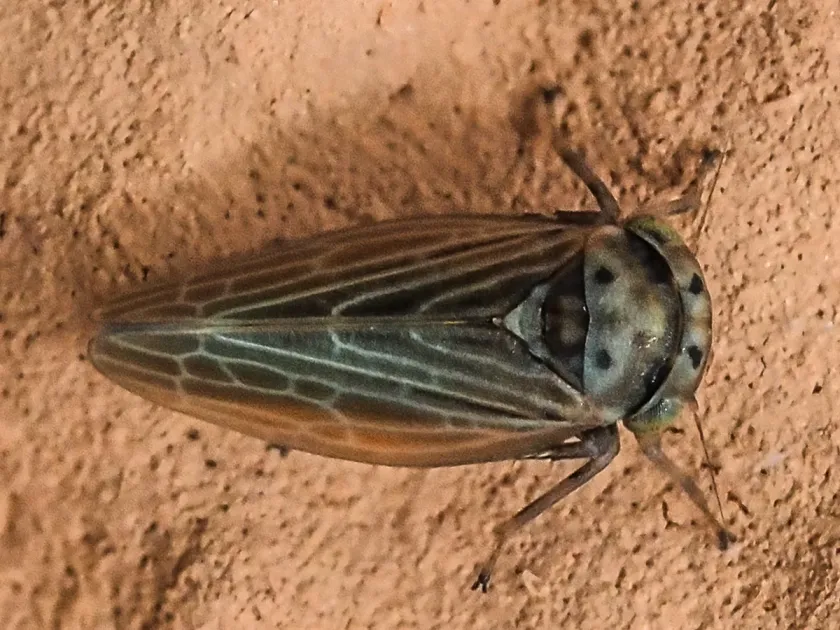
Agallia quadripunctata belongs to the order Hemiptera and the family Cicadellidae. It is a small insect, typically measuring 3-4 mm in length, characterized by a compact body structure with wings folded tightly over the abdomen.
Adults exhibit a color palette ranging from yellowish-brown to grayish, which provides excellent camouflage against leaves and stems. The species is named after the distinct dark spots found on its pronotum and scutellum.
Nymphs resemble adults but lack fully developed wings and are smaller in size. They undergo several molting stages, gradually increasing in size, and primarily inhabit the lower strata of the plant canopy to stay protected.
Equipped with powerful hind legs, these leafhoppers are extremely agile and prone to jumping away when disturbed. This high mobility makes visual monitoring of their population density quite challenging in field conditions.
The biology of this species is closely tied to the presence of weeds, which serve as reservoirs during droughts or unfavorable weather. Their adaptability allows them to thrive in various agricultural ecosystems, making them persistent pests.
What it damages
Agallia quadripunctata is a polyphagous pest capable of infesting a wide range of agricultural crops, including cereal grains, legumes, vegetables, root crops, and nightshades.
Both adults and nymphs cause damage by feeding on plant sap. This feeding process disrupts the water and nutrient transport within the plant, leading to stunted growth and reduced photosynthetic efficiency.
A significant threat posed by these leafhoppers is their ability to transmit dangerous phytoplasma and viral diseases. Even a low population density can trigger widespread infection, leading to symptoms like leaf curling or chlorosis.
Damage is most severe during periods of peak vegetative growth. Infested plants often show signs of wilting, and under heavy infestation pressure, young seedlings may completely fail to survive.
The economic impact goes beyond physical biomass loss; the quality of harvested produce is often compromised. Viral infections spread by these pests can render crops unsuitable for storage or processing, leading to significant financial losses for farmers.
When it appears
Mass emergence of Agallia quadripunctata typically occurs in late spring and early summer, aligning with the vigorous growth phase of most field crops. Depending on regional temperatures, the pest may complete multiple generations within a single season.
They overwinter primarily as adults or late-stage nymphs in crop residues, leaf litter, or dense basal parts of perennial grasses. As soon as temperatures rise in early spring, they resume feeding activities.
The peak period of damage often coincides with the tillering and jointing stages of cereals and the formation of the first true leaves in vegetables. Hot, dry weather conditions tend to increase their activity, necessitating more vigilant monitoring.
While populations may decline toward the end of summer, favorable autumn conditions can allow for extended breeding. This poses a particular risk to winter-sown crops, which can be infested before the insects enter hibernation.
Monitoring the seasonal population dynamics is best achieved using yellow sticky traps. These tools help agronomists pinpoint the arrival of the first generation and make informed decisions regarding the timing of control measures.
Signs of infestation
The primary symptom of an infestation is the appearance of small, light-colored spots on leaves. These spots gradually expand and merge, resulting in generalized yellowing and loss of turgor in the plant tissue.
Checking the underside of leaves will often reveal the presence of insects. Additionally, cast-off exuviae (molted skins) of nymphs on the soil surface serve as a strong indicator that a significant population is present in the field.
The emergence of viral symptoms, such as leaf curling, mosaic patterns, or systemic yellowing, is a critical sign that the leafhoppers have successfully transmitted pathogens to the host plants.
In the field, agronomists use sweep netting to quantify population levels. A significant rise in the number of captured insects is an immediate signal that defensive actions must be implemented.
Monitoring field perimeters is essential, as these areas often host the weeds that serve as the initial source of infestation. Early detection in these marginal zones can prevent the spread of the pest into the main crop.
Control measures
The management of Agallia quadripunctata relies on cultural practices aimed at eliminating pest reservoirs. Regular weeding of fields, hedgerows, and irrigation ditches is crucial for reducing the local population.
Crop rotation and spatial isolation of susceptible crops help decrease pest pressure. Deep autumn plowing is an effective way to destroy overwintering sites, significantly reducing the pest population before the next planting cycle.
When economic thresholds are exceeded, chemical control becomes necessary. Insecticides such as neonicotinoids or pyrethroids with systemic or contact action are typically employed to manage infestations effectively.
To optimize treatment, applications should be carried out in the early morning or late evening when the insects are less active. It is vital to adhere to label guidelines, respecting pre-harvest intervals and protecting beneficial pollinators.
- Spatial isolation of crops from perennial grasslands.
- Control of weeds and volunteer plants during the growing season.
- Use of insecticidal seed treatments to protect young seedlings.
- Regular population monitoring using sticky traps.
- Spot-treatment with insecticides upon detection of localized infestations.
Taxonomy
- Latin name
- Agallia quadripunctata
- Order
- Hemiptera (bugs, aphids, leafhoppers)
- Family
- Cicadellidae
- EPPO code
- AGLLQU
Discussion
No discussions yet — be the first.