
Agallia pulchra
Agallia pulchra
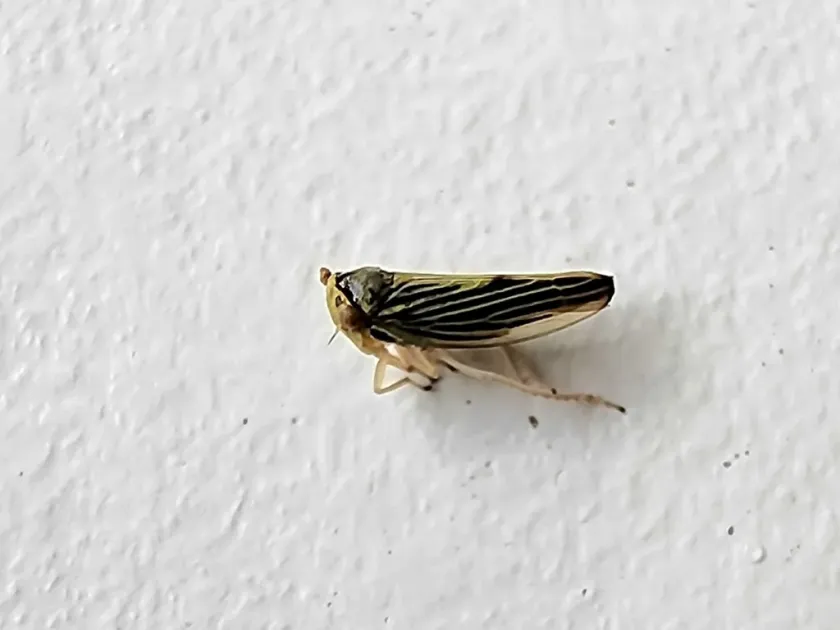
Description
How to identify
Agallia pulchra belongs to the order Hemiptera and the family Cicadellidae (leafhoppers). These small insects typically measure 3–4 mm in length.
Adults are characterized by a stocky body with a reticulated pattern on their forewings, which provides excellent camouflage within foliage.
The coloration of adults ranges from grayish-yellow to brown, featuring distinctive spots on the head and pronotum that distinguish them from other species.
Nymphs resemble the adults but are smaller, lack fully developed wings, and often have a lighter, translucent appearance.
The insect undergoes incomplete metamorphosis, passing through egg, nymph (several instars), and adult stages.
What it damages
This pest is a polyphage that causes damage to a wide range of agricultural crops, including cereals, legumes, and vegetable plants.
It poses a significant threat to sugar beet, potato, tomato crops, and various fodder grasses by feeding on plant cell sap.
During feeding, the insects pierce the leaf epidermis, which disrupts the host plant's overall metabolic processes.
In addition to direct mechanical tissue damage, these leafhoppers are capable of transmitting phytoplasma and viral infections that cause severe crop diseases.
Mass infestations can lead to significant yield losses and decreased produce quality due to the stunted growth of the affected plants.
When it appears
The activity of Agallia pulchra adults and nymphs begins in spring as soon as air temperatures reach consistently positive levels.
Population density typically peaks during the hot summer months, when climatic conditions are most favorable for the pest's reproduction.
Throughout the growing season, the insect can produce several generations, significantly increasing the risk of crop infestation at various stages.
The pest overwinters as an egg in plant tissues or as an adult in forest litter, stubble, and weed residues.
Migration to cultivated plants often coincides with the period of most active vegetative growth, leaving crops highly vulnerable.
Signs of infestation
The first sign of infestation is the appearance of small light spots (stippling necrosis) on the leaves where the insects have fed.
In cases of heavy infestation, leaf curling, yellowing, general growth stunting, and shoot deformation are observed.
Infected crops may exhibit specific symptoms like dwarfism or leaf curl, which often indicate the transmission of viral pathogens by the leafhopper.
Visual inspection of the leaf undersides reveals adults and nymphs, which jump rapidly to neighboring plants when disturbed.
The accumulation of honeydew on the leaf surface may encourage the growth of sooty mold, further impairing the plant's photosynthetic capacity.
Control measures
Protection strategies include agronomic measures such as weed control, as weeds often serve as reservoirs for the pest during the off-season.
Adhering to optimal planting dates and applying balanced fertilizers allows plants to strengthen and become less susceptible to pest attacks.
Once the economic injury threshold is reached, systemic or contact insecticides approved for use on specific crops should be applied.
Monitoring leafhopper populations using yellow sticky traps is an essential element for timely adjustment of protective measures.
Biological control involves the use of natural enemies, although their effectiveness in field conditions requires high densities of these predators.
Taxonomy
- Latin name
- Agallia pulchra
- Order
- Hemiptera (bugs, aphids, leafhoppers)
- Family
- Cicadellidae
- EPPO code
- AGLLPU
Discussion
No discussions yet — be the first.