
Agallia lingula
Agallia lingula
Description
How to identify
The leafhopper Agallia lingula is a member of the Cicadellidae family, order Hemiptera. These insects are widely recognized in agronomy for their ability to damage various agricultural and ornamental crops.
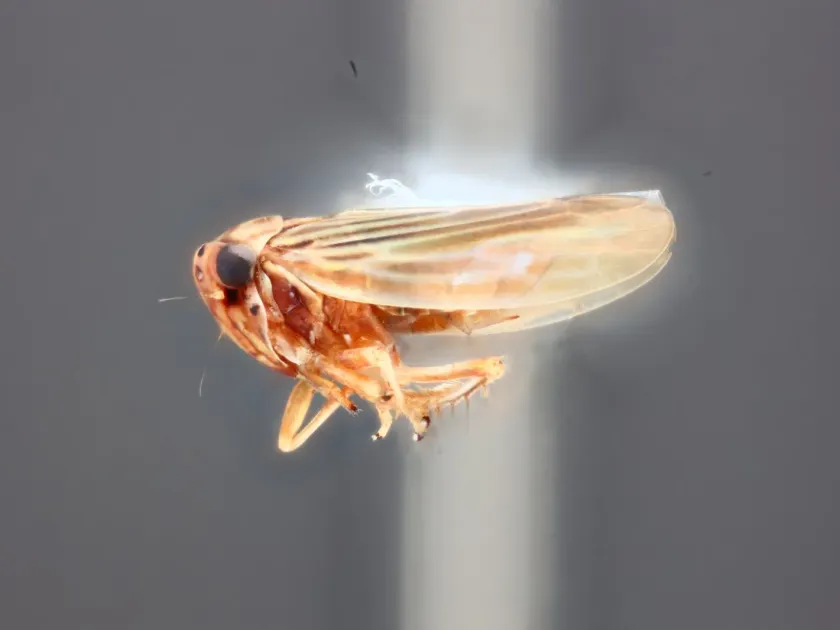
Adult Agallia lingula individuals are small, typically ranging from 3 to 5 millimeters in length. They possess a robust body shape that is slightly flattened, allowing them to hide efficiently within plant foliage.
Their coloration is generally cryptic, varying between shades of brown and yellowish-grey. This camouflage is a crucial adaptation that helps them evade predators while resting on host plants.
The nymphs lack functional wings but exhibit similar morphological features to adults. They are highly mobile and start feeding on plant sap shortly after hatching from eggs laid in plant tissues.
Identification in the field often relies on observing the insect's characteristic jumping behavior when disturbed. Entomological traps, such as yellow sticky cards, are essential tools for population monitoring.
What it damages
Agallia lingula is a polyphagous pest, meaning it feeds on a wide range of botanical hosts. It is particularly damaging to young seedlings, where its feeding can significantly hinder initial growth.
The primary damage results from piercing-sucking mouthparts that extract phloem sap from leaves and stems. This process removes essential nutrients and moisture, weakening the plant's overall vigor.
Beyond direct feeding damage, this species serves as a vector for various plant pathogens. By injecting saliva while feeding, they can transmit viruses and phytoplasmas to healthy plants.
Infested plants often display stunting, reduced fruit yield, and general chlorosis. In severe cases, the cumulative effect of feeding and disease transmission can lead to total crop failure in specific zones.
The damage is more pronounced during periods of water stress, as affected plants have a reduced capacity to recover from the loss of fluids and nutrients caused by the leafhopper activity.
When it appears
The lifecycle of Agallia lingula is synchronized with the seasonal growth of its host plants. Overwintering occurs in the adult stage, hidden within plant debris or perennial grasses.
As spring temperatures rise, adults emerge and begin feeding on early-season vegetation. This migration from overwintering sites to commercial fields is a critical phase for pest management strategies.
Development is temperature-dependent, with warmer summer months facilitating faster generation turnover. Multiple overlapping generations can occur throughout the growing season in warmer climates.
The peak of population density usually coincides with the mid-summer months when foliage is abundant and nutritional quality is high, providing an ideal environment for reproduction.
With the arrival of autumn, individuals look for sheltered microhabitats. Understanding this seasonal pattern allows farmers to implement preventive measures just before the primary colonization period.
Signs of infestation
The most common sign of Agallia lingula presence is the development of yellow or white stippling on the leaves. These spots are caused by the destruction of chlorophyll during feeding.
Leaves may exhibit curling, distortion, or premature senescence. In many vegetable crops, this damage is often mistaken for nutrient deficiencies or soil-borne root issues.
The presence of honeydew secreted by the leafhoppers can lead to the growth of sooty mold on the foliage, which further obstructs photosynthesis and diminishes the aesthetic value of the crop.
Vector-borne symptoms, such as mosaics, vein yellowing, or severe leaf deformation, often appear several days or weeks after the initial colonization, indicating viral infection.
When scouting, a sudden disturbance of the canopy will reveal small, winged adults jumping away, which is a definitive confirmation of a leafhopper infestation in the field.
Control measures
Management starts with cultural practices such as removing weeds from field perimeters. Weeds act as reservoirs, sustaining populations of Agallia lingula before they move to crops.
- Implementing crop rotation to disrupt the insect's habitat requirements.
- Using reflective mulches to deter leafhopper colonization in sensitive crops.
- Encouraging natural predators such as ladybugs, lacewings, and parasitic wasps.
- Applying systemic insecticides only when the economic threshold of damage is reached.
Chemical control must be executed with precision. Relying on systemic products ensures that the insecticide is translocated through the plant tissue, effectively targeting the sap-feeding insects.
Integrated Pest Management (IPM) is essential for long-term success. It balances biological control with careful chemical application to minimize the impact on non-target beneficial species.
Regular monitoring using traps and field visual inspections allows for timely action, preventing the rapid spread of the pest and reducing the overall need for heavy pesticide usage.
Taxonomy
- Latin name
- Agallia lingula
- Order
- Hemiptera (bugs, aphids, leafhoppers)
- Family
- Cicadellidae
- EPPO code
- AGLLLI
Discussion
No discussions yet — be the first.