
Agallia barretti
Agallia barretti
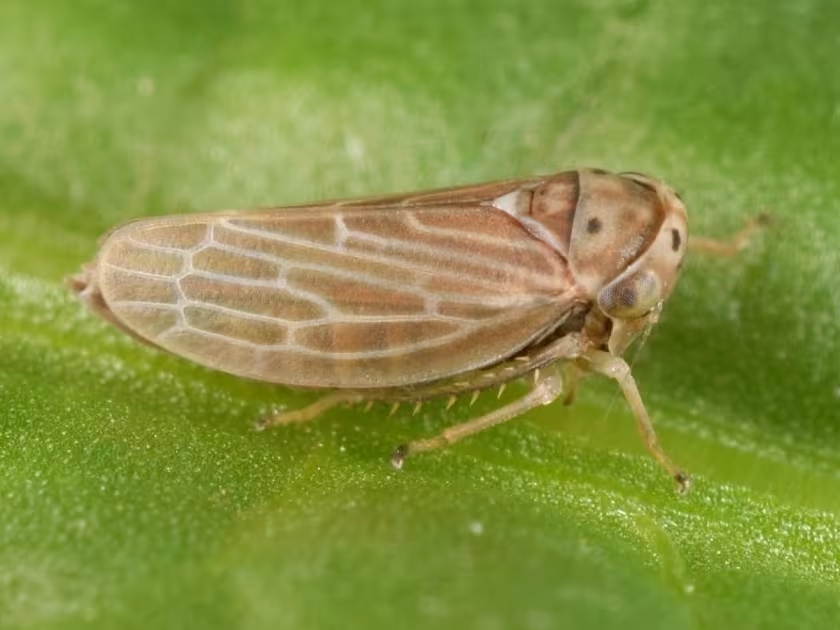
Description
How to identify
Agallia barretti belongs to the order Hemiptera and the family Cicadellidae (leafhoppers). These insects are typically small, with robust bodies ranging from 3 to 5 millimeters in length.
Adults possess a characteristic head structure with piercing-sucking mouthparts designed to feed on plant vascular tissues. Their coloration often ranges from brown to yellowish hues, which provides excellent camouflage on foliage and stems.
The life cycle involves egg, nymph, and adult stages. Nymphs resemble wingless adults but are smaller in size and lack fully developed reproductive organs, often residing on the underside of leaves.
The insect is predominantly secretive, often remaining hidden. Equipped with powerful hind legs, Agallia barretti can perform rapid jumps when disturbed, making manual monitoring and identification quite challenging for farmers.
Overwintering typically occurs in the egg stage within plant debris or as adults within the base of perennial grasses, ensuring the population's survival through harsh environmental conditions until the next season.
What it damages
This pest targets a wide variety of agricultural crops, including vegetables, cereals, and various ornamental plants. Younger plants during active vegetative growth stages are particularly susceptible to infestation.
Agallia barretti feeds on plant sap by piercing the epidermis of leaves and stems. This process depletes the plant's metabolic resources and severely disrupts essential photosynthetic processes.
Beyond direct mechanical injury, the pest poses a significant phytosanitary risk as a suspected vector for various viral and phytoplasma plant diseases, which can cause systemic collapse in host plants.
During mass outbreaks, farmers often observe reduced crop yields, stunted growth, and visible deformation of the foliage. In severe cases, the commercial value of the harvest is entirely lost.
The secretion of honeydew during feeding promotes the colonization of sooty mold, which further inhibits leaf respiration and diminishes the overall quality of the fruit or grain produced.
Signs of infestation
The initial signs of infestation include the appearance of small yellowish or whitish spots on leaves, which gradually lose color and eventually necrotize at the points of the pest's punctures.
In the early stages of damage, plants exhibit slowed development, distorted shoots, and curling leaves that eventually wither along the margins due to severe sap loss.
A closer inspection of the abaxial (bottom) side of the leaves often reveals the presence of the insects themselves, alongside sticky droplets of honeydew which indicate high pest density.
A secondary indicator is the general decline of crop health during warm, dry weather conditions, which are ideal for the rapid proliferation and spread of the Agallia barretti population.
Symptoms such as leaf mosaic patterns or systemic chlorosis are often associated with the insect's presence, indicating that the pest has successfully transmitted a pathogen into the plant tissues.
Control measures
Effective management of Agallia barretti requires an Integrated Pest Management (IPM) approach that combines cultural, biological, and chemical strategies for optimal results.
Cultural control involves deep autumn plowing to bury eggs and the diligent removal of weeds around field margins, which serve as crucial reservoirs for the pest during the off-season.
- Maintain clean fields by removing alternative host weeds.
- Apply spatial isolation between susceptible crop plots.
- Optimize sowing times to ensure plants are less vulnerable during peak pest activity.
When pest populations exceed economic thresholds, the application of systemic or contact-stomach insecticides registered for use on the target crop is recommended for rapid suppression.
Biological control focuses on protecting native populations of predators such as predatory bugs, spiders, and parasitic wasps, which play a vital role in naturally limiting the population density of the leafhopper.
Taxonomy
- Latin name
- Agallia barretti
- Order
- Hemiptera (bugs, aphids, leafhoppers)
- Family
- Cicadellidae
- EPPO code
- AGLLBA
Discussion
No discussions yet — be the first.