
Agallia albidula
Agallia albidula
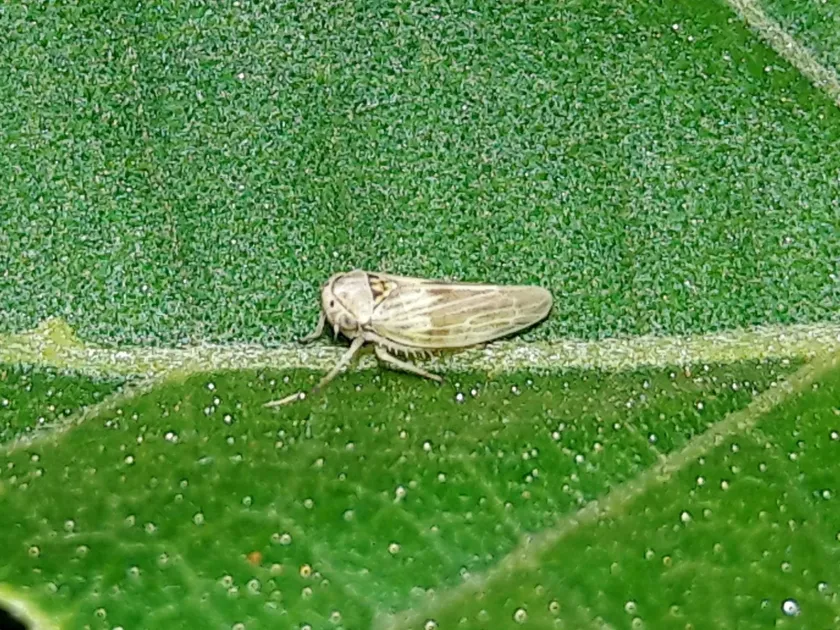
Description
How to identify
Agallia albidula belongs to the family Cicadellidae (leafhoppers) within the order Hemiptera. These insects are relatively small, usually ranging from 3 to 4 millimeters in length, making them difficult to detect without careful inspection.
The adult form is characterized by a whitish to light-gray body color, which serves as camouflage on the surfaces of host plants. They have a broad head and compound eyes, typical of the leafhopper family, providing them with acute perception of their environment.
The life cycle consists of three primary stages: egg, nymph, and adult. Both nymphs and adults possess piercing-sucking mouthparts designed to tap into plant phloem, which is their primary source of nutrition.
These insects are highly mobile, capable of both jumping and flying over short distances, allowing them to relocate quickly when disturbed. They are typically most active during warm, daylight hours.
Reproduction involves the female depositing eggs directly into the epidermal tissue of the plant. This strategic placement protects the developing offspring and provides a ready-to-use food source immediately upon hatching.
What it damages
Agallia albidula is considered a polyphagous pest, meaning it feeds on a wide variety of plant species. Common hosts include vegetable crops such as tomatoes, potatoes, cucumbers, and legumes like alfalfa.
The primary damage is caused by the extraction of plant sap, which weakens the host plant, stunts growth, and reduces overall vigor. Severe infestations lead to yellowing, curling, and eventual necrosis of leaves.
Beyond physical damage, the insect is a known vector for various phytoplasmas and viruses. By feeding on infected plants and then moving to healthy ones, they facilitate the rapid spread of debilitating plant diseases.
Economic impact is substantial, especially in regions with favorable climates for the pest. Yield losses can occur due to both reduced biomass production and the poor quality of fruits or tubers resulting from diseased plants.
In high-density populations, the cumulative effect of feeding and disease transmission can lead to total crop failure if management interventions are not implemented in time.
When it appears
The seasonal activity of Agallia albidula is heavily influenced by ambient temperature. As soon as temperatures rise in early spring, overwintering adults emerge to seek out young vegetation.
Population peaks typically occur during the mid-summer months when dry and hot weather conditions accelerate the insect's development cycle. This period represents the highest risk for crop infestation.
As the weather cools in autumn, the insects look for wintering sites, often moving to perennial weeds or crop residues that can survive the winter months, ensuring the survival of the population.
Multiple generations can be produced within a single growing season, depending on the local climate. Warm springs and dry summers often lead to larger outbreaks compared to cooler, wetter seasons.
Monitoring for the pest should begin early in the season, particularly focusing on the edges of fields and areas where alternative weed hosts are prevalent.
Signs of infestation
One of the first signs of Agallia albidula presence is the appearance of tiny stippling or pale spots on the upper leaf surface, resulting from the removal of chlorophyll by the pest.
Viral infection symptoms, often introduced by the leafhopper, include leaf chlorosis, severe curling or crinkling of leaves, and an abnormal, stunted growth habit of the entire plant.
Visual inspection of the underside of leaves often reveals the presence of nymphs. They are usually found huddled near veins, fleeing quickly if the leaf is disturbed or shaken.
Widespread wilting or "yellowing" patches in a field, particularly during hot and dry spells, should serve as an immediate alert to investigate for the presence of sucking pests like this leafhopper.
Secondary symptoms may include the presence of honeydew or slight sooty mold development, although this is less characteristic for this species compared to aphids or whiteflies.
Control measures
Managing Agallia albidula requires an Integrated Pest Management (IPM) approach. This includes cultural practices such as removing weeds that serve as alternative hosts and maintaining field hygiene.
Chemical control involves the timely application of systemic insecticides. These should be applied when populations reach economic threshold levels, rotating classes to avoid resistance.
Yellow sticky traps are an effective tool for monitoring population density. These help agronomists make informed decisions about when to apply pesticide treatments, optimizing efficiency.
Biological control, involving the encouragement of natural predators such as predatory bugs and parasitic wasps, can play a role in suppressing populations within an ecological management strategy.
- Rigorous weed management in and around production fields.
- Strategic application of systemic insecticides during peak activity.
- Use of pheromone or sticky traps for early detection and monitoring.
Taxonomy
- Latin name
- Agallia albidula
- Order
- Hemiptera (bugs, aphids, leafhoppers)
- Family
- Cicadellidae
- EPPO code
- AGLLAL
Discussion
No discussions yet — be the first.