
Agallia
Agallia
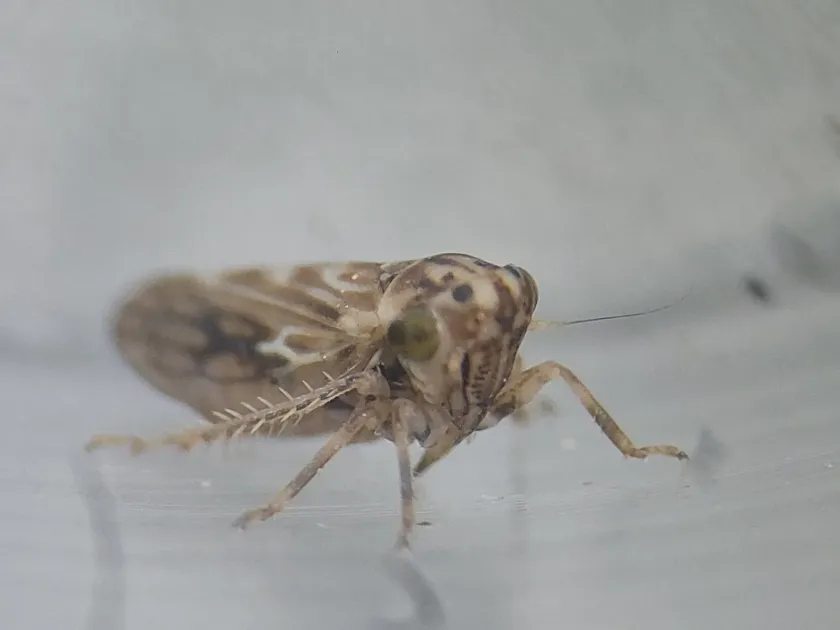
Description
How to identify
Agallia is a genus of insects belonging to the family Cicadellidae (leafhoppers). These small insects typically range from 3 to 5 mm in length and possess a sturdy, wedge-shaped body characteristic of the family.
Their coloration is generally cryptic, varying from light brown to greyish-brown, which helps them blend in with host plants. A distinct morphological feature often includes dark markings on the pronotum and scutellum.
Adult Agallia are equipped with specialized hind legs for jumping, allowing them to rapidly escape when disturbed. They also have well-developed wings for active dispersal between host plants.
Nymphs resemble the adults but are smaller and lack fully developed wings. They undergo several molting stages, gradually increasing in size while remaining restricted to the host plant environment.
Due to their small size and tendency to hide in dense foliage or on the undersides of leaves, they are often difficult to detect until a significant population has established.
What it damages
Agallia species act as significant agricultural pests by feeding on the sap of a wide variety of plants. They use piercing-sucking mouthparts to extract nutrients directly from the plant's vascular tissues.
Common host plants include various vegetable crops such as tomatoes, potatoes, and beans, as well as sugar beets. The withdrawal of phloem sap leads to a reduction in the overall vigor of the host plant.
Beyond the direct physical damage, Agallia are well-known vectors for several plant diseases, including phytoplasmas and viruses. The transmission of these pathogens often causes far more damage than the physical feeding alone.
Infected plants may exhibit stunted growth, yellowing, and systemic deformities. In severe cases, the cumulative effect of sap loss and disease can lead to complete crop failure or significant yield reduction.
The cosmetic damage, combined with reduced fruit size and quality, makes these insects a major concern for farmers aiming to maintain high standards for marketable produce.
When it appears
The life cycle of Agallia is highly dependent on environmental temperatures. Adult activity typically commences in the spring as temperatures rise and host plants become available.
These insects can produce multiple generations within a single growing season. The speed of their development is directly linked to climatic conditions, with warm, dry summers facilitating rapid population growth.
Overwintering usually occurs in the adult stage or as eggs, hidden within soil debris, leaf litter, or on persistent weed species. This allows them to survive through colder months effectively.
Peak infestation levels are usually observed in mid-summer. During this time, high reproductive rates lead to large populations that can quickly colonize adjacent fields or greenhouse crops.
As autumn approaches and temperatures drop, the insects migrate toward sheltered areas or hibernate within the soil to prepare for the dormant winter period.
Signs of infestation
Initial signs of infestation often include the appearance of small, chlorotic white spots on leaves, which occur at the specific sites of insect feeding probes.
As the feeding continues, leaves may start to curl, wither, or show general yellowing (chlorosis). In cases of virus transmission, plants might show mosaic patterns or severe leaf curling.
One of the easiest ways to detect their presence is to gently shake the foliage of a suspect plant; the adults will quickly jump or fly away, revealing their presence to the observer.
Another sign is the presence of sticky honeydew on the leaves, which can lead to the growth of sooty mold, further reducing the photosynthetic capacity of the plant.
- Stippling or white spots on the upper leaf surface.
- Leaf curling or systemic yellowing.
- Reduced growth and stunted plant development.
- Presence of nymphs on the undersides of leaves.
- Development of sooty mold due to insect excretions.
Control measures
Effective management begins with robust cultural practices, primarily the sanitation of fields to remove weeds that harbor the pests during the off-season.
Crop rotation and deep plowing after harvest are essential strategies, as they disrupt the life cycle of the pest by destroying their preferred overwintering habitats in the soil.
When monitoring indicates that population thresholds have been exceeded, the application of systemic or contact insecticides may be necessary to protect the crop from feeding and virus transmission.
In greenhouse settings, the use of yellow sticky traps is a highly effective method for both monitoring and reducing the population of adult leafhoppers throughout the growing season.
Encouraging natural biological controls, such as predatory insects or entomopathogenic fungi, can help suppress populations and reduce the reliance on chemical interventions.
Taxonomy
- Latin name
- Agallia
- Order
- Hemiptera (bugs, aphids, leafhoppers)
- Family
- Cicadellidae
- EPPO code
- AGLLSP
Discussion
No discussions yet — be the first.