
Lettuce aphid
Acyrthosiphon scariolae
Description
How to identify
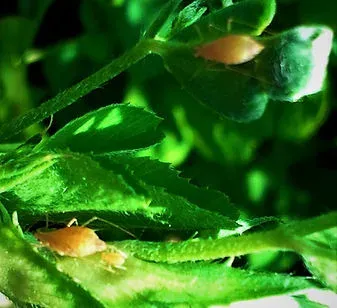
The lettuce aphid (Acyrthosiphon scariolae) is a member of the order Hemiptera and the family Aphididae, specialized in infesting plants within the Asteraceae family.
Adult insects are small, typically ranging from 2 to 3 mm in length. Their body color is usually light green or yellowish-green, providing effective camouflage on the underside of leaves.
Key morphological features include relatively long legs and prominent siphunculi (tubes) at the tip of the abdomen, which are vital for accurate field identification.
The lifecycle involves both parthenogenetic reproduction (giving birth to live young) and sexual phases, which allows for rapid population expansion during favorable growing conditions.
Several generations can occur within a single season, with population peaks usually observed during periods of moderate temperatures and high humidity.
What it damages
The primary hosts for this pest are plants belonging to the genus Lactuca, including common garden lettuce and various wild related species.
Aphids aggregate in dense colonies on the underside of leaves, flower stalks, and buds, where they feed by piercing plant tissues with their stylets.
By consuming the phloem sap, the pests cause significant stress to the plant, leading to stunted growth, leaf curling, and potential overall decline in plant vigor.
Beyond mechanical damage, this species serves as a vector for various plant viruses, which can cause far more severe economic damage than the feeding activity itself.
Infected crops suffer from reduced leaf quality, rendering the produce unmarketable and unsuitable for consumption, leading to harvest losses.
Signs of infestation
The first observable sign of infestation is the yellowing and curling of leaves, often starting from the center of the colony or the youngest tissues.
Heavy infestations are accompanied by the secretion of honeydew, a sticky substance that promotes the growth of sooty mold, appearing as black patches on leaves.
The presence of ants is a reliable indicator of aphid activity, as they are attracted to the honeydew and often protect the aphids from natural predators.
Small white particles, which are the cast skins (exuviae) left behind by nymphs during molting, are frequently visible on the leaf surfaces in affected areas.
If left unchecked, plants exhibit severe deformities in leaf shape and flower stalks, which can eventually lead to complete plant death in younger specimens.
Control measures
Integrated pest management (IPM) for this species begins with strict weed control, targeting wild host plants that act as reservoirs for the pest during the off-season.
Crop rotation and proper spacing between plantings are essential to prevent the microclimate from becoming overly favorable for rapid aphid colonization.
Biological control, utilizing beneficial insects such as ladybird beetles (coccinellids) and lacewing larvae, is highly effective in both greenhouses and open fields.
Chemical intervention should be considered only when economic thresholds are reached, using selective insecticides that minimize impact on non-target beneficial species.
- Regular monitoring of lettuce crops for early detection.
- Use of yellow sticky traps to track population fluctuations.
- Removal and destruction of highly infested plant debris.
Taxonomy
- Latin name
- Acyrthosiphon scariolae
- Order
- Hemiptera (bugs, aphids, leafhoppers)
- Family
- Aphididae
- EPPO code
- ACYRSC
Discussion
No discussions yet — be the first.