
Primrose aphid
Acyrthosiphon primulae
Description
How to identify
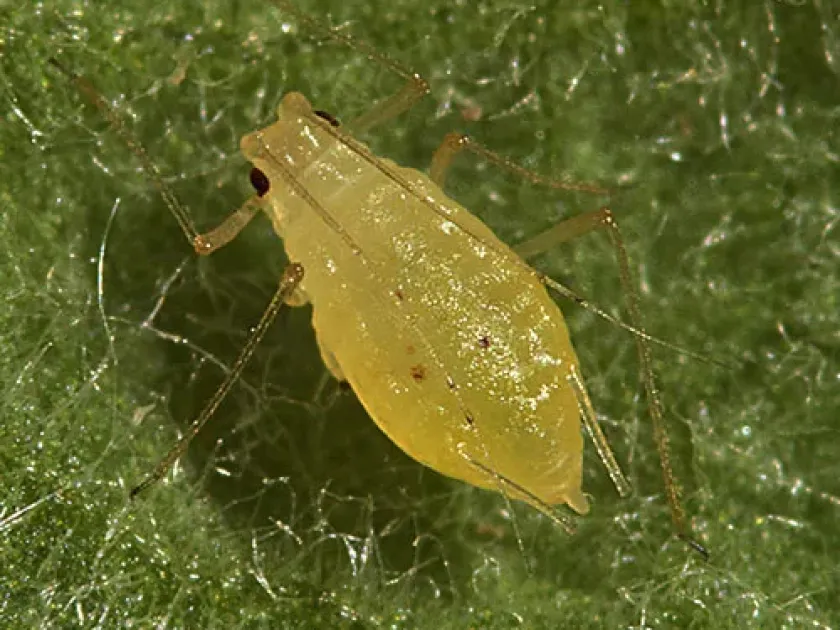
The Primrose aphid (Acyrthosiphon primulae) is a member of the Aphididae family, order Hemiptera. These are small insects often found in colonies on the underside of leaves.
Adult specimens typically measure between 2 and 3 millimeters. Their color ranges from light green to yellow-green, providing excellent camouflage against the foliage of host plants.
A key diagnostic feature is the presence of relatively long siphunculi at the end of the abdomen. The antennae are nearly equal to the length of the body, which is characteristic of the Acyrthosiphon genus.
They live in dense colonies that may include both wingless and winged forms. The winged individuals are responsible for dispersing the population to new plants during the growing season.
Reproduction is primarily parthenogenetic, allowing for rapid population growth under favorable conditions, which can lead to significant stress for the host plant.
What it damages
The primary host of this pest is the primrose (Primula). It targets species grown both in open garden environments and in greenhouse or indoor conditions.
Aphids attack leaves, stems, and flower buds. Feeding on the growing points can severely stunt the plant's development and reduce its overall vitality.
While primarily restricted to primulas, the pest may occasionally spread to other closely related plants in the Primulaceae family if the host population is dense enough.
They feed by sucking sap from soft, growing tissues that are rich in nutrients. This continuous feeding weakens the plant significantly before it reaches the blooming stage.
Damage to the buds often results in deformed flowers that fail to open properly, drastically reducing the aesthetic quality of the primrose display.
When it appears
Activity begins in early spring as temperatures rise and primulas start their active growth phase. Early detection is crucial for effective population management.
The peak activity period usually occurs during late spring and early summer, when environmental conditions are optimal for the aphid's metabolic rate and reproduction.
During summer heatwaves, reproductive rates may decrease, but colonies persist in shaded areas of the plant until the temperatures moderate again.
In autumn, sexual forms develop to lay winter-hardy eggs. These eggs are deposited on the base of the plant or nearby debris to survive the winter frost.
In greenhouses, where climate control is maintained, the cycle can continue year-round, posing a constant threat to primula production if not managed.
Signs of infestation
Initial signs of infestation include curling and twisting of leaves. This is often accompanied by the production of honeydew, a sticky substance secreted by the aphids.
Sooty mold frequently colonizes the honeydew, appearing as a black, powdery layer on leaves. This hinders photosynthesis and weakens the plant further.
Stunted growth, yellowing foliage, and deformed flower buds are clear indicators of a severe infestation requiring immediate intervention.
The presence of ants is a strong signal of aphid activity, as they farm the aphids for their sweet honeydew secretions, protecting them from natural predators.
Close inspection reveals small green insects and white, translucent exuviae (shed skins) on the underside of leaves, which are tell-tale signs of an established colony.
Control measures
Effective management requires an integrated approach including physical, biological, and chemical strategies to prevent significant plant damage.
- Regular monitoring of plants to detect early aphid presence.
- Physical removal of heavily infested leaves and buds.
- Encouraging natural predators such as lady beetles and lacewings.
- Using biological control agents like entomopathogenic fungi.
- Applying systemic insecticides when threshold levels are exceeded.
Systemic insecticides are often preferred as they are absorbed by the plant, reaching aphids even in tight clusters or curled leaves where contact sprays might fail.
Controlling ant populations in the garden is essential to prevent them from protecting aphid colonies from natural enemies.
Good sanitation practices, such as clearing plant debris at the end of the season, are vital to remove overwintering sites for aphid eggs and reduce future populations.
Taxonomy
- Latin name
- Acyrthosiphon primulae
- Order
- Hemiptera (bugs, aphids, leafhoppers)
- Family
- Aphididae
- EPPO code
- ACYRPR
Discussion
No discussions yet — be the first.