
Acyrthosiphon parvus aphid
Acyrthosiphon parvus
Description
How to identify
The aphid Acyrthosiphon parvus belongs to the family Aphididae. It is a small sap-sucking insect characterized by a complex life cycle that involves both asexual and sexual reproduction phases depending on the season.
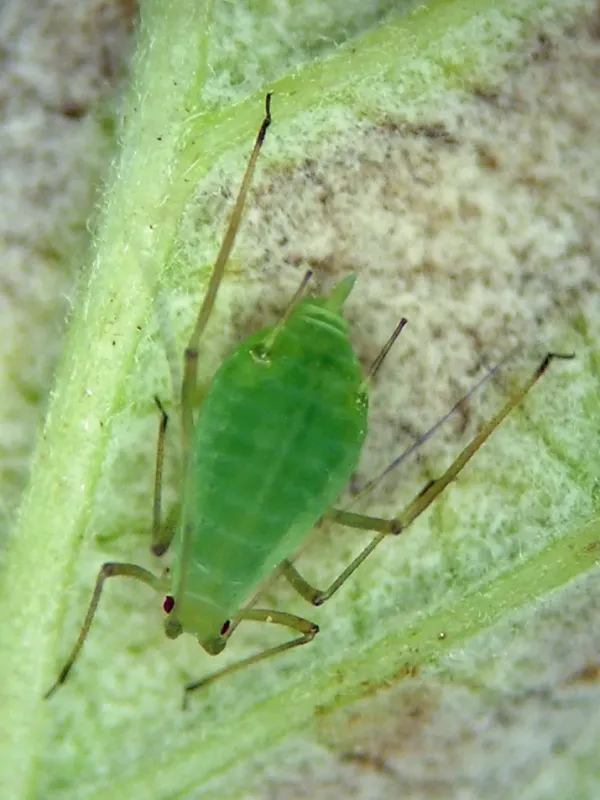
Morphologically, this species is defined by its elongated body and long siphons, which are diagnostic features for the genus Acyrthosiphon. The color typically ranges from light green to yellow, providing camouflage against the host plant tissues.
Identification requires microscopic examination of specific anatomical features, including antennal segments and the shape of the cauda. In the field, it is easily recognized by its presence in dense colonies on leaf undersides.
The species relies on specific host plants to complete its developmental stages. Its high reproductive rate allows it to build up large populations in a very short period under favorable environmental conditions.
Monitoring programs often involve yellow sticky traps and field scouting to identify the initial arrival of the pest on agricultural lands.
What it damages
This pest primarily targets leguminous crops. The aphids feed on the cell sap of young shoots, leaves, and buds, causing significant stress to the host plant.
As a result of intensive feeding, the plants exhibit stunted growth, leaf curling, and yellowing. In severe cases, the entire plant may wilt and fail to produce viable seeds or fruits.
Acyrthosiphon parvus is also a known vector for various plant viruses. Transmission occurs during feeding, which often leads to systemic infection that can destroy entire crop patches.
The production of honeydew promotes the growth of sooty mold, which covers the leaf surface. This layer blocks sunlight and significantly inhibits the plant's photosynthetic efficiency.
Economic damage is most pronounced when infestations occur during the early vegetative stages, potentially leading to significant yield losses if left unchecked.
When it appears
The aphid is most active during the spring and summer months when weather conditions are warm and humid. These factors are critical for the rapid growth of their populations.
In early spring, nymphs hatch from overwintering eggs laid on plant debris. From this point, the population increases exponentially through parthenogenesis.
Peak infestation usually aligns with the intensive growth phases of the host plants, such as budding and flowering. This is when the plant is most vulnerable to sap loss and virus transmission.
As autumn approaches and temperatures drop, the aphid shifts to sexual reproduction. This stage produces hardy eggs that are resistant to winter frosts and serve as the source of infestation for the next year.
Regular scouting is essential throughout the growing season to detect early hotspots before they spread across the entire field.
Signs of infestation
The most immediate signs of infestation include the deformation of young leaves, which begin to curl and lose their natural color. Close inspection reveals small insects clustered on the underside of these leaves.
A shiny, sticky layer of honeydew on the foliage is a hallmark sign of aphid activity. This substance is often accompanied by the presence of ants that protect the aphid colonies from natural predators.
Plants showing inhibited growth, yellowish patches, or prematurely dropping blossoms are clear indicators of potential aphid presence. Such symptoms often suggest a widespread infestation.
The accumulation of black sooty mold on the foliage is another strong visual indicator of long-standing aphid activity. This mold thrives on the sugar-rich excretions left behind.
The increased activity of beneficial predators, such as ladybugs and lacewings, near a specific plant area often acts as a biological signal that an aphid colony is present.
Control measures
Managing Acyrthosiphon parvus requires an Integrated Pest Management (IPM) approach to minimize crop damage while protecting beneficial insect populations.
- Cultural practices: Removal of alternative weed hosts from field margins.
- Crop rotation to break the pest's life cycle.
- Biological control: Conserving natural enemies like parasitoids and predators.
- Chemical control: Targeted application of systemic insecticides when thresholds are exceeded.
Biological control agents, including biopesticides based on fungi or bacteria, are effective at lower infestation levels and are safer for the environment than broad-spectrum chemicals.
Chemical applications should be restricted to cases where the economic threshold is breached. It is crucial to rotate chemical modes of action to prevent the development of resistance in aphid populations.
Taxonomy
- Latin name
- Acyrthosiphon parvus
- Order
- Hemiptera (bugs, aphids, leafhoppers)
- Family
- Aphididae
- EPPO code
- ACYRPA
Discussion
No discussions yet — be the first.