
Mallow aphid
Acyrthosiphon malvae
Description
How to identify
The Mallow aphid, scientifically known as Acyrthosiphon malvae, belongs to the family Aphididae and is a common pest affecting various garden plants.
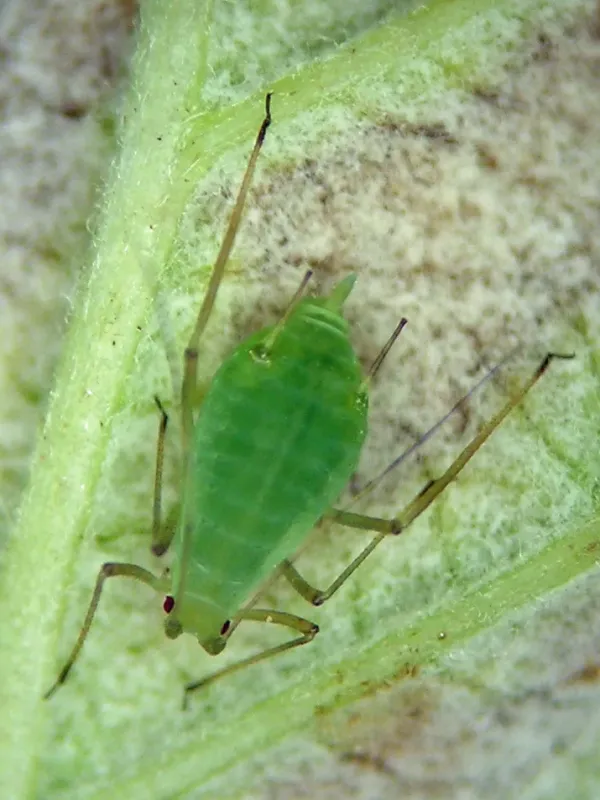
Adult aphids are typically small, measuring between 2 and 3 millimeters in length, with a slender, elongated body shape characteristic of the genus.
Their color ranges from pale green to yellowish-green, which helps them blend in with the foliage of host plants, making them difficult to detect at an early stage.
They possess long, thin siphunculi at the rear end of the abdomen and very long antennae, which are often longer than their entire body length.
The species exists in both wingless and winged forms, the latter being primarily responsible for spreading the infestation to new plants and locations.
What it damages
This aphid species is primarily associated with plants in the Malvaceae family, including mallow (Malva), hibiscus, and lavatera species.
In addition to mallows, they are frequently found on pelargoniums and a variety of vegetable crops, such as sugar beets and different types of cabbage.
They damage plants by piercing the tissue with their mouthparts and sucking out the sap, which leads to stunted growth and a general weakening of the plant.
Severe infestations cause leaves to curl, twist, and turn yellow, eventually leading to premature senescence of the foliage and significant loss of aesthetic value.
Furthermore, the Mallow aphid serves as a vector for various plant viruses, which can cause irreparable damage to the overall health and productivity of the crop.
When it appears
The seasonal activity of the Mallow aphid begins in early spring when overwintering eggs hatch, producing the first generation of active nymphs.
During the warmer months, the population grows exponentially due to rapid parthenogenetic reproduction, allowing for multiple overlapping generations.
They thrive in moderate temperatures and high humidity, often reaching peak populations during the late spring and throughout the summer months.
As autumn approaches, the aphid produces sexual forms that lay eggs to survive the winter, ensuring the population persists into the next growing season.
In greenhouse settings or climate-controlled environments, the Mallow aphid can reproduce continuously, bypassing the natural winter dormancy period.
Signs of infestation
A primary indicator of infestation is the presence of honeydew, a sticky, sugary substance secreted by the aphids that accumulates on the leaves below.
The honeydew provides a perfect medium for the growth of sooty mold, a fungus that manifests as a black coating on the leaves, blocking sunlight.
Visible curling of the youngest leaves and the deformation of growing points are typical symptoms of high aphid density within a colony.
Checking the underside of leaves will reveal clusters of green insects, often accompanied by white shed skins (exuviae) left behind during molting.
An unusual number of ants visiting the plants is a strong hint, as ants are known to tend and protect aphid colonies to collect the excreted honeydew.
Control measures
Effective management begins with the application of systemic insecticides that are absorbed by the plant and kill aphids through ingestion during sap feeding.
Contact sprays containing soaps or horticultural oils can be used for smaller infestations, provided that direct coverage of the undersides of leaves is achieved.
Encouraging natural predators, such as ladybird beetles, lacewings, and hoverfly larvae, can significantly help in suppressing aphid numbers naturally.
- Maintain good garden hygiene by removing weeds that may serve as alternative hosts.
- Avoid over-fertilizing with nitrogen, which produces succulent growth that attracts aphids.
- Regularly monitor susceptible plants to catch initial outbreaks before they colonize the entire plant.
For ornamental plants, early detection and localized treatment are usually sufficient to maintain the health and appearance of the foliage.
Taxonomy
- Latin name
- Acyrthosiphon malvae
- Order
- Hemiptera (bugs, aphids, leafhoppers)
- Family
- Aphididae
- EPPO code
- AULAPE
Discussion
No discussions yet — be the first.