
Lettuce aphid
Acyrthosiphon lactucae
Description
How to identify
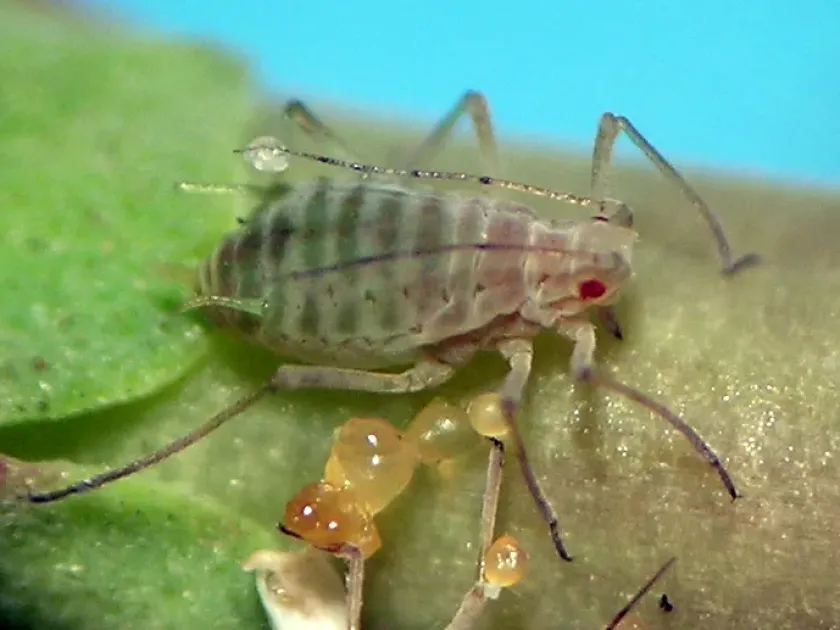
The lettuce aphid (Acyrthosiphon lactucae) is a small insect belonging to the family Aphididae. It is a specialized pest that primarily targets members of the Asteraceae family, with lettuce (Lactuca sativa) being its main host plant.
Adult aphids are typically pale green or yellowish-green, providing them with excellent camouflage against the host leaves. They measure approximately 2–3 mm in length and feature characteristic long siphunculi (tubular structures) on the posterior end of their abdomen.
Their reproduction is highly efficient, utilizing both parthenogenesis and sexual reproduction depending on the season. This allows for rapid population growth, with a single colony capable of expanding significantly in just a few days under optimal conditions.
The insect thrives in temperate climates, with the most rapid development occurring between +20°C and +25°C. Their life cycle consists of several nymphal stages, and the population often includes both winged and wingless forms to facilitate movement.
Winged forms (alatae) are produced to migrate to new host plants when the current colony becomes overcrowded or the plant's health declines. This migratory behavior makes the lettuce aphid a major threat to both greenhouse and field-grown lettuce production.
What it damages
The primary damage is caused by both nymphs and adults feeding on the sap of the lettuce plant. They usually congregate on the underside of leaves and near the growing points, causing direct physical damage and nutritional depletion.
As they feed, they inject toxic saliva into the plant, which leads to leaf curling, chlorosis (yellowing), and severe stunted growth. This damage not only ruins the visual appeal of the crop but also significantly reduces the overall biomass and weight of the harvest.
Crucially, the lettuce aphid is a known vector for several plant viruses, most notably the Lettuce Mosaic Virus (LMV). Once a plant is infected with this virus, it often shows mottled leaves and fails to develop a proper head, rendering the produce unmarketable.
The presence of aphids also leads to the excretion of honeydew, a sticky substance that coats the leaves. This serves as a substrate for sooty mold, a dark fungal growth that prevents proper photosynthesis and requires extensive cleaning before consumption.
Economic losses can be substantial, as lettuce is a high-turnover crop. Even a minor infestation can lead to the total rejection of a harvest batch if the aphids or the accompanying viral symptoms are detected during quality control.
Signs of infestation
The first signs of an infestation include the curling and inward rolling of young leaves. If you notice the edges of the leaves beginning to pucker or appear distorted, it is a strong indicator that aphids are feeding on the plant's sap.
Sticky residues on the surface of the leaves, known as honeydew, indicate a well-established colony. If left untreated, this area will quickly turn black as sooty mold colonizes the sugary secretions left behind by the pests.
High ant activity around your lettuce crops is often a major red flag. Ants "farm" aphids, protecting them from predators in exchange for the honeydew, so a trail of ants on lettuce plants suggests the presence of an aphid population.
Upon closer inspection of the undersides of the leaves, you may find clusters of aphids along with their white, cast-off skins (exuviae) left behind after molting. These white specks are often mistaken for fungal spores or dust.
Stunted growth or a failure to form a crisp head is a classic sign of a sustained infestation. Affected plants will look significantly smaller and weaker compared to healthy plants growing in the same environment.
Control measures
Cultural control practices are essential, starting with the strict removal of weeds from around the growing area. Many wild Asteraceae weeds act as bridges for the aphid population between seasons, so keeping the area clear is vital.
Biological control methods, such as introducing natural predators like ladybirds (Coccinellidae) and lacewing larvae, are highly effective. In protected cropping systems, parasitic wasps can be released to target and eliminate the colonies biologically.
For organic management, horticultural soaps and neem-based oils can be used to disrupt the aphid cuticle and control population numbers. These treatments are safer for consumers and have minimal impact on the local ecosystem.
Chemical control should be used as a last resort due to the short harvest intervals of lettuce. If pesticides are necessary, always select products labeled for edible greens and strictly adhere to the pre-harvest interval (PHI) to ensure safety.
- Monitor crops regularly using yellow sticky traps.
- Ensure adequate spacing between plants to improve airflow.
- Avoid excessive nitrogen fertilization which can stimulate soft, succulent growth.
- Use fine-mesh insect netting to physically exclude the pests from the crops.
Taxonomy
- Latin name
- Acyrthosiphon lactucae
- Order
- Hemiptera (bugs, aphids, leafhoppers)
- Family
- Aphididae
- EPPO code
- ACYRLA
Discussion
No discussions yet — be the first.