
Cotton aphid
Acyrthosiphon gossypii
Description
How to identify
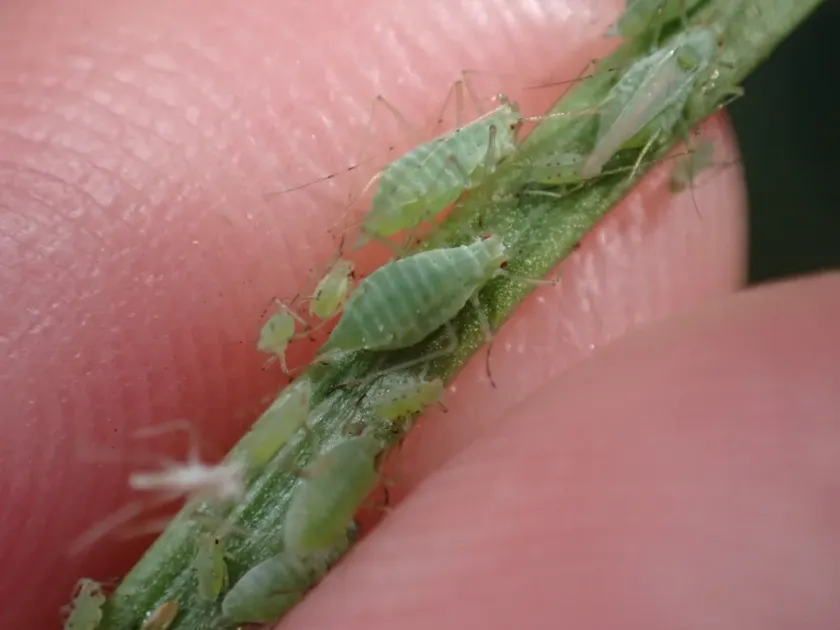
The cotton aphid (Aphis gossypii) is a major agricultural pest belonging to the family Aphididae. These insects are small, typically ranging in color from pale yellow to deep green or nearly black, depending on their environment and host plant.
The life cycle involves both winged and wingless forms, allowing the population to expand rapidly and colonize new plants through active flight or wind dispersal.
Reproduction is primarily parthenogenetic, meaning females give birth to live young without mating, which leads to exponential population growth during warm weather.
Cotton aphids are known for their high genetic plasticity, which enables them to quickly adapt to various climate conditions and develop resistance to insecticides.
They overwinter as eggs on weeds or as active individuals in greenhouses, ensuring they are present as soon as the growing season begins.
What it damages
This pest attacks a wide range of crops, including cotton, cucumbers, melons, peppers, and various other vegetable and ornamental plants.
Both adults and nymphs feed by inserting their mouthparts into plant tissues and extracting sap, which causes the plants to lose essential nutrients and water.
Beyond direct damage, the cotton aphid is a notorious vector of numerous plant viruses, such as Cucumber Mosaic Virus, which can devastate entire crop fields.
As they feed, they excrete honeydew, a sticky substance that promotes the growth of sooty mold, blocking photosynthesis and reducing plant vigor.
Heavy infestations lead to stunted growth, leaf curling, flower bud drop, and a significant decrease in both the quality and quantity of the harvest.
Signs of infestation
Visual identification starts with observing curled, yellowing, or distorted leaves, particularly at the terminals of the plant shoots.
Upon inspecting the undersides of the leaves, you will typically find dense colonies of aphids along the leaf veins and stems.
A shiny, sticky residue (honeydew) on the leaves or the presence of ants, which aggressively protect the aphids, are reliable indicators of an infestation.
The appearance of a black, powdery substance on leaves indicates the presence of sooty mold, suggesting that aphids have been feeding for some time.
Growth abnormalities, such as shortened internodes or the failure of flowers to develop properly, are common symptoms in heavily infested areas.
Control measures
Effective management begins with strict weed control, as many weed species act as reservoirs for the aphids before they migrate to crop fields.
Biological control, including the release of natural predators like lady beetles, lacewings, and parasitic wasps, is highly effective in greenhouse environments.
When infestation levels exceed the economic threshold, chemical control using systemic insecticides is required to penetrate plant tissues.
Resistance management is crucial, so rotation of different chemical classes is necessary to prevent the aphid population from developing immunity.
- Regular monitoring of crop fields and greenhouse perimeters.
- Sanitation by removing crop residues after harvest.
- Encouraging natural predator populations.
- Applying systemic insecticides in rotation to prevent resistance.
Taxonomy
- Latin name
- Acyrthosiphon gossypii
- Order
- Hemiptera (bugs, aphids, leafhoppers)
- Family
- Aphididae
- EPPO code
- ACYRGO
Discussion
No discussions yet — be the first.