
Acrogonia citrina
Acrogonia citrina
Description
How to identify
Acrogonia citrina is an insect belonging to the order Hemiptera, family Cicadellidae, and subfamily Cicadellinae, commonly known as a type of sharpshooter.
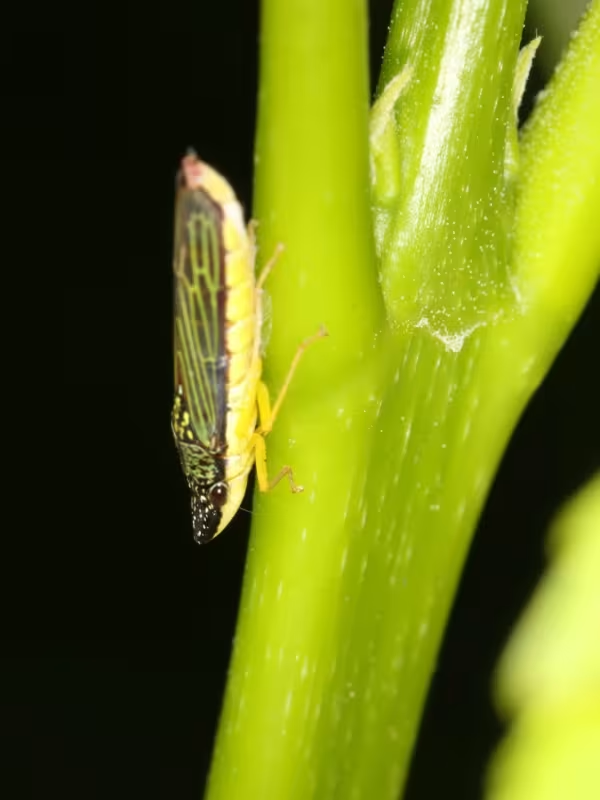
Adult insects are characterized by a vibrant yellow or lemon-green coloration, which provides camouflage on host plant foliage, and a streamlined, wedge-shaped body structure.
The biological cycle consists of egg, nymph (several instars), and adult stages, with all active stages feeding directly on the host plant throughout their development.
They possess specialized mouthparts adapted for piercing and sucking xylem sap, distinguishing them from other sap-feeding insects that target phloem or mesophyll cells.
Identification is often based on their high activity level; they are known for sudden, powerful jumps when disturbed, making visual inspection of the canopy challenging.
What it damages
This pest primarily affects woody plants, including citrus orchards, where it causes significant physiological stress by extracting large volumes of xylem sap.
Beyond the direct nutrient loss, Acrogonia citrina is a known vector for various plant pathogens, particularly bacteria that colonize the vascular system.
The damage to xylem vessels impairs the plant's ability to transport water and essential minerals, leading to systemic weakness and stunted growth.
Severe infestations can result in leaf scorching, premature fruit drop, and branch dieback, which drastically reduces the economic yield of the orchard.
In addition to physiological harm, the excretion of honeydew by the insects serves as a substrate for sooty mold, which interferes with photosynthesis by covering the leaf surface.
When it appears
The pest's appearance is closely tied to the growing season of host plants, as they require constant access to xylem sap during the period of active water movement.
In temperate and tropical climates, the insect may complete multiple generations per year, with population peaks occurring during the warmest and most humid months.
Overwintering usually occurs in the form of eggs laid inside tender shoot tissues or as adults hiding in protected areas of the tree canopy.
Monitoring efforts should intensify in early spring, as nymphs emerge and begin feeding on developing leaves and young shoots, increasing the vulnerability of the trees.
Environmental conditions play a crucial role, as prolonged dry spells can influence the density of the population, while favorable temperatures facilitate rapid reproduction cycles.
Signs of infestation
Initial signs of infestation include the yellowing of leaf margins and the appearance of chlorotic patches, which occur due to the disruption of water transport.
The accumulation of excrement on the foliage often leads to the development of black sooty mold, a reliable visual cue for the presence of the pest.
The insects themselves can be detected on the undersides of leaves, especially near the main veins where they prefer to feed, often jumping when the plant is shaken.
Dieback of individual branches or flagging leaves during the hottest part of the day is a strong indicator of vascular stress caused by a large population of sharpshooters.
Deformed shoots and irregular growth patterns are further symptoms, indicating that the plant is under continuous pressure from the feeding activities of the insects.
Control measures
An integrated pest management (IPM) approach is essential to maintain the health of the orchard and reduce the dependency on chemical treatments.
- Regular sanitation, including the pruning of infected or heavily infested shoots, helps reduce the reservoir of eggs and nymphs.
- The use of systemic insecticides that are translocated within the xylem is effective, as these chemicals target the insects during their primary feeding activity.
- Yellow sticky traps are recommended for monitoring flight patterns and reducing the number of adults in the orchard.
- Biological control measures, such as encouraging local predators and parasitoids, provide a sustainable way to keep populations below the economic injury level.
- Quarantine and inspection of nursery stock are critical to prevent the accidental introduction of Acrogonia citrina into new, unaffected regions.
Chemical applications must be timed carefully to coincide with peak nymphal activity and should strictly follow local regulations to protect beneficial insect pollinators.
Taxonomy
- Latin name
- Acrogonia citrina
- Order
- Hemiptera (bugs, aphids, leafhoppers)
- Family
- Cicadellidae
- EPPO code
- ACRGCI
Discussion
No discussions yet — be the first.