
Reed warbler
Acrocephalus
Description
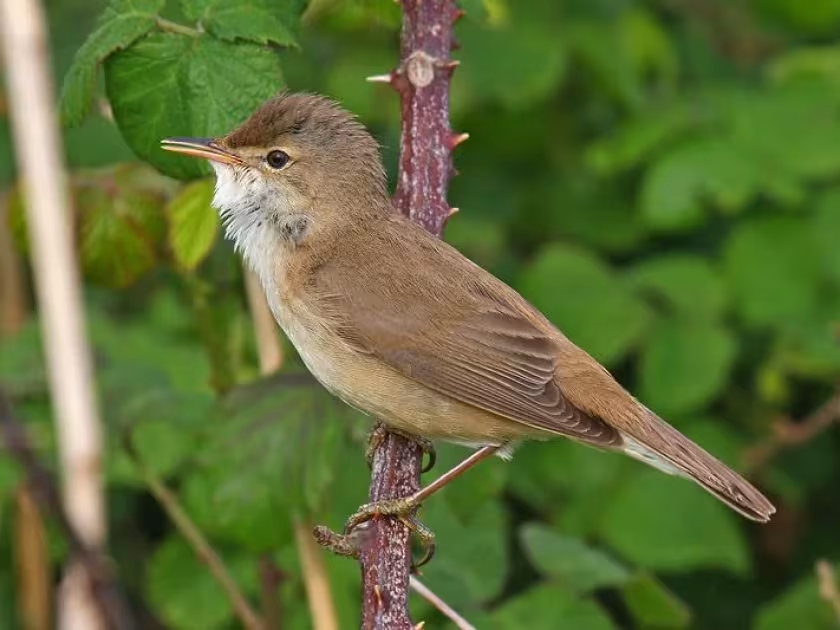
How to identify
The genus Acrocephalus belongs to the Acrocephalidae family within the order Passeriformes. These are small insectivorous birds typically found in wetlands and reed beds.
They are characterized by brownish, cryptic plumage that provides excellent camouflage in their natural habitat, making them difficult to spot during routine field inspections.
From an agronomical perspective, it is critical to recognize that these birds are not pests; they do not consume seeds, fruits, or vegetation of cultivated crops.
Their identification in the field is usually based on their distinct, loud vocalizations, which are common near irrigation canals or water-adjacent agricultural areas.
Understanding their taxonomy and behavior helps prevent misclassification as agricultural pests during field management monitoring programs.
What it damages
Reed warblers cause no mechanical or physiological damage to agricultural crops. They are obligate insectivores and lack the anatomical features to feed on plant tissue.
Instead, they act as natural controllers by consuming various insects, including several species that are considered major pests of cereal and vegetable crops.
By feeding on these insects, the birds contribute to a reduction in the pest population density near the edges of fields and drainage systems.
There is zero economic loss associated with the presence of this genus; in fact, their presence indicates a healthy, functioning agroecosystem.
Agro-consultants confirm that no crop deformations or yield losses can be attributed to the activity of Acrocephalus species.
When it appears
These birds are migratory and typically arrive at agricultural areas during the spring, coinciding with the onset of the crop growing season.
The period of highest activity occurs between May and July, which corresponds to their nesting phase and the peak period of insect abundance in the fields.
Once the breeding cycle is complete and temperatures begin to drop in autumn, they migrate to warmer regions, leaving the agricultural land behind.
Their phenology is strictly tied to the presence of water and the subsequent development of insect populations, which serve as their primary food source.
The presence of these birds in the agro-landscape is highly seasonal and fluctuates based on the availability of appropriate nesting sites and humidity levels.
Signs of infestation
There are no diagnostic signs of crop damage, such as leaf lesions, gnawing marks, or stem deformations, because these birds do not feed on plants.
Indications of their presence include the auditory cues of their singing and the physical location of their nests within the tall vegetation near irrigation ditches.
Observation of birds flying between reeds and crops is common, but this is solely in search of insect prey and poses no threat to the harvest.
Lack of any specific damage symptoms on the plants confirms that the species is non-pathogenic and non-damaging to agricultural crops.
Any perceived problems in plant development should be investigated as abiotic or pest-related, excluding the influence of reed warblers entirely.
Control measures
No pest control measures are required or advised for reed warblers, as they are beneficial organisms and are often protected by local environmental laws.
Integrated Pest Management (IPM) strategies encourage the preservation of buffer zones and reed beds to maintain populations of these natural predators.
The excessive use of broad-spectrum insecticides should be avoided to prevent harming these beneficial birds and disrupting the ecological balance of the field.
Managing the habitat to support these birds is a cost-effective way to enhance natural pest regulation without the need for chemical intervention.
Agronomists should promote these species as allies in sustainable farming, ensuring that their habitats are preserved within the wider agricultural landscape.
Taxonomy
- Latin name
- Acrocephalus
- Family
- Acrocephalidae
- EPPO code
- ACRKSP
Discussion
No discussions yet — be the first.