

Pest · Lepidoptera (butterflies)
Pear fruit moth
Acrobasis pirivorella
Description
How to identify
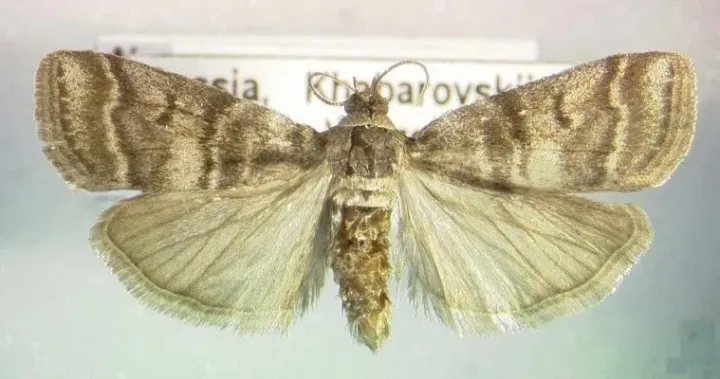
The pear fruit moth (Acrobasis pirivorella) belongs to the Pyralidae family in the order Lepidoptera. The adult moth has a wingspan ranging from 20 to 25 mm.
The forewings are brownish-gray with distinct dark transverse bands. This coloration acts as camouflage, allowing the moth to blend into the bark of fruit trees perfectly.
The larvae are approximately 15–18 mm long. They feature a dirty green to brownish body with a dark brown or black head, which serves as a key identifier for this species.
Overwintering occurs in the larval stage. The larvae spin dense silk cocoons hidden in tree bark crevices, branch forks, or at the base of buds to survive the winter months.
The life cycle is tightly synchronized with the pear tree's phenology. Adult emergence and egg-laying patterns are closely dependent on the tree's growth stages.
What it damages
While pear trees are the primary host, this pest can also infest apple trees and other pome fruits under high population pressure, leading to significant orchard damage.
In early spring, larvae cause severe damage by feeding on the internal tissues of swelling buds, often destroying them before they can bloom and produce fruit.
During the summer, the second generation of larvae attacks the developing fruit. They tunnel into the flesh, leaving behind frass and damaging the internal structure.
Affected shoots often show signs of stunted growth, twisting, and drying out. This reduces the tree's overall vigor and can affect its ability to withstand winter frosts.
The total economic impact is high because the damage results in both direct loss of yield and a decrease in fruit quality due to decay and fungal infections.
When it appears
Larval activity begins in spring as soon as temperatures exceed 10-12°C. This timing coincides with the swelling and opening of pear tree buds.
Adult moths of the first generation typically emerge in late spring (May to June), when they begin laying eggs on the newly formed fruit or foliage.
The second generation emerges in mid-to-late summer (July and August), causing the most significant damage to maturing fruit crops in the orchard.
The pest development rate is heavily influenced by climate. Warm, humid summers often lead to higher reproduction rates and more severe infestations.
By autumn, the larvae seek out overwintering sites. They move towards the trunk or thicker branches to build the cocoons that will protect them until next spring.
Signs of infestation
The most prominent spring sign is the appearance of 'burnt' or withered buds that turn brown and fail to open, indicating larval feeding inside.
Silken webs on the tips of shoots are a clear sign of larval presence. These webs are used by the larvae to bind leaves and buds together for protection.
Infested fruit will show entry holes surrounded by waste products (frass). These spots are often sites where secondary rot starts to develop rapidly.
Premature fruit drop is a common indicator of internal feeding. If fallen fruit is sliced open, one can usually find the larva or the tunnels it created.
- Withered, non-opening buds in spring.
- Presence of silken webs at the shoot tips.
- Entry holes and rot spots on developing pears.
Control measures
Orchard sanitation is critical. This includes pruning away dead or infested wood and scraping away old bark where larvae hide during the winter.
Consistent removal and destruction of fallen fruit are essential to prevent larvae from completing their life cycle and returning to the soil or tree trunk.
Chemical control should be timed based on pest monitoring. Sprays are most effective when larvae are actively emerging from their winter cocoons.
Using pheromone traps is highly recommended to monitor adult population levels and determine the precise timing for insecticide applications.
Biological control agents, particularly Bacillus thuringiensis-based products, provide an effective and environmentally friendly way to manage the population during the growing season.
Content graph
Connections · Pear fruit moth
Most often together:
Marketplace
Products · 1
Biology
Taxonomy
- Latin name
- Acrobasis pirivorella
- Order
- Lepidoptera (butterflies)
- Family
- Pyralidae
- EPPO code
- NUMOPI
Community
Discussion
No discussions yet — be the first.