
Chrysanthemum nematode
Aphelenchoides ritzemabosi
Description
How to identify
The chrysanthemum nematode (Aphelenchoides ritzemabosi) is a microscopic worm that belongs to the Aphelenchoididae family. Unlike soil-borne nematodes, this species is a foliar parasite that primarily lives within the above-ground tissues of its host plant.
Adult worms are approximately 0.5 to 1.0 mm long, thin, and transparent. They move across the surface of stems and leaves only when a film of water is present, such as from dew, rain, or overhead irrigation, which they use to enter the plant through stomata.
Inside the plant, they puncture cells with a specialized structure called a stylet to feed on the cytoplasm. This feeding activity causes cell collapse and leads to the formation of the characteristic necrotic lesions observed in host plants.
The life cycle of the nematode is relatively short, taking about 14 days under optimal conditions (warm and humid). Eggs are laid within leaf tissues or buds, and the larvae go through several molting stages before reaching adulthood.
This parasite is highly resilient; it can survive for long periods in a state of anhydrobiosis (dormancy) within dried plant debris, infested soil, or on greenhouse surfaces, awaiting suitable moisture levels to resume its active life cycle.
What it damages
Chrysanthemums are the primary hosts, but the nematode also causes significant damage to other species such as dahlias, anemones, asters, strawberries, and various weeds. These alternative hosts often act as reservoirs, keeping the infestation alive in a garden or nursery.
The damage is aesthetic and physiological. By destroying plant cells, the nematode prevents photosynthesis, leading to weak, stunted growth. In commercial settings, infested plants lose their market value, leading to severe financial losses for producers.
Damage often starts from the lower leaves and progresses upward. If left unchecked, the plant may become completely defoliated, distorted, or stunted, making it susceptible to other pathogens or simply killing it due to excessive tissue damage.
The nematode spreads rapidly through water droplets, allowing it to splash from plant to plant during watering. Greenhouse conditions are particularly favorable for outbreaks due to the constant presence of moisture on foliage.
In crops like strawberries, the nematode causes severe distortions of the leaves and crowns. This condition often leads to decreased yields and poor quality fruits, forcing growers to remove and destroy entire beds to prevent further spread.
Signs of infestation
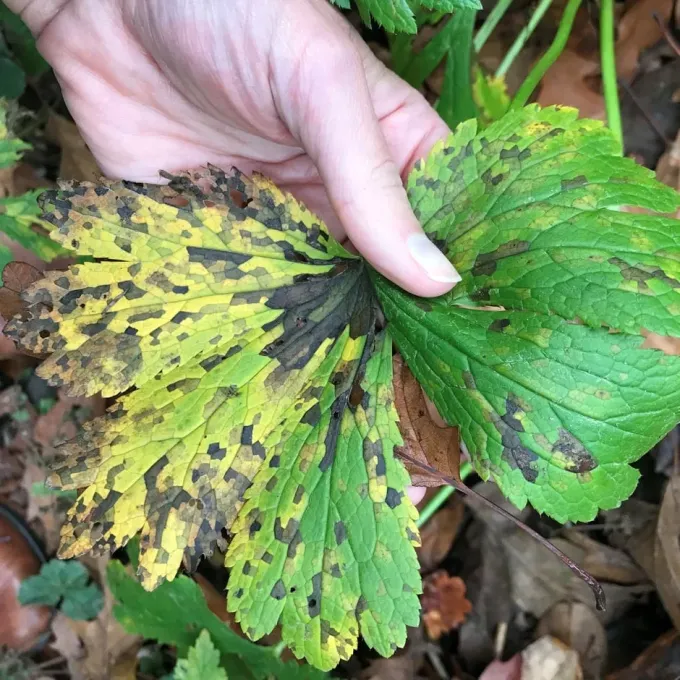
The most distinctive symptom is the appearance of interveinal spots. These spots start as pale green or yellowish patches and gradually turn brown or black as the leaf tissue dies. The shape is typically angular because the nematode's movement is restricted by the leaf veins.
As the infection advances, the leaves dry out, curl up, and fall off. This process often leaves the lower part of the stem bare while the top of the plant may still look somewhat healthy, though it will likely show symptoms shortly after.
Severely infested plants may exhibit stunted growth, shortened internodes, and malformed buds or flowers. In some cases, buds may fail to open entirely, or the entire plant may appear dwarfed and woody.
In high humidity environments, the presence of the nematode can be confirmed by observing the darkening of tissues. In advanced stages, the entire plant may collapse if the parasite enters the vascular system or crown, although this is less common than foliar necrosis.
- Angular brown spots between leaf veins
- Premature yellowing and leaf drop
- Curled and distorted leaf blades
- Stunted growth and malformed flower buds
- General plant decline and loss of vigor
Control measures
Prevention is the most effective management strategy. Always start with certified, disease-free cuttings. Any new plants introduced to a collection should be kept in quarantine for several weeks to monitor for potential symptoms of nematode activity.
Hot water treatment is a standard practice for infested cuttings. Immersing them in water at 45–46°C for 20 minutes is effective at killing the nematodes within the tissues without significantly damaging the plants, provided the timing and temperature are precise.
Sanitation is crucial. Remove and destroy all infested plants immediately. Do not place infested material in home compost piles, as the nematodes can survive the decomposition process and be reintroduced into the soil later.
Change your watering method to avoid overhead irrigation. Watering at the base of the plant keeps the foliage dry, which prevents the nematodes from moving from one leaf to another and reduces the speed of an outbreak.
Keep the surrounding area free of weeds, as many common weeds can harbor the nematode without showing severe symptoms. Regular disinfection of tools using professional-grade biocides can also prevent mechanical transfer between plants during pruning.
Causes diseases · 2
Discussion
No discussions yet — be the first.