
Rice white tip nematode
Aphelenchoides besseyi
Description
How to identify
The rice white tip nematode Aphelenchoides besseyi is a microscopic worm within the phylum Nematoda. It is a foliar parasite that significantly impacts global agriculture, particularly in tropical and temperate regions.
The life cycle consists of an egg stage, four larval stages, and an adult stage. The nematodes are approximately 0.5 to 0.7 mm in length, making them invisible to the naked eye under field conditions.
A crucial survival mechanism is the ability of Aphelenchoides besseyi to enter anhydrobiosis. They can survive for months or even years in dried seeds or crop residues, waiting for favorable moisture.
The nematode is primarily dispersed through infested seeds, nursery stock, and irrigation water. Its ability to colonize various tissues allows it to persist effectively within the host plant.
Feeding occurs by puncturing plant cells with a needle-like stylet. The nematode secretes enzymes that liquefy the cellular contents, which it then ingests, leading to tissue damage and physiological stress.
What it damages
The primary crop affected is rice, causing the well-known "white tip" disease. This condition leads to necrosis at the leaf tips, reducing the plant's photosynthetic capacity.
Beyond rice, Aphelenchoides besseyi is a severe pest for strawberries. It causes "summer dwarf" symptoms, leading to stunted growth, leaf deformation, and a dramatic reduction in berry yield.
The nematode also affects several ornamental plants, such as chrysanthemums and lilies. In these crops, it causes leaf necrosis and bud damage, significantly decreasing their commercial and aesthetic value.
Infestation during the seed formation stage in rice results in shriveled and discolored grains. This reduces both the quality and the milling percentage of the rice crop.
Stunted plants and reduced tillering are common results of high nematode populations, which negatively impact the crop's ability to compete with weeds and respond to nutrients.
Signs of infestation
The most distinctive symptom on rice is the whitening of the leaf tip, which often extends several centimeters. As the leaf matures, these tips become necrotic and turn brown.
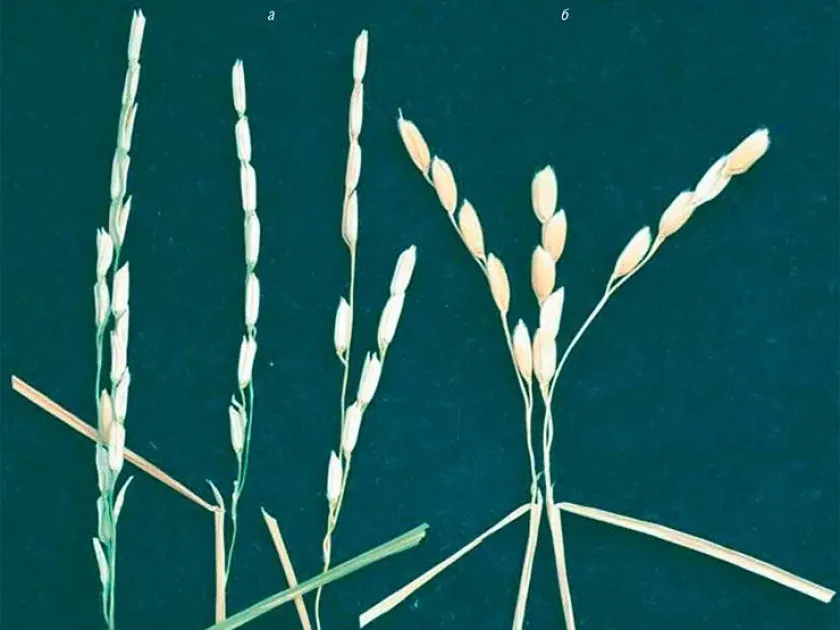
Infested rice panicles are often shorter and bear fewer seeds. The grains themselves may exhibit brown spots on the glumes and appear malformed, contributing to significant yield losses.
On strawberries, the nematode causes leaves to become crinkled and brittle. New leaves may fail to expand fully, and the entire plant appears dwarfed with shortened petioles.
Ornamental plants show irregular necrotic patches on leaves, often bounded by the leaf veins. In severe cases, the flower buds may die before opening, a condition known as "bud blight."
Laboratory diagnosis is essential, as the symptoms caused by Aphelenchoides besseyi can sometimes be confused with nutritional deficiencies or other fungal pathogens.
Control measures
The most effective strategy is the use of nematode-free seeds. Hot water treatment of rice seeds, typically at 50–55°C for 10–15 minutes, is a standard and highly effective control method.
Cultural practices include deep plowing and the destruction of crop residues that may harbor the nematode. Rotating crops with non-host plants can significantly reduce population levels.
For strawberry cultivation, propagating material must be sourced from certified nurseries to ensure it is free of the parasite. Infected plants should be promptly rogued and destroyed.
Chemical control with nematicides is challenging due to environmental regulations and the systemic nature of the pest. Integrated pest management (IPM) is the preferred approach.
Strict phytosanitary regulations regarding the import of seeds and seedlings are critical to prevent the introduction of this nematode into non-infested agricultural regions.
Causes diseases · 1
Discussion
No discussions yet — be the first.