
Head smut of maize
Sphacelotheca reiliana
Head smut is caused by the fungus Sphacelotheca reiliana (often referred to as Sporisorium reilianum), a specialized basidiomycete pathogen. It is a soil-borne disease that exclusively infects corn and sorghum crops.
What the section contains
Head smut of maize
The fungus survives in the soil as teliospores, which remain viable for several years. The primary infection occurs during seed germination, when the fungus invades the seedling tissue before it emerges from the ground.
Once inside the host, the pathogen grows systemically through the plant's vascular system, tracking the growing point of the plant. It remains symptomless throughout the vegetative stage.
Environmental conditions play a crucial role, as the fungus thrives in warm soil temperatures between +15°C and +30°C and moderate soil moisture levels during the planting phase.
Since the fungus does not produce specialized conidia for secondary spread, the annual cycle is defined by the initial infection from the soil reservoir or contaminated seeds.
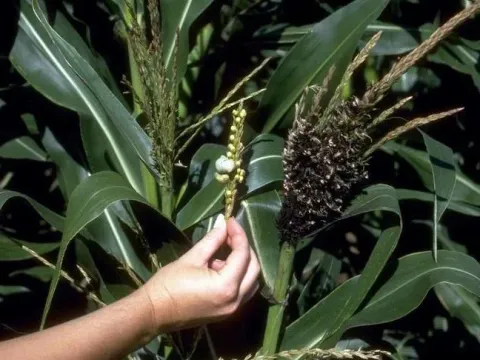
The most visible and destructive damage occurs when the plant begins its reproductive phase. The fungus completely replaces the tassels and ears with dark, powdery masses of teliospores.
Infected ears are transformed into hard, dark, cone-like structures. This process halts grain production entirely, leading to significant yield losses in affected fields.
Plants affected by the pathogen may exhibit stunted growth, excessive tillering, and general physical weakness, making them more susceptible to other biotic and abiotic stresses.
Head smut significantly degrades the market value of the crop. Even a low percentage of infected plants in a field can lead to severe long-term soil infestation.
The disease poses a major economic threat, especially in regions where monocropping is practiced, as the cumulative density of spores in the soil increases exponentially.
Symptoms become apparent only at the flowering stage. The typical sign is the transformation of the tassel into a mass of black spores covered by a thin, fragile membrane.
Ears are often entirely replaced by large, black spore-filled galls. When the membrane ruptures, the spores are released and dispersed by wind, rain, and machinery to surrounding areas.
In addition to spore-bearing structures, plants often show abnormal morphology, such as phyllody, where floral parts revert to leaf-like structures, or excessive branching.
In cases of severe systemic infection, the entire plant may look physically different, showing signs of reduced vigor, premature senescence of leaves, and poor development.
Visual identification at the late stage is easy because the black, dusty masses are distinct from any normal part of the healthy maize plant anatomy.
The primary control measure is the use of high-quality systemic fungicide seed treatments. These chemicals protect the young seedling during the critical infection window.
Crop rotation is essential for long-term management. Avoiding corn production on the same land for at least 3-4 years allows soil spore populations to decline naturally.
Selection of resistant or tolerant corn hybrids is highly recommended. Genetic resistance is the most effective and sustainable way to mitigate the disease in high-pressure areas.
Agricultural practices that promote rapid seedling emergence, such as planting into well-warmed soil at the optimal depth, reduce the time the plant is vulnerable to soil-borne spores.
- Systemic fungicide seed treatment.
- Rigorous crop rotation (3-4 years).
- Planting resistant hybrid varieties.
- Optimal planting timing for rapid emergence.
- Sanitation of machinery to prevent spore spread.