
Xiphinema vulgare
Xiphinema vulgare
Description
How to identify
Xiphinema vulgare belongs to the phylum Nematoda, class Enoplea. It is an ectoparasitic nematode equipped with a specialized feeding apparatus—a long, hollow stylet used to pierce plant root cells and extract their contents.
The nematode's body is filiform, typically reaching 2–3 mm in length. Detecting the pest in soil is only possible through laboratory analysis of soil samples and root systems, as these microscopic worms are impossible to identify visually in the field.
The life cycle consists of an egg stage, four larval stages, and an adult. Development is slow, and the lifecycle can span several months depending on soil temperature and environmental conditions.
Xiphinema species are not only direct pests that weaken plants through mechanical root damage but are also critical vectors for dangerous nepoviruses, such as grapevine fanleaf virus.
These nematodes prefer moist, well-aerated soils with sufficient organic matter, where their populations can persist for many years, moving into deeper soil horizons during unfavorable conditions.
What it damages
The primary damage occurs in fruit crops, berries, and vineyards. Grapes, raspberries, strawberries, as well as various tree species and ornamental shrubs, are highly susceptible to infestation.
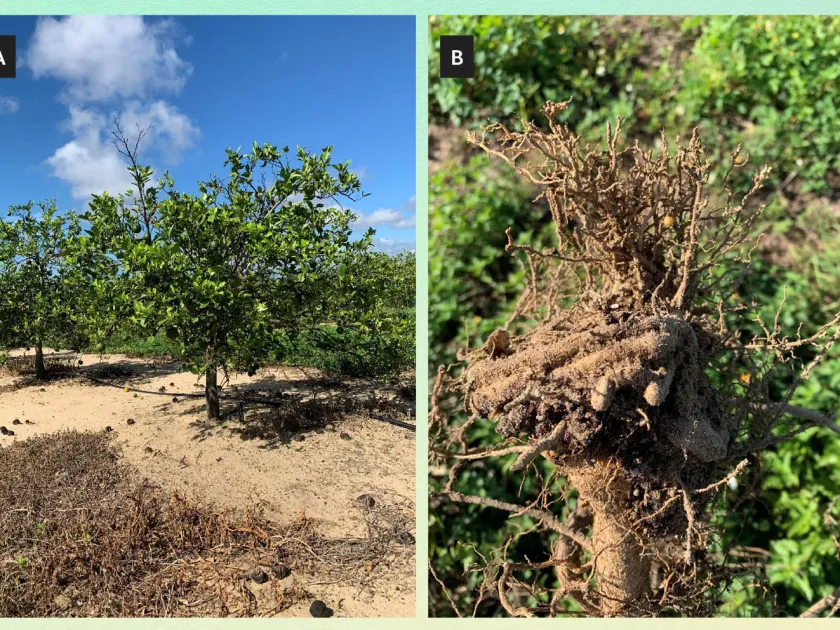
When nematodes feed on roots, characteristic galls or swellings form, and root tip necrosis is frequently observed, which disrupts the plant's ability to absorb water and essential nutrients from the soil.
Signs of infestation
External symptoms of infection often appear as general plant stunting, leaf chlorosis, premature leaf drop, and a significant decrease in crop yield. Plants show signs of micronutrient deficiency despite fertilization.
When nematodes transmit viral infections, typical viral symptoms emerge, such as leaf deformation, mosaic patterns, ring spots, and leaf curling, often resulting in the decline and eventual death of perennial plantings.
Control measures
The primary control method is the use of certified virus-free planting material to prevent the introduction of the pathogen into healthy fields. Implementing crop rotation with non-host plant species is also highly recommended.
Soil fumigation can be effective but requires strict adherence to environmental regulations and professional application. In small-scale settings, using cover crops with phytocidal properties can help suppress nematode population development in the soil.
Causes diseases · 1
Discussion
No discussions yet — be the first.