


SKU #31455
·
66 views
Contribution
Sweet Corn
User rating
0 votes0% positive reviews
No ratings yet — be the first.
Assignment
Freeze Seeds
Recommended Density
70-80 thousand pcs/ha
Registration year
2007
About product

A technological solution for deep processing with high stability of commercial grain.
Assignment
Freeze Seeds
Recommended Density
70-80 thousand pcs/ha
Registration year
2007
Description
Technological potential of the variety
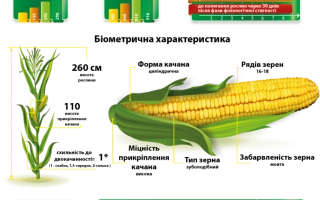
When planning a planting campaign, it is crucial to understand how the crop behaves during the growing season. The "Vnesok" variety, developed by the Institute of Grain Crops of the NAAS, is a classic of Ukrainian selection for the sweet corn segment. It demonstrates stable performance, allowing for predictable yields.
Field "Operational" Features
- Plant density: A seeding rate of 70,000–80,000 plants/ha is optimal for maintaining vitality and forming a high-quality ear. At these levels, the plants thrive without critical competition for light and nutrients.
- Application and marketability: The variety's specification is strictly focused on grain freezing. For processors, this ensures high grain density and proper geometry, which remains intact during intensive industrial processing.
- Agrotechnics: Yield stability directly depends on the nutrition regime. The "Vnesok" variety is sensitive to the background fertility; therefore, when targeting 80,000 plants/ha, it is essential to ensure appropriate fertilization to avoid micronutrient deficiencies during the active growth phase.
Farmers working with this variety note the predictability of maturation timelines and the lack of sharp quality fluctuations between batches. It is a reliable technological choice for those specializing in deep processing of sweet corn, requiring a standardized product directly from the field.
Specifications
| Assignment | |
|---|---|
| Recommended Density | 70-80 thousand pcs/ha |
| Registration year | 2007 |
| Catalog | Catalog → Sweet Corn |
| Legal data |
Show · 1
|
| Country | Ukraine |
Store offers
Prices are updated on loadLoading offers…
Aggregator catalog: prices are collected automatically from store websites, normalized by AI and converted at the current exchange rate. Before ordering, confirm the price and availability on the store's website. This block is not indexed by search engines — the data is loaded after the page opens.
Not yet комментариев. Be the first!
Alternatives
Sweet corn seeds · similar varieties






See also
Often considered together with this variety







Recently viewed
Products you’ve viewed on this site
Reviews · 0