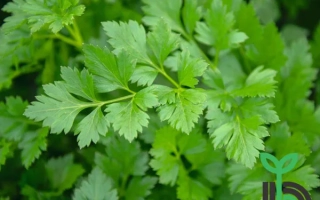
Tango (Tango) is a medium-maturing celery variety developed by Bejo Zaden, intended for producing juicy and succulent stalks up to 50 cm long and 3-4 cm wide. The plant forms a vertical rosette with light green or dark green leaves and bluish-green, curved stalks without fibers. The rosette mass reaches approximately 1 kg. The variety is characterized by high yield — from 1.9 to 3.7 kg per square meter — as well as resistance to bolting and rust, ensuring stable fruiting even in dry and hot climates. The vegetative period is approximately 60-65 days, and cultivation is carried out by seedlings sown in trays and transplanted once the plant reaches three leaves.
For successful cultivation of Tango celery, choose sunny areas with neutral or slightly acidic soil, provide regular and adequate watering (about 20 liters per square meter), and conduct loosening and fertilization. Both insufficient and excessive moisture negatively affect the quality and quantity of the harvest. The stalks of this variety have dense flesh and juicy texture, making them ideal for fresh consumption, canning, freezing, and drying. Due to their wide base at the stalks' base, they are easily bundled, which is especially valuable for retail sales in markets and supermarkets.
In addition to culinary advantages, Tango celery has medicinal properties: its greens contain vitamins A, C, B1, B2, PP, as well as potassium, phosphorus, and calcium. Regular consumption promotes improved appetite, increased body tone, normalized metabolism, and positively affects the nervous system and sleep quality. The variety stores well at around 0°C and exhibits high transportability, preserving freshness and flavor for an extended period.