
Flooring in Farm Utility Rooms: Why Modern Materials Are Replacing Traditional Coverings
A practical guide to choosing wear-resistant flooring for utility and auxiliary rooms at agricultural enterprises.
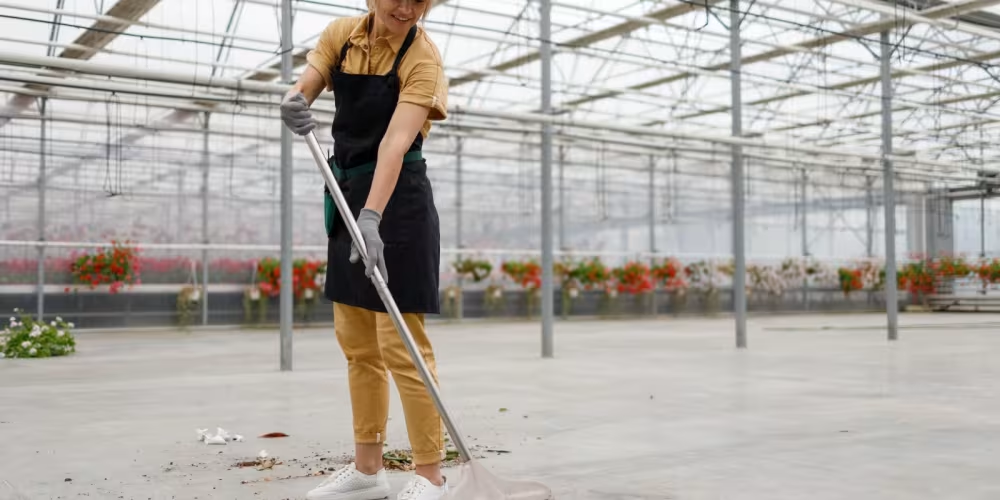
Requirements for Floors in Utility Zones
Modern outfitting of auxiliary and technical spaces in agro-industrial facilities requires a fundamentally new approach to selecting finishing materials. Traditional concrete screeds and wooden flooring often fail to cope with heavy use, constant temperature fluctuations, and exposure to aggressive environments. On a farm, flooring must withstand significant mechanical loads, constant staff movement, and contact with moisture and various chemical compounds used for disinfection and cleaning. This is why owners of homestead and industrial agricultural enterprises are increasingly turning to high-tech solutions capable of ensuring durability and ease of maintenance.
Special attention during the design of technical spaces is paid to the safety of movement for people and equipment. Surfaces must not be slippery, even when exposed to water, industrial oils, or organic residues. Additionally, the floor's ability to absorb vibrations from operating equipment and reduce noise levels is taken into account, significantly improving overall working conditions at the facility.
Practicality and Installation Features
When choosing the optimal solution for spaces with high hygiene requirements, it is critically important to consider the material's resistance to wear and deformation. Professional builders and engineers note that high-quality SPC vinyl demonstrates excellent operational characteristics in difficult operating environments thanks to its multi-layer structure and rigid mineral-polymer base. This material is not afraid of direct contact with water, does not rot, is not susceptible to mold and mildew, and is easily cleaned of any dirt using standard detergents. An important advantage is dimensional stability under temperature fluctuations, which allows such coverings to be used in unheated or seasonally used premises.
The installation technology for modern composite coverings is based on the use of locking systems or specialized polymer adhesives, ensuring a monolithic sheet. This eliminates the risk of moisture penetrating into joints and under the floor base, which is especially valuable for facilities with high sanitary requirements. The speed of installation allows finishing work to be completed in a short time without stopping key production processes.
Hygiene Standards and Chemical Resistance
Auxiliary and technical zones require regular sanitary treatment using strong disinfectants, alkalis, and acids. Ordinary building materials quickly degrade under the influence of such chemicals, losing their protective properties and appearance. Modern polymer and mineral modules are inert to most aggressive chemicals, which guarantees the preservation of the structure throughout the entire period of operation. The smooth yet non-slip texture of the top layer prevents the accumulation of dirt and the reproduction of bacteria.
The simplicity of daily maintenance reduces labor costs for maintaining cleanliness. The absence of a porous structure eliminates the absorption of industrial liquids and unpleasant odors, which is critically important when equipping facilities related to the storage of feed, inventory, or the processing of agricultural products.
Selection Criteria and Operation Recommendations
Assessment of expected mechanical load and pedestrian traffic intensity
Analysis of humidity levels and the frequency of wet cleaning using disinfectants
Checking the flatness and strength of the base foundation before laying the finish layer
Compliance with temperature conditions and technological gaps during coating installation
Proper selection of materials for arranging interior spaces within an agricultural complex significantly reduces current repair and maintenance costs in the long term. Modern composite modular coverings provide the necessary level of safety, prevent slipping, and create comfortable conditions for staff work. Investments in high-quality finishing materials pay off due to their long service life and minimal requirements for complex maintenance, making them the optimal choice for rational owners.
A comprehensive approach to designing technical zones also includes taking into account the prospects for expanding business activities. Early selection of universal flooring will eliminate the need for dismantling and re-repairing when changing the profile of room use in the future, ensuring maximum flexibility of the farm's infrastructure.
Editorial team agronom.info
Materials are prepared by the portal's agronomists and editors. We use only trusted sources: Ukrainian agricultural universities, variety registries, open scientific publications.
Related articles
Not yet comments. Be the first!
Comments