
Vegetable farming gains ground in Nepal’s Barahakshetra as farmers turn idle land into income
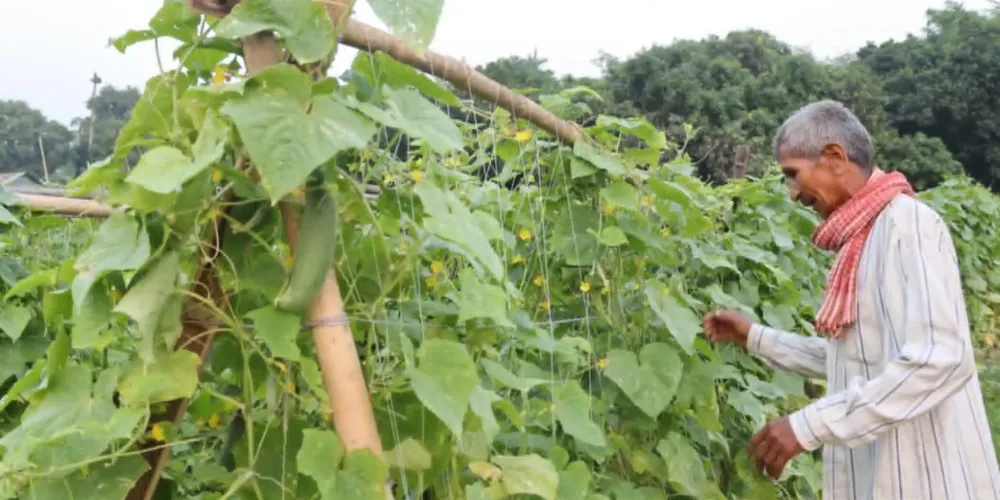
Commercial vegetable farming is expanding in Barahakshetra Municipality in Nepal’s Sunsari district, where farmers are increasingly turning previously idle land into productive plots. According to Peoples’ Review, growers in the area are harvesting cucumbers, tomatoes, beans, sponge gourds, cabbages and other seasonal vegetables, and many families now see farming as a realistic local income source rather than something secondary to migrant labour.
The produce is being sold into markets in Dharan, Itahari, Inaruwa, Barahakshetra and nearby trading centres. Dinesh Rajbanshi of Barahakshetra-7 has been engaged in commercial vegetable farming on nearly two bighas for six years. After spending three years working abroad, he returned home and said the family now earns enough from vegetables to cover household costs and save more than was possible through overseas labour.
Nitu Rajbanshi and her husband Ramesh are farming vegetables commercially on three bighas. They grow cucumbers, beans, sponge gourds, cabbages and tomatoes. The family said maize and millet had previously covered little more than food needs, while the shift into vegetables created a stronger cash economy. In good weather, and with adequate irrigation and fertiliser management, they estimate annual vegetable sales can reach 700,000 to 800,000 Nepalese rupees.
Another example comes from Yukti Chaudhary of Tinkune in Barahakshetra-8. He began six years ago on just one kattha of land and has expanded to four bighas, building Ritika Agriculture Farm into a business that now generates more than 1 million Nepalese rupees a year. Chaudhary uses manure from his cattle and goats as organic fertiliser and says it helps produce healthier, higher-quality crops.
Marketing conditions have also helped the transition. Chaudhary said traders come directly to the farm to buy produce, paying roughly 10 Nepalese rupees per kilogram below the open market price, which still saves farmers the cost and difficulty of arranging their own sales. The Sunsari Agriculture Knowledge Centre is supporting the shift with subsidies, improved seed, irrigation equipment, soil testing and training in fertiliser and pesticide management, while also advising growers on storage, pest pressure, market issues and weather-related risks.
Not yet comments. Be the first!
Comments · 0