
Swiss Scientists Buried 2,000 Pairs of Underwear to Evaluate Soil Health
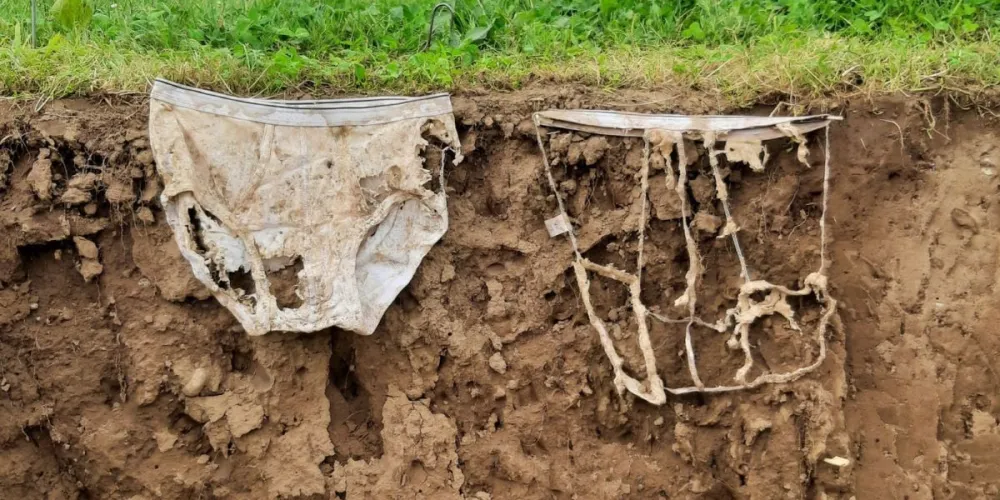
Scientists from the University of Zurich and the Agroscope institute have conducted a large-scale experiment burying over 2,000 pairs of cotton underwear across Switzerland. The project, titled 'Proof by Underpants', was designed to draw public attention to a critical but often overlooked resource: soil quality. The research findings, published in the journal Plants, People, Planet, demonstrated that the state of the textile after two months in the ground serves as a clear indicator of biological activity.
Approximately 1,000 volunteers participated in the experiment, working alongside scientists to place the cotton items in gardens, meadows, fields, and lawns. After two months, the items were retrieved for analysis. In some locations, the fabric was reduced to nothing but seams, while in others, it featured only minor holes. Researchers believe that using underwear is a more 'playful' and accessible outreach tool compared to traditional methods, such as using tea bags to measure organic decomposition rates.
A key factor determining the level of decomposition was land use. The study revealed that private gardens showed the highest levels of biological activity, with approximately 58% of the cotton material decomposing in just two months. This is attributed to the fact that garden owners frequently fertilize and aerate their soil. Conversely, lawns showed the lowest performance, with a decomposition rate of about 40%, indicating lower soil fertility in these areas due to monocultural land management.
Agroecologist Franz Bender described the project as one of the most rewarding experiences of his career. The researchers emphasized that topsoil provides 95% of the world's food and acts as the second-largest carbon reservoir on the planet. Despite this, soil degradation rates remain dangerously high. The project authors hope that their proposed 'Underpants Index' will help the general public understand the importance of soil protection for future generations.
However, high biological activity can also have a downside. In private gardens, higher concentrations of nitrogen, potassium, and especially phosphorus were recorded, resulting from excessive fertilizer application. Scientists warn that an overabundance of nutrients can disrupt ecosystem balance and threaten surrounding waterways. Thus, the project not only measured the activity of soil organisms but also raised important questions regarding sustainable land management practices.
Not yet comments. Be the first!
Comments · 0