
No winter in India? WMO warns of 'Godzilla' El Niño effects until February 2027
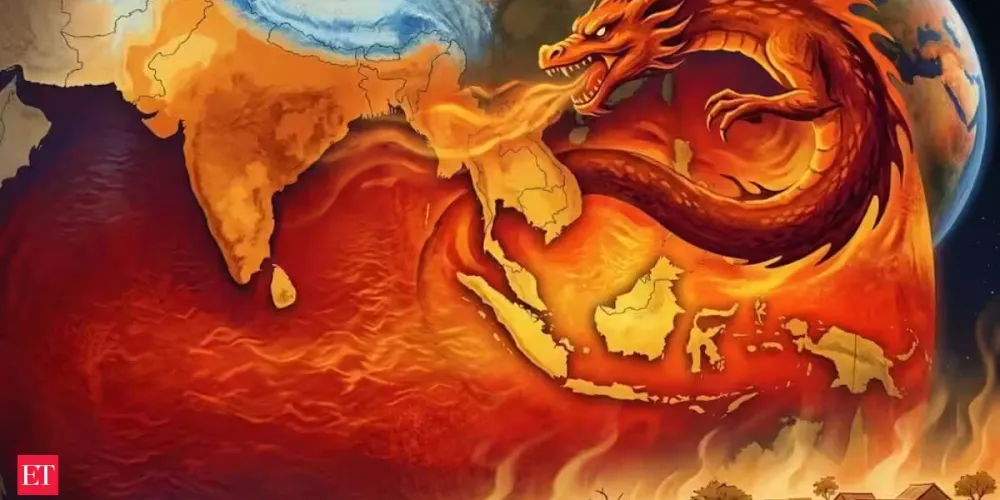
The World Meteorological Organization (WMO) has issued a grave warning regarding the climate phenomenon known as El Niño, which is currently strengthening over the tropical Pacific. According to the latest forecasts, there is a nearly 100% probability that this anomalous warming event will persist until at least February 2027. Experts have characterized the current event as a "super" or "Godzilla" El Niño, emphasizing its exceptional intensity and potential impact on global weather patterns.
The situation in the Pacific Ocean is a cause for significant concern among meteorologists. The Niño 3.4 index, which measures sea surface temperatures, averaged 1.5°C above normal from May to July 2026, with the anomaly reaching 2°C by July. Furthermore, weekly readings from late July to mid-August recorded deviations ranging from 2.2°C to 2.6°C above the seasonal average. Even more strikingly, sub-surface ocean temperatures in certain areas exceeded the norm by more than 8°C, providing strong support for the event's intensification.
For India, the unfolding of this phenomenon may result in significant changes to the 2026–2027 winter season. There are growing concerns that the traditionally cold winter could turn out to be uncharacteristically mild, raising questions about whether the public will even require woolen clothing. WMO seasonal forecasts indicate a high risk of above-normal temperatures across nearly all landmasses from September to November 2026, a prospect that has already drawn the attention of agricultural stakeholders and government officials.
UN Secretary-General António Guterres described the current event as a "supersized" El Niño, warning that rising ocean temperatures are escalating the risks associated with extreme weather events globally. Concurrently, WMO Secretary-General Celeste Saulo has urged governments to begin immediate preparations to mitigate potential disruptions to critical sectors, including agriculture, public health, energy, water supplies, and disaster management.
While the strength of El Niño is a primary indicator, experts note that for India, the final outlook for winter depends on the complex interplay of various climate drivers, including conditions in the Indian and Atlantic Oceans. Although a powerful El Niño is capable of altering atmospheric circulation on a global scale, its influence on specific regions remains a multi-faceted and unpredictable process that requires constant monitoring by meteorological agencies.
Not yet comments. Be the first!
Comments · 0