
At 62, This Farmer Found a Social Security Tax Break Hidden Inside His USDA Conservation Checks
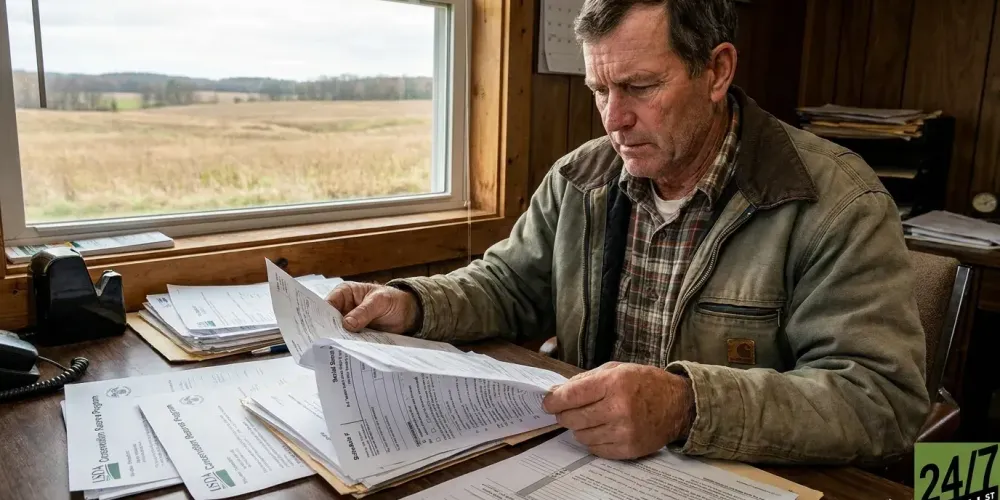
Many American farmers turning 62 are navigating the complexities of how Conservation Reserve Program (CRP) rental payments are taxed. While these USDA payments are generally classified as self-employment income—subject to Social Security and Medicare taxes—a specific IRS carve-out offers a hidden path to tax relief for those who have already started claiming Social Security retirement benefits.
If an individual is receiving Social Security benefits at the time a CRP payment is received, that payment can be subtracted from net earnings when calculating the self-employment tax on Schedule SE. For a farmer receiving a typical $40,000 annual CRP check, this exemption can translate to annual tax savings of approximately $5,650, provided they have not already hit the Social Security wage ceiling through other active farming profits.
Choosing to claim Social Security at 62 involves a trade-off. For anyone born in 1960 or later, the full retirement age (FRA) is 67. Claiming benefits at 62 results in a permanent 30% reduction in monthly payments. For example, a monthly benefit of $2,400 would drop to approximately $1,680. This decision affects not only long-term income but also potential cost-of-living adjustments and survivor benefits for spouses, making it a critical financial calculation.
It is important to note that this tax break does not render CRP income tax-free. These payments remain subject to federal income tax and can impact income-based calculations and the taxation of Social Security benefits themselves. The benefit is strictly limited to the avoidance of the self-employment tax, which can save farmers tens of thousands of dollars over the life of a multi-year CRP contract.
Farmers must also be aware of the Social Security earnings test. If a farmer continues to actively operate their land before reaching the full retirement age, they may still face benefit withholding if their total net earnings from self-employment exceed annual limits. Because the CRP exclusion only applies to the conservation payments, other farm profits could still trigger this test. Consequently, this tax break is most effective for farmers who are transitioning toward a reduced operational role, allowing CRP payments and Social Security to serve as a sustainable retirement foundation.
Not yet comments. Be the first!
Comments · 0