
How Climate Resilience and Measurable Impact Are Reshaping the Global Cotton Value Chain
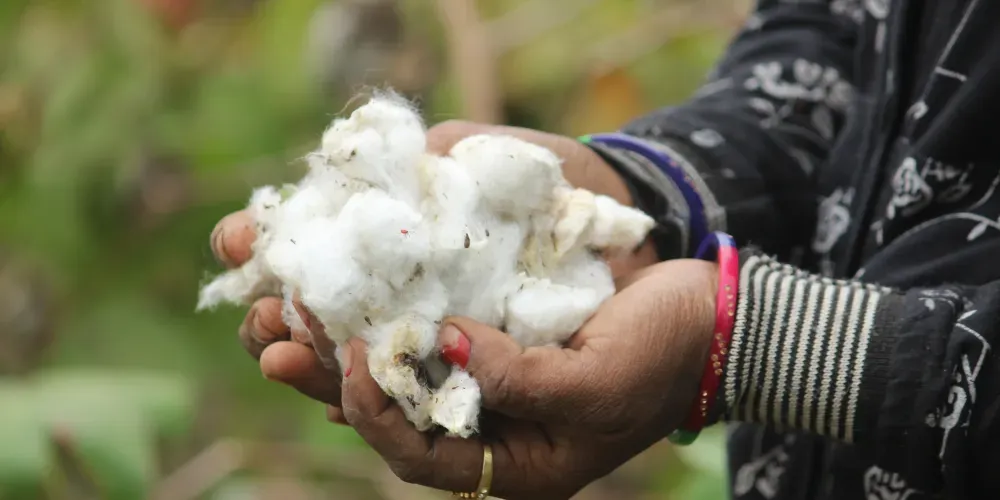
As the global fashion and textile sectors observe World Cotton Day under the theme “Cotton for Good: Building Prosperity Through Trade, Transformation and Partnership,” the industry stands at a critical juncture. Climate volatility, shifting regulatory pressures and economic uncertainty are rapidly transforming cotton farming from a traditional agricultural endeavor into a complex, high-stakes business challenge.
Ensuring supply chain resilience now requires more than environmental stewardship—it demands transparent partnerships that drive measurable outcomes and deliver real economic value to farming communities. Alison Ward, CEO of social enterprise CottonConnect, highlights that climate volatility is no longer a future risk but an immediate reality reshaping how and where cotton is grown, with erratic rainfall, droughts, floods, and extreme heat.
Research from the Cotton 2040 initiative indicates that by the 2040s, half of the world’s cotton-growing regions could face high or very high exposure to at least one climate hazard, while 75 percent could experience increased heat stress. Consequently, climate resilience is increasingly becoming a core business issue, prompting forward-thinking brands to invest in the resilience of farming communities ahead of disruptions.
Beyond climate pressures, farmers must navigate rising input costs, water scarcity, tightening margins, labor constraints, and rigorous traceability mandates. Ward emphasizes that a major misconception is separating sustainability from farmer livelihoods. In reality, they are deeply connected; if sustainable practices do not make economic sense for producers, they will never be adopted at scale.
CottonConnect’s approach directly addresses this by working with farmers to improve soil health, reduce reliance on costly synthetic inputs, and build climate resilience while connecting them to transparent and responsible supply chains. Long-term sector success ultimately depends on aligning environmental health with the prosperity of the people who cultivate the crop.
Not yet comments. Be the first!
Comments · 0