
Indian Cabinet Approves 1-10% Hike in Rabi Crops Minimum Support Prices
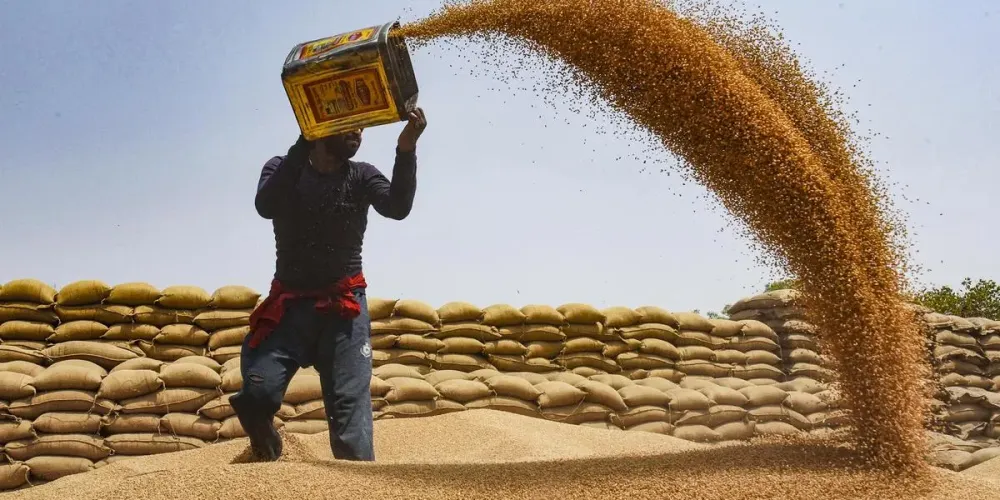
The Indian government has announced minimum support prices (MSPs) for rabi crops for the 2027-28 marketing season after the Cabinet approved a 1 to 10 per cent hike on Wednesday, just a day before the winter sowing season commenced. The lowest hike was recorded for wheat at less than 1 per cent, while the highest increase of 10.3 per cent was granted to safflower.
Following the revision, the MSP for the winter season's primary cereal, wheat, now stands at ₹2,610 per quintal compared to ₹2,585 per quintal announced for the 2026-27 marketing season (April-March). Briefing the media after the Cabinet meeting, Information and Broadcasting Minister Ashwini Vaishnaw stated that the Cabinet approved the MSP recommendations made by the Commission for Agricultural Costs and Prices (CACP) as proposed by the Ministry of Agriculture.
Elaborating on the pricing structure, the minister noted that while the production cost of wheat is ₹1,264 per quintal, the MSP has been set at more than double that amount, reaching ₹2,610 per quintal for 2027-28. The total payout to farmers is estimated to be ₹90,962 crore for 324 lakh tonnes of produce in the 2027-28 marketing year. Vaishnaw added that the MSP levels were determined by factoring in production costs, El Nino concerns, as well as prevailing global and domestic price trends.
Regarding other rabi crops, the MSP for barley has been increased by 6.3 per cent to ₹2,286 per quintal from ₹2,150, gram (chana) has been hiked by 1.4 per cent to ₹5,958 from ₹5,875, lentil (masur) by 5.6 per cent to ₹7,390 from ₹7,000, mustard by 6.7 per cent to ₹6,613 from ₹6,200, and safflower to ₹7,215 from ₹6,540 per quintal. Furthermore, the government has established a total foodgrain production target of 177.72 million tonnes (mt) for the current rabi season, comprising 121 mt of wheat, 17.20 mt of pulses, and 22.30 mt of nutri/coarse cereals.
Industry experts point out that the higher MSP increases for oilseeds and pulses, alongside a modest rise for wheat, signal a calibrated policy shift towards crop diversification, import substitution, and nutritional security. Satyam Shivam Sundaram, Partner at EY LLP, noted that stronger incentives for crops like rapeseed-mustard, safflower, and masur align with India's long-term objectives of enhancing self-sufficiency in edible oils and pulses. However, analysts stress that meaningful shifts in cropping patterns require assured procurement, reliable market access, and targeted investments in storage, processing, and agricultural logistics.
Not yet comments. Be the first!
Comments · 0