
Iran conflict pushes U.S. fuel costs up; risks for fertilizer supply and farm input prices
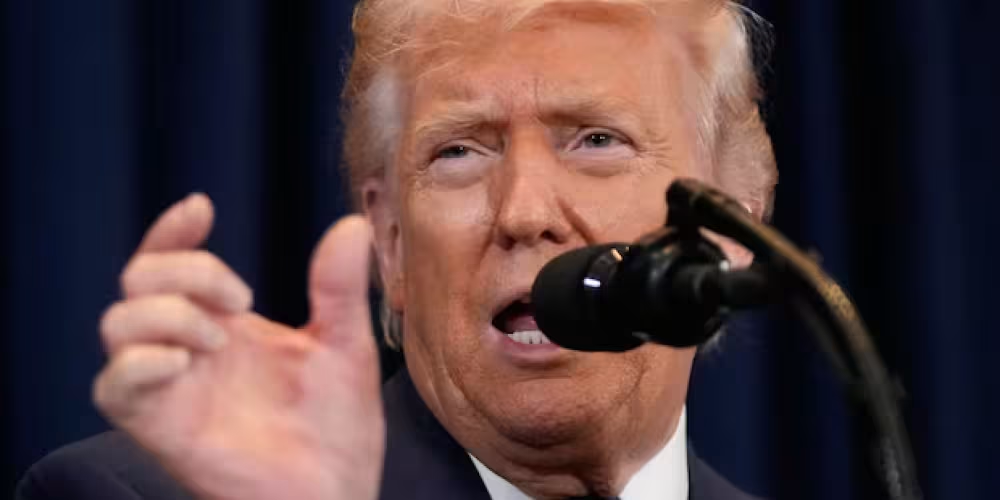
U.S. President Donald Trump acknowledged higher crude oil and gasoline prices as a short-term effect of the U.S.-Israeli military campaign against Iran, while asserting that long-term oil supplies will be more secure and that prices for American families will fall.
Fuel costs have already risen sharply. AAA reported the national average price of a gallon of gas in the United States reached $3.48, up 48 cents from the previous week — a one-week increase described as larger than the 45-cent spike seen in 2022 after Russia’s invasion of Ukraine.
Analysts warn the rise in fuel prices has immediate implications for household cost of living and political sentiment ahead of the November midterm elections. Dan Cassino of Fairleigh Dickinson University said gas prices are a visceral, immediate measure of living costs; Kevin Book of ClearView Energy Partners and Brittany Martinez of Principles First warned that persistent price spikes could pose political risk for incumbents.
Beyond direct consumer impacts, the conflict poses risks to agricultural supply chains. Countries bordering the Persian Gulf supply key fertilizer feedstocks and intermediates. Disruptions to shipments through the Strait of Hormuz could push up fertilizer prices, which in turn risks higher input costs for farmers and higher food prices globally.
Energy Secretary Chris Wright suggested the worst-case gas price spike might last weeks rather than months and aimed to get prices back below $3 per gallon soon. Nevertheless, observers note broader economic indicators remain mixed: U.S. employment and inflation have weakened relative to prior years, and job creation in 2025 was lower than in 2024.
If fuel and fertilizer price increases persist, farmers and agricultural supply businesses could face higher operating costs for field operations, transport and crop inputs. These cost pressures can feed through to food prices and influence planting, input purchasing and logistics decisions in the coming seasons.
The reporting and analysis referenced include coverage from The New York Times, Bloomberg, Reuters, CNBC, AAA data and CBC News reporting by Mike Crawley. Political and economic commentators cited in the coverage stress the interplay between energy shocks, agricultural inputs and the broader economy.
Not yet comments. Be the first!
Comments