
MiDA chief flags major losses from neglected farm infrastructure in Ghana’s middle belt
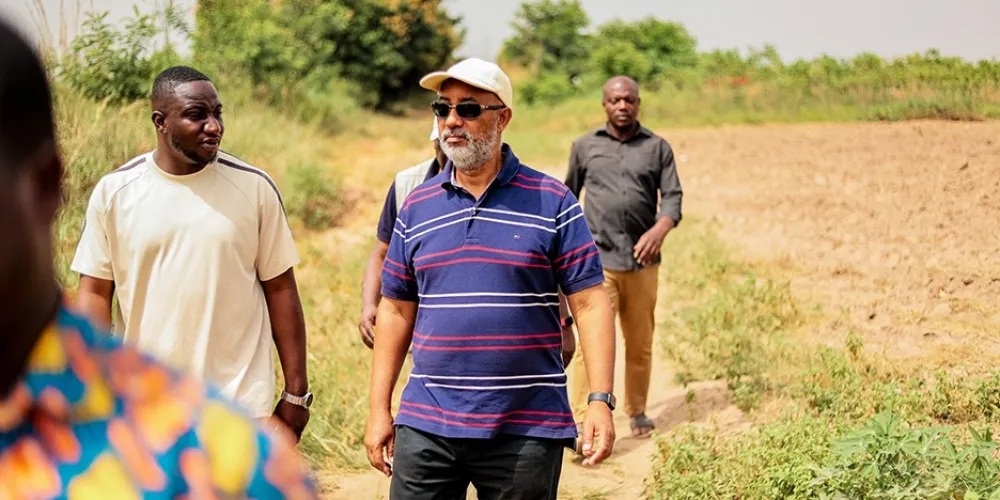
Ghana’s Millennium Development Authority (MiDA) has raised concerns about deteriorating agricultural infrastructure across key farming areas in the country’s middle belt. The warning came after a seven-day field mission led by MiDA chief Alex Mould, covering parts of Ashanti, Bono, Ahafo and Bono East. The assessment reviewed irrigation potential, water resources, value-chain constraints and institutional coordination needs for future investment planning.
During the tour, MiDA teams met with traditional authorities, district officials and agribusiness operators, while inspecting dams, irrigation schemes, inland valleys, markets and agro-processing facilities. Mould said multiple sites showed years of weak operations and maintenance, turning earlier capital spending into underperforming assets. In practical terms, that means existing infrastructure is not delivering expected productivity or farm-income gains.
At the Subinja irrigation site, the delegation reported that critical equipment had been stripped, including four pumps and an electricity transformer that were previously installed in the pump house. MiDA said rehabilitation would require a coordinated technical program with the Ghana Irrigation Development Authority and the Ministry of Food and Agriculture, covering dam restoration, pumping systems, pipelines, canal rehabilitation and grid reconnection.
The agency also highlighted underused rice potential in Tano North and Tano South. According to the report, one rice scheme with capacity for roughly 1,000 acres is currently cultivating only about 300 acres. MiDA estimates that completing the unfinished dam works and installing a concrete water-distribution canal could enable two annual harvests and lift paddy output from around 1,000 tonnes to roughly 6,000-7,000 tonnes per year.
Mould characterized such sites as brownfield opportunities: existing agricultural assets that can be revived faster and at lower risk than fully greenfield projects. If executed, that strategy could support downstream processing, including local rice milling, strengthen domestic agribusiness linkages and reduce dependence on imported rice and food commodities. For Ghana’s farm economy, the message is clear: restoring neglected infrastructure may deliver a faster productivity dividend than starting from scratch.
Not yet comments. Be the first!
Comments · 0