
India: Assam tea industry faces climate-driven labor crisis
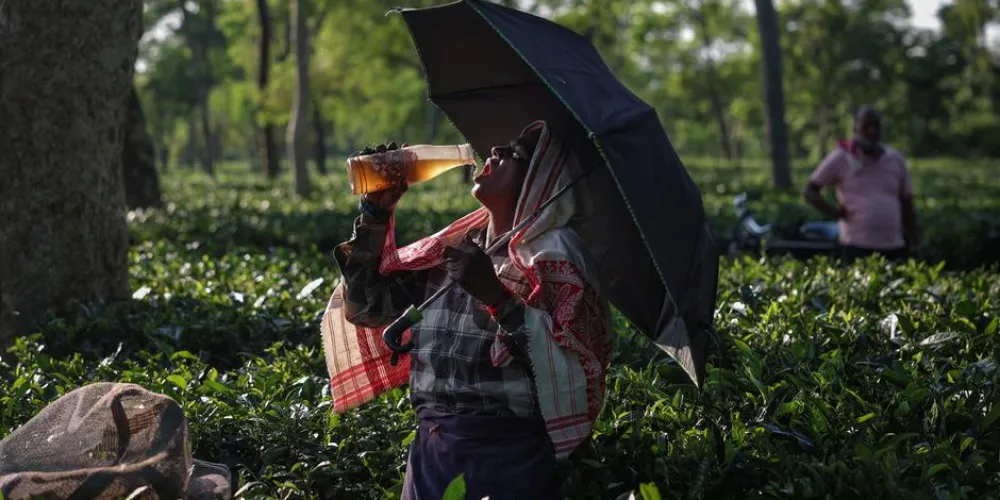
The tea industry in the Indian state of Assam is facing a deep crisis driven by a combination of extreme weather conditions and economic instability. Plantation workers like Bidesh Kamar and Sumitra Tanti are increasingly struggling with the unpredictability of their working conditions. Recent devastating floods and storms, which damaged more than 50 tea gardens, have only exacerbated the situation, leading many professional tea pickers to consider leaving the industry in search of more stable income.
Assam accounts for about 52% of India's tea production, supporting the livelihoods of 700,000 plantation workers and 140,000 small tea growers. However, the traditional model of hand-picking tea is becoming less viable. According to estate owner Sanjiv Gogoi, producers are grappling with falling yields, rising costs for fertilizers and fuel, and a shortage of reliable labor. Small producers, who contribute nearly half of the state's tea output, are particularly vulnerable due to their lack of bargaining power over pricing.
The climate factor plays a crucial role: temperatures in major tea-growing districts often reach 36 to 40 degrees Celsius (97-104 degrees Fahrenheit), causing severe heat stress for both plants and people. Research shows that every 1°C rise in temperature can reduce tea yields by about 87 kilos per hectare in India. Workers, who spend hours under the scorching sun, suffer from dehydration and exhaustion, which directly impacts the quality of plucking—the most vital stage for obtaining high-quality tea.
Economic pressure is intensified by the stagnation of tea prices while operating costs continue to rise. According to data from the North Eastern Tea Association (NETA), labor costs now account for approximately 60% of total production costs. With current daily wages ranging from 250 to 280 Indian Rupees, workers are demanding an increase to 350–500 Rupees to meet the rising cost of living. Unions report that low wages have led to absenteeism reaching over 50% in some districts, as workers shift toward construction or government employment schemes.
Industry experts, such as veteran planter Harkirat Singh Sidhu, are calling for immediate changes. He argues that mechanization of harvesting is becoming a necessity rather than an option. Furthermore, he advocates for a shift toward regenerative farming, improved drainage networks, and canopy management to protect tea bushes. Without adapting to these new climate realities, the industry risks permanently losing its skilled workforce and its competitiveness in the global market.
Not yet comments. Be the first!
Comments · 0