
Hasaka Agriculture Directorate Announces Completion of Wheat Harvesting
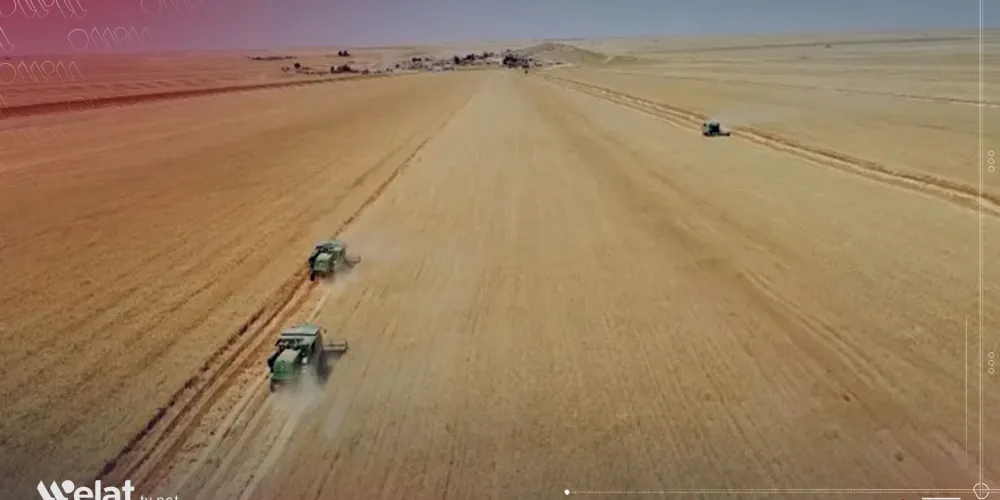
The Agriculture Directorate in Hasaka Governorate officially announced on Sunday, July 12, 2026, the completion of the winter crop harvest. The campaign included extensive harvesting of wheat, barley, and lentils across all agricultural regions of the governorate. A total of 45 harvesters were utilized throughout the season to manage the vast output of the region's fields.
According to the Directorate's official statistics, the total area harvested reached 776,200 hectares. The Deputy Director of Agriculture in Hasaka, Engineer Ezzadin al-Hisso, confirmed that harvesting operations are now finished in all agricultural zones. The breakdown of the wheat harvest shows 100,200 hectares of irrigated wheat and 363,000 hectares of rain-fed wheat successfully gathered.
In addition to wheat, the region saw significant yields of other crops. The harvested area for barley reached 21,000 hectares of irrigated land and 268,000 hectares of rain-fed land. Furthermore, the harvest for lentils covered 2,200 hectares of irrigated fields and 21,800 hectares of rain-fed fields, showcasing the diversity and productivity of the local agricultural sector.
Parallel to the conclusion of field work, the marketing of the wheat crop to authorized collection centers continues. These facilities are managed by the Syrian Grain Trading Corporation’s local branch. Currently, the daily intake of wheat at these collection centers is approximately 30,000 metric tons, supporting the regional supply chain.
As the harvest season approaches its end, officials expect that the volume of marketed wheat will begin to decrease over the coming days. The successful completion of this harvest cycle underscores Hasaka’s critical position in Syria’s agricultural landscape, with farmers and authorities working together to ensure the collection of the season's output remains efficient.
Not yet comments. Be the first!
Comments · 0