
Experts warn Iran faced ‘water bankruptcy’ before wartime bombing — ancient qanats abandoned, aquifers over-pumped
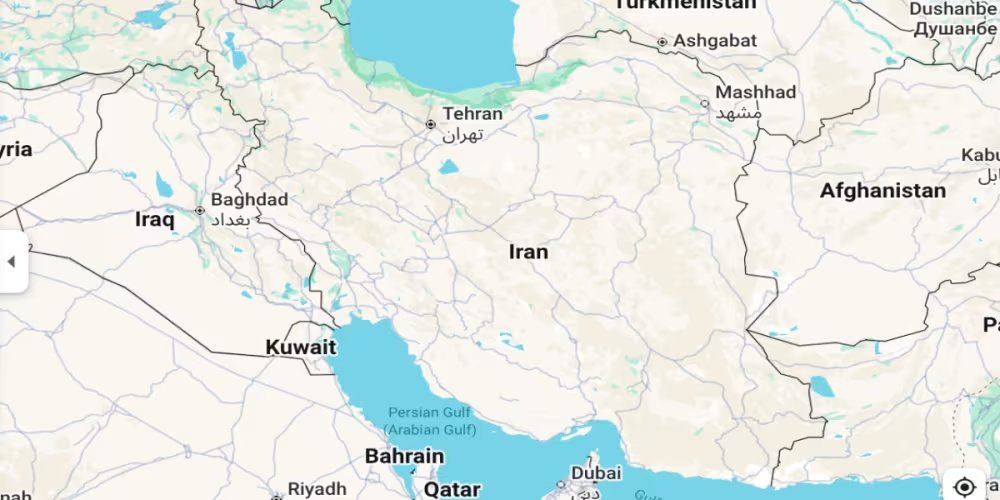
Yale Environment 360 and international researchers warn Iran is approaching a condition described as ‘water bankruptcy’ after decades of infrastructure choices and over‑extraction that have depleted freshwater reserves.
For millennia Iran relied on qanats — underground gravity-fed tunnels that channeled groundwater from aquifers to settlements. Reports estimate about 70,000 qanats with a combined length exceeding 250,000 miles; these systems were resilient to droughts, floods, earthquakes and wartime disruption.
In the 20th century Iran pivoted to dam construction and mass drilling of wells. Over the past 40 years more than a million irrigation wells were drilled, increasing groundwater withdrawals while qanat networks fell into disrepair and water tables declined.
A drought lasting more than five years in northern Iran, including the Tehran region, has deepened shortages. Officials and experts have even discussed relocating roughly 10 million residents of Tehran to less affected areas because of water scarcity.
Large dams built in the late 20th century made Iran one of the world’s top three dam builders but also increased evaporation losses, reduced downstream flows and drained wetlands and underground reserves. Many reservoirs were created on rivers too small to sustain them.
Transboundary developments compound the problem. Afghanistan’s dam building — including the Pashdan Dam, operational since August — reportedly can control up to about 80% of the Harirud River’s average flow, threatening eastern Iran’s water supply, including Mashhad.
A global study of 1,700 groundwater sites in 40 countries identified 32 of the world’s 50 most over‑pumped aquifers in Iran. Critical basins such as the West Qazvin Plain, Arsanjan, Baladeh and Rashtkhar show water‑table falls up to 10 feet (≈3 m) per year.
Hydrologists warn much damage could be permanent: falling water tables and land subsidence can destroy aquifer storage capacity. Around 90% of water taken from rivers and aquifers in Iran is used for agriculture, intensifying pressure on supplies.
Experts estimate Iran loses about 20% of rainfall to uncollected flash floods; they say up to 80% of that runoff could be diverted to recharge aquifers, but the government has largely rejected such measures.
Plans to build a large desalination system on the Persian Gulf with roughly 2,300 miles of pipeline to drought‑hit provinces are under discussion, but high costs make desalinated water impractical for agriculture.
Climate warming and reduced winter snowpack further reduce natural recharge. NASA satellite data show Lake Urmia largely dried by 2023 and the Hamoun wetland at the Iran–Afghanistan border has diminished into salt flats.
Key voices cited include Keveh Madani (UNU Institute of Water, Environment and Health), Penelope Mitchell (University of Alabama) and Mohammad Barshan (Qanats Center in Kerman). They link the crisis to fragmented planning, over‑pumping and infrastructure choices that failed to secure long‑term water resilience.
Hydrologists warn that if current trends continue, Iran faces likely irreversible outcomes: reduced food security and heightened water tensions with neighboring countries.
Not yet comments. Be the first!
Comments