
Lower Kharif output expected due to rainfall deficit in Rajasthan
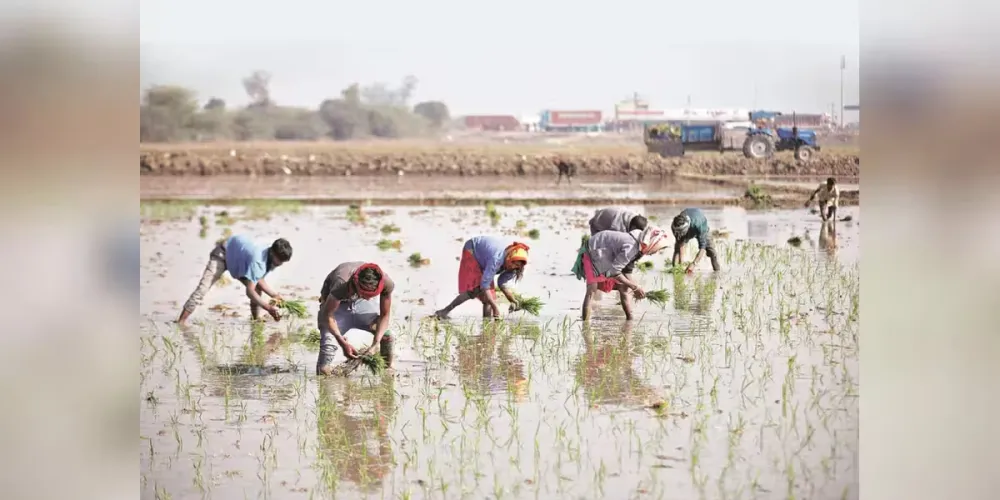
Agricultural production during the Kharif season in the Indian state of Rajasthan is expected to decline owing to a persistent rainfall deficit this year, traders and market participants report. Current estimates suggest that moth bean yield could drop to around 75 percent of normal levels, while moong bean output could plunge by as much as 50 percent compared to standard yields.
Similar production drops are anticipated for other major crops, including guar and groundnuts. Rajasthan had initially set a sowing target of 25.50 lakh hectares for guar this year, but the crop was ultimately planted across only 22.34 lakh hectares. Ramotar Khandelwal, a prominent guar trader, stated that a decline of up to 45 to 50 percent in guar production is currently projected because insufficient rain has heavily impacted crop yields.
Western Rajasthan serves as the primary cultivation belt for guar and positions the state as one of the country's leading producers. A comparable trend is visible in moong cultivation, where the state targeted 26.50 lakh hectares but achieved sowing on only 23.17 lakh hectares. Shyam Natani, a moong trader, confirms that the final output for moong and moth could decline by up to 50 percent and 75 percent, respectively.
Industry experts note that rainfall at this advanced stage would no longer be beneficial and could instead damage remaining Kharif crops. Harvesting has already begun in certain areas, while crops in other regions are fully ready to be reaped. However, should rainfall occur within the upcoming month, it will provide favorable moisture for the sowing and establishment of Rabi season crops.
The deficient rainfall across western Rajasthan districts—specifically Jalore, Pali, Sirohi, Barmer, Jodhpur, and Jaisalmer, which form the core cultivation belt for moong and moth—is already severely impacting local farming operations. Wheat trader K.G. Jhalani points out that rain next month would greatly benefit key Rabi crops such as wheat, gram, and mustard, though a continued dry spell could threaten overall Rabi yields as well.
Not yet comments. Be the first!
Comments · 0