
Canada has lost millions of hectares of farmland: Where is it all going?
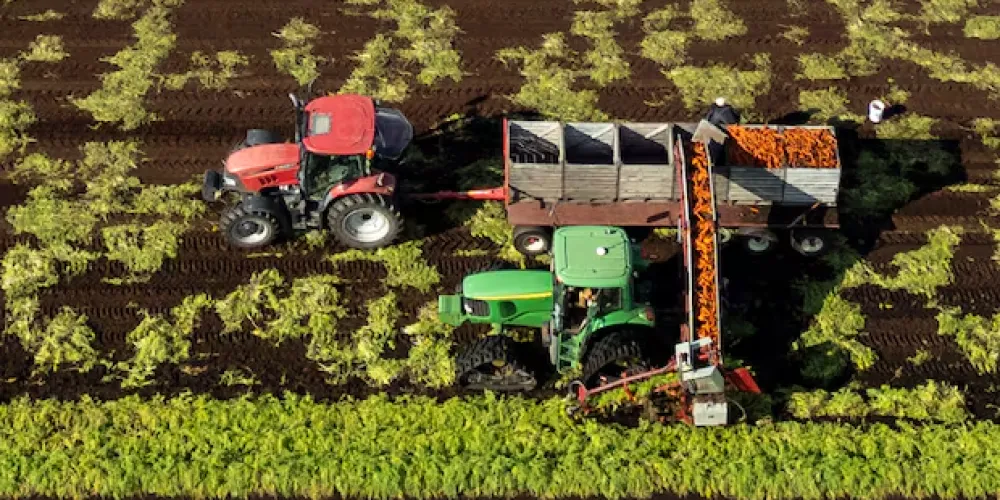
The Canadian government has recently launched its National Food Security Strategy, an ambitious plan to spend billions of dollars over the next decade to boost domestic food production. However, this initiative faces a significant challenge: Canada is rapidly losing its agricultural land. According to the 2021 Census of Agriculture, the country’s total farm area decreased by 3.2 percent since 2016, representing a loss of more than two million hectares.
The long-term outlook is even more concerning. The Canadian Federation of Agriculture reports that since 2001, more than five million hectares have been lost, an area roughly the size of Nova Scotia. Charles Stevens, a farmer who owns Wilmot Orchards near Toronto, turned down a $16 million offer from developers. Instead, he worked with the Ontario Farmland Trust to place a restrictive easement on his property, ensuring it remains dedicated to agricultural use for the next 999 years.
Tyler McCann, managing director of the Canadian Agri-Food Policy Institute, explains that urban expansion in major hubs like Toronto, Regina, Saskatoon, and Winnipeg is displacing productive, profitable land. Because land carries a higher market value when used for residential housing or commercial facilities, farmers often face intense pressure to sell. Recent analysis suggests that approximately 129 hectares of farmland in Ontario are lost every single day.
Experts argue that while Canada currently avoids food shortages through imports, this decline makes the national food system increasingly precarious. Diminishing the country's strategic land assets limits its future capacity to feed its own population. In response, the Ontario government, mirroring steps taken by other provinces, is moving to restrict foreign ownership of farmland in an attempt to protect the domestic industry.
The provincial Ministry of Agriculture highlights that the agri-food sector is a $52 billion economic powerhouse. However, experts debate the primary drivers of land price inflation, noting that local farmers expanding their own operations often contribute more to price pressure than foreign buyers. Balancing urban growth with the urgent need to protect soil remains a central, unresolved tension for the future of Canadian agriculture.
Not yet comments. Be the first!
Comments · 0