
Non-moldboard tillage improves crop residue mineralization
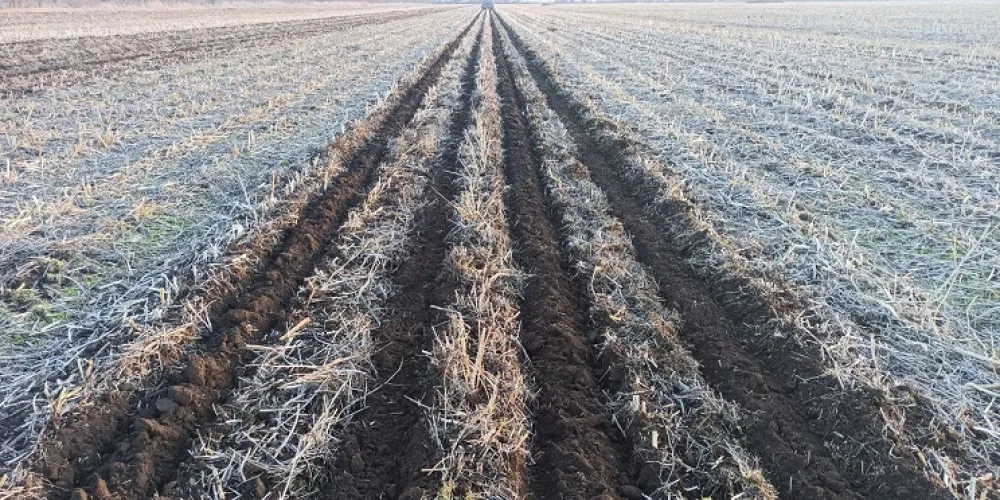
Under a non-moldboard tillage system, crop residues decompose more efficiently due to improved air circulation. This actively stimulates soil biota activity and contributes to the healthy formation of soil structure across agricultural fields.
One of the main reasons for transitioning to non-moldboard technology at the Agat Podillya farm in the Vinnytsia region was the noticeable difference in plant residue mineralization following traditional moldboard plowing versus deep loosening or strip-till.
According to Anatoliy Formanyuk, the farm's chief agronomist, when working with a plow, a significant portion of plant residues is actually relocated to the lower soil layers. There, they end up in the plow pan zone where oxygen access is severely restricted.
Under such conditions with limited oxygen, proper decomposition of organic matter becomes quite difficult, and fermentation processes may instead prevail in the lower horizons. This negatively impacts the biological balance and nutrient cycling.
Conversely, with loosening or strip-till systems, plant residues remain in the topsoil layer or directly on the surface. This guarantees better oxygen access and creates favorable conditions for aerobic bacteria and soil biota.
The organic matter is progressively broken down, enriching the soil with organic compounds and resulting in a well-structured soil profile with active biological processes. The agronomist emphasizes this as a primary argument for adopting non-moldboard tillage.
Not yet comments. Be the first!
Comments