
When to sow buckwheat: optimal sowing dates for different regions of Ukraine
When to sow buckwheat in Ukraine: optimal sowing dates for different regions, soil temperature, frost risks, and double cropping.
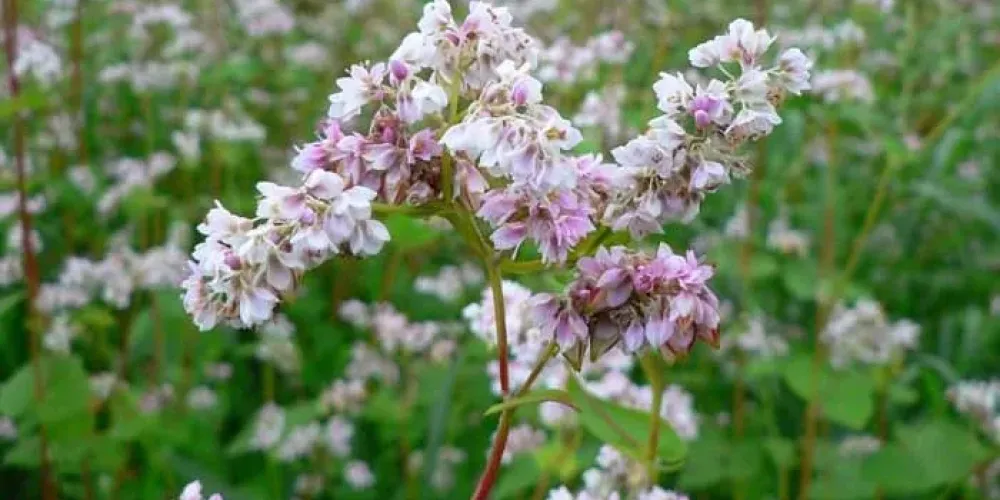
Buckwheat is a heat-sensitive crop, and even a week's difference in sowing dates can significantly affect the yield. Buckwheat sown too early falls under late spring frosts and dies; sown too late, it does not have time to mature before the autumn cold. To find the right moment, you should look not only at the calendar but also at the soil condition and the weather forecast in a specific region.
Optimal period for sowing buckwheat
Buckwheat is a warmth-loving short-day crop, so the main task when choosing the sowing date is to wait for stable warming and, at the same time, not to be late. In general, across Ukraine, the optimal time for sowing is the second half of May, when the threat of late frosts has passed and the soil has warmed up to the required temperature.
It is important to understand that buckwheat grows very quickly after emergence, but its first week after germination is extremely vulnerable. Even a short-term drop in temperature to -1°C can destroy newly emerged seedlings. That is why experienced agronomists look not only at the date but also at the five-day weather forecast before sowing.
Optimal soil and air temperature
Before starting to sow, it is worth checking two indicators: the soil temperature at the seeding depth and the average daily air temperature. Together, these two parameters provide a much more accurate guide than any calendar.
Buckwheat seeds begin to germinate when the soil at a depth of 8–10 cm warms up to +10…+12°C, but optimal, uniform emergence is achieved at a temperature of +14…+16°C. The average daily air temperature should be at least +10°C, and the weekly forecast should not contain nighttime temperatures below zero.
It is important to understand that warmth above ground and warmth at depth are different things. After prolonged rains or in low-lying areas, the soil can remain cold even when it is already truly warm during the day. That is why relying solely on the air temperature is a mistake. If there is no thermometer, there is a simple folk method: put your hand into the soil to a palm's depth. If it is just tolerable, it is still too early; if it feels warm, it is time to sow.
It is the soil temperature that is the main answer to the question of when to sow buckwheat. If sown in cold ground, the seeds do not germinate but lie and absorb moisture, which can cause them to rot or become diseased even before the seedlings emerge.
When to sow buckwheat in the northern regions of Ukraine
The northern regions—Chernihiv, Kyiv, Zhytomyr—are traditionally considered the main "buckwheat belt" of Ukraine. Here the crop feels comfortable, but spring arrives later than in the south.
The optimal sowing period for this region is from May 15 to May 31. In years with a cold, prolonged spring, sowing can be shifted up to June 5–7, and this is not critical: with a properly selected variety, buckwheat has time to mature by September. Sowing earlier than May 10 in northern areas is risky, as late spring frosts can occur there up to the third decade of the month.
Sowing dates for buckwheat in central regions
Central Ukraine—Poltava, Sumy, and partly Kharkiv regions—occupies an intermediate position between the north and south in terms of climatic conditions. Spring arrives here 7–10 days earlier than in the Chernihiv or Zhytomyr regions, but the risk of late frosts remains until mid-May.
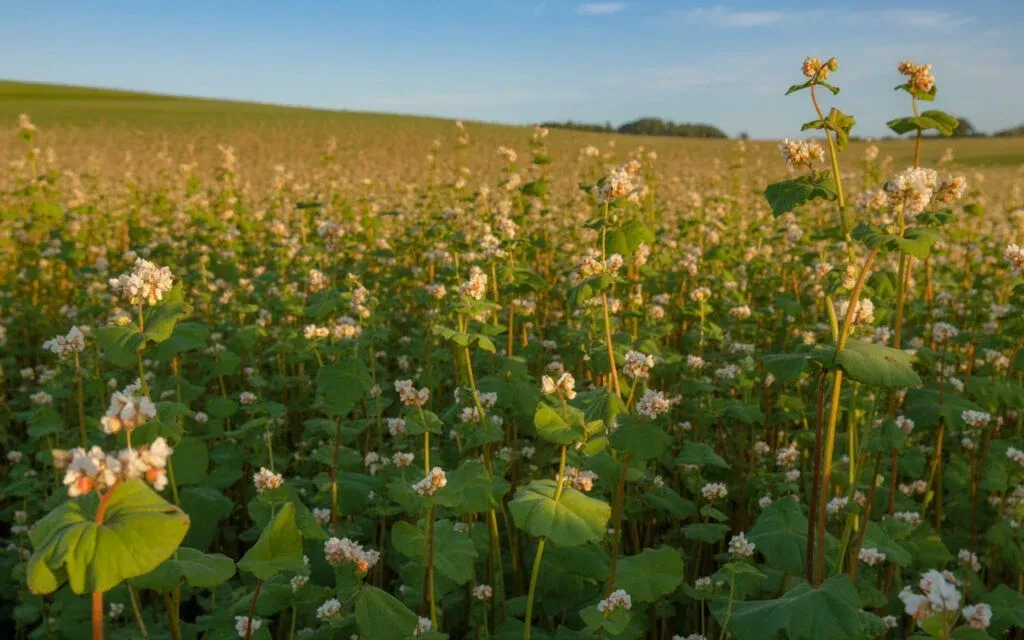
Here, the optimal sowing period falls on May 10–25. Practice shows that sowings made in the third decade of May often yield a better result than earlier ones, because by that time the soil is already well warmed up, and the threat of frost has passed. Buckwheat sown in warm soil emerges faster and more evenly, which has a positive effect on the yield level.
When to sow buckwheat in western Ukraine
The west of the country—Volyn, Rivne, Khmelnytskyi, Vinnytsia, Lviv, and neighboring regions—has its own climatic characteristics. It is wetter here than in the center and east, and spring can sometimes be unstable, with cold spells returning even in May.
The general guideline for sowing is the second or third decade of May. Especially in Polissya and the Carpathian foothills, the forecast should be closely monitored: in the mountainous areas of Zakarpattia and Prykarpattia, nighttime temperatures can drop below zero even in the first half of May. In the flat part of the west, conditions are closer to central regions, and sowing can begin somewhat earlier.
Features of sowing buckwheat in southern regions
In the south, buckwheat can be sown earlier than anywhere else—and that is why it is easiest to make a mistake with the timing here. The soil in Kherson, Mykolaiv, and Odesa regions warms up to the required temperature already in early May, and in some places even at the end of April. But there is no need to rush: a plant sown in April will bloom right in the July heat, when the temperature exceeds +30°C and dry winds blow. On such days, buckwheat simply does not set fruit—there is a flower, but no grain.
Therefore, a different logic works in the south compared to the rest of Ukraine. They either sow late in spring—in the second half of May, so that flowering shifts to the end of July. Or they deliberately choose summer sowing—in the first decade of July, in which case flowering occurs in August, when the heat is already subsiding, and September provides normal conditions for ripening. The second option requires moist soil and precise calculation: from sowing to harvesting takes about 75 days, and frosts must not catch the crop by surprise.
Can buckwheat be sown twice in a season
Double cropping buckwheat in a single season is a real practice, although it is not common in all regions. It makes sense when the first sowing has died due to frost or when a farm deliberately plans a summer sowing date as the primary one.
The second sowing is typically carried out in June or early July. The growing season of buckwheat is approximately 70–80 days, so when sown on July 1, the harvest falls around mid-September. For most regions of the center and west, this is acceptable, but in the northern regions and Polissya, there is a risk of getting caught by early autumn frosts. In the south, summer sowing is often a better choice than spring sowing. In the central and northern areas, a second sowing is more of a safety option than a planned agricultural practice.
It is also worth considering what grew in this spot previously. Buckwheat feels good where cereals—wheat, barley, rye—or legumes: peas, soybeans—were grown before it. They do not deplete the soil excessively and leave it clean of weeds. But after sunflowers and other oilseeds, it is better not to sow buckwheat—due to shared diseases and significant depletion of the soil. Buckwheat returns to the same field no earlier than after 3–4 years.
Editorial team agronom.info
Materials are prepared by the portal's agronomists and editors. We use only trusted sources: Ukrainian agricultural universities, variety registries, open scientific publications.
Related articles

Not yet comments. Be the first!
Comments · 0