
How to Choose a Motor Cultivator
A motor cultivator is needed on a farm or household plot to loosen the soil, prepare the area for planting, cultivate row spacing, and generally spend less effort and time working with the soil.
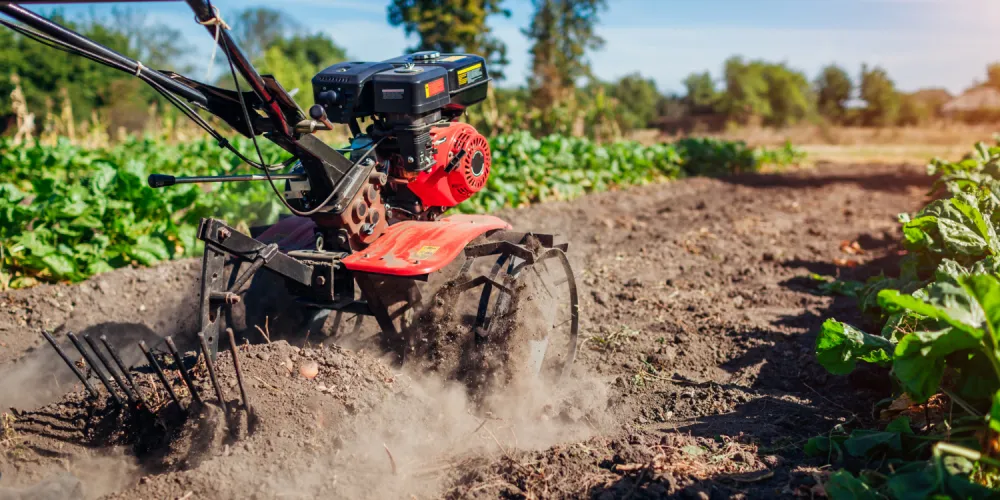
A motor cultivator is needed on a farm or household plot to loosen the soil, prepare the area for planting, cultivate row spacing, and generally spend less effort and time working with the soil. But as soon as you open a store, for example https://agrogear.com.ua/ru/kultivatory/motokultivatory/, and look at what is available for sale, it quickly becomes clear that choosing one is not so simple. The models are different, the engines are different, the power is different, the gears are different too, and the list does not end there. So it is easy to get confused. To avoid this, let’s look at the main criteria that will really help you choose a motor cultivator without unnecessary confusion.
Electric or Gasoline
An electric one is usually chosen for very small plots – about 5-6 ares, greenhouses, flower beds, row spacing, and light soil. It has a simpler design, is lighter in weight, quieter in operation, and does not require fuel.
But it also has limitations. Its power is most often within 1-2.5 kW, plus you either need to run a cable or monitor the charge if the model is battery-powered.
A gasoline cultivator becomes more interesting when there is more work to do. It is more often chosen for plots from 6-10 ares and larger, for denser soil, and for regular cultivation. Such models have power from 3 to 7 hp, and sometimes even higher. They are:
- autonomous;
- not tied to an electrical outlet;
- better at handling load.
If your plot is not decorative with just a few beds, but a vegetable garden where real work needs to be done, then it makes sense to look specifically toward a gasoline cultivator.
How to Choose the Right Power
When it comes to gasoline motor cultivators, power is fairly simple. For light work and a small plot, models with 3-4 hp are enough. If the plot is medium-sized and the soil is not the softest, it is better to look at 5-6 hp. And if the soil is dense, there is a lot of work, or the cultivator is needed not just a couple of times per season, then it is worth choosing 6-7 hp and higher.
The main thing is not to choose a model that is too weak just because it is cheaper. If there is not enough power, the cultivator will not work properly but will struggle. At the same time, overpaying for too much reserve power does not always make sense either.
Cooling
Cooling is also worth checking right away. Gasoline motor cultivators most often have air cooling. For ordinary country house and garden work, this is quite enough. It is simpler in design, cheaper to maintain, and does the job if the equipment is not running nonstop for many hours in a row. The main thing is not to overload the cultivator, give it a normal operating mode, and not try to squeeze more out of it than it was designed for.
Starting System
Most often, there is a manual start, the same option where you need to pull a cord. For this type of equipment, this is normal and quite common. If the engine is in good condition and the cultivator is serviced, it starts without any particular problems.
An electric starter is less common. It is more convenient because you do not need to make extra effort. This is especially useful if an older person will be using the equipment or if you simply do not want to pull the cord every time.
Wheel Width
Motor cultivators may have wheels with a width of:
- 4-6 cm;
- 6-8 cm;
- 8-10 cm.
If the plot is small, the soil has already been cultivated, and the cultivator is needed mainly for loosening, wheels 4-6 cm wide are usually enough.
For a regular vegetable garden and more confident operation, it is better to look at 6-8 cm. And if the soil is loose, the plot is uneven, or the cultivator will be used often, it is more convenient to choose wheels from 8-10 cm, because they provide better stability and sink less.
These are the main points. But for the full picture, you should also consider the fuel tank capacity so that you do not have to constantly run for refueling on a large plot. And also the rotation speed of the cutters, because it also affects how the cultivator will work the soil.
Editorial team agronom.info
Materials are prepared by the portal's agronomists and editors. We use only trusted sources: Ukrainian agricultural universities, variety registries, open scientific publications.
Related articles
Cultivator or Walk-Behind Tractor: Fundamental Differences and Technical Distinctions

Financial instruments for updating the agricultural technology fleet: choosing an optimal strategy
Cargo lashing straps: reliable fixation for transport and storage
Not yet comments. Be the first!
Comments · 0