
How to choose seedling trays depending on the crop
Need plastic seedling trays for the new season? We explain how to choose the optimal cell size, when to use a tray, and why it is profitable to buy trays in bulk.
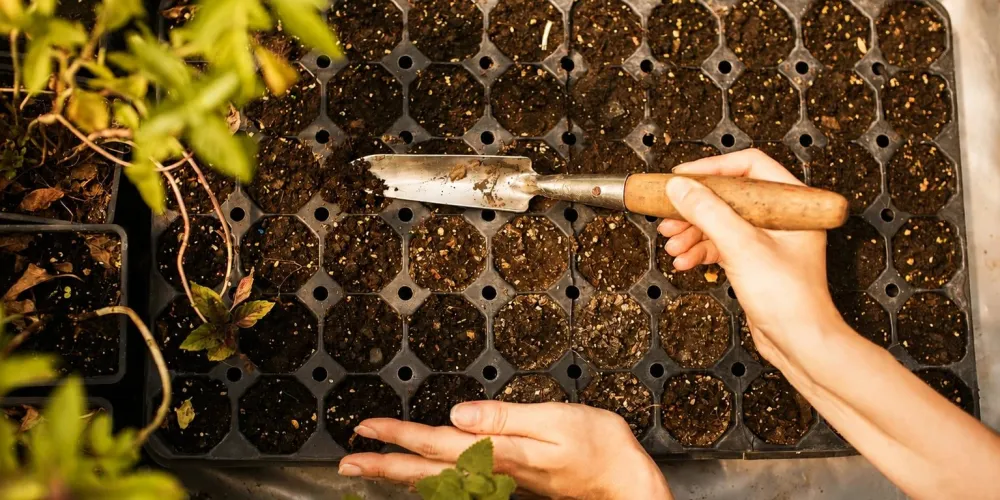
Growing healthy seedlings starts with properly selected containers. The root system's development and future crop yields depend on the size of the cells, the quality of the material, and the ease of care. This is exactly why, before the start of the sowing season, many gardeners strive to correctly choose seedling trays tailored to specific crops.
This method of cultivation allows for the compact placement of a large number of plants, controlled watering, and the creation of comfortable conditions for each seedling. Plastic containers are suitable for both home use and professional greenhouse farms.
Why you should use seedling trays
Individual cells help plants develop without competing for nutrients and moisture. Furthermore, the roots are less traumatized during transplanting, as each plant has its own dedicated growing space.
Key advantages of this method:
convenient placement of a large number of seedlings;
saving soil mix;
easier plant care;
uniform development of the root system;
possibility of multiple uses for high-quality containers.
That is why seedling trays are actively used for vegetable crops, flowers, and herbs.
How to choose cell size for different plants
Cell size is important, as different crops require different amounts of space to develop. Small seedlings grow well in compact cells, while plants with powerful root systems need more volume.
When choosing, consider:
type of crop;
growing time before transplanting;
size of the mature plant;
nutrient requirements;
future growing conditions.
For example, smaller formats are often used for cabbage, lettuce, or flower crops, while for tomatoes, peppers, and eggplants, it is better to choose more spacious options.
Plastic trays: a practical solution for gardeners
Today, plastic seedling trays are the most popular because they are lightweight, easy to use, and do not require complex maintenance. They can be moved, cleaned after the season, and reused.
Plastic models are suitable for various growing conditions—from a small home greenhouse to a professional farm. They help organize space and make the growing process more efficient.
How to choose and where to buy seedling trays
Before purchasing, it is important to determine the required number of cells and the tray format. Compact models are suitable for small volumes, while large batches are relevant for farmers and nurseries.
Before buying, pay attention to the plastic quality, structural strength, and ease of use. Well-selected containers help obtain strong plants before transplanting into open ground.
Many gardeners also choose seedling trays from the manufacturer, as this allows for consistent product quality and a wide selection of models. For large farms, a cost-effective solution is to buy seedling trays in bulk, as seasonal cultivation often requires a significant number of containers.
Cost of trays and additional options
The price of seedling trays depends on the size, number of cells, plastic thickness, and order volume. When choosing products, consider not only the cost but also the practicality of using them over several seasons.
For easier care, seedling trays are often used together with trays (pallets). Such a configuration makes watering, moving plants, and keeping the workplace clean easier.
If you need a ready-made solution for growing, you can buy seedling trays with a bottom tray. This option is particularly convenient for greenhouses, balcony growing, and small home nurseries.
In the Budpolimer catalog – https://budpolimer.com/catalog/dlya-sadu-gorodu/sitka-zatinyayucha-agrovolokno-kaseti/, you will find practical items for the garden and vegetable patch that help make the plant-growing process more convenient.
Editorial team agronom.info
Materials are prepared by the portal's agronomists and editors. We use only trusted sources: Ukrainian agricultural universities, variety registries, open scientific publications.
Related articles

Not yet comments. Be the first!
Comments