
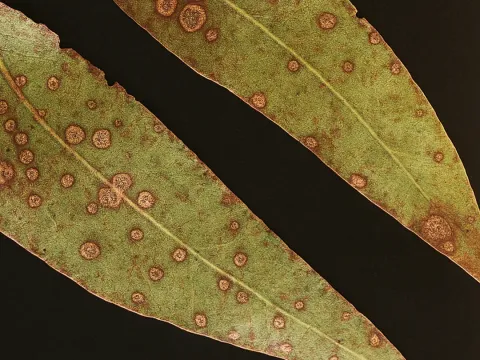
Eucalyptus leaf spot
Eucalyptus leaf
The primary symptom of eucalyptus leaf spot is the appearance of distinct lesions on the leaves, which range from small spots to large necrotic patches. These spots typically change color from pale green to dark brown or purple as the infection matures.
What the section contains
Eucalyptus leaf spot
Small black fruiting bodies, known as pycnidia or pseudothecia, often appear within the centers of these spots under high humidity. These structures are clear indicators of active fungal sporulation on the leaf surface.
Severe infestations lead to premature yellowing and defoliation, significantly affecting the plant's vigor. Young seedlings may experience distorted leaf growth or terminal dieback if the infection remains unchecked.
The lesions often start on the underside of the leaves, making early detection difficult without a thorough inspection. As the disease advances, leaf drop becomes more pronounced, leaving the tree sparse and vulnerable.
In some susceptible species, the spots may coalesce, covering most of the leaf blade and causing localized tissue death. This reduces the total leaf surface area available for photosynthesis, impacting the overall tree health.
The disease is most commonly caused by various species of fungi within the Mycosphaerella complex, including Mycosphaerella cryptica and Mycosphaerella nubilosa. These fungi are highly specialized pathogens of Eucalyptus species.
The pathogen completes its life cycle by producing spores that are easily disseminated by wind and splashing water. This mechanism allows the fungus to spread rapidly throughout a plantation or garden during favorable weather.
The fungus overwinters on infected fallen leaves and debris, remaining viable until the next growing season. Sanitation is therefore vital to break the infection cycle and reduce the initial inoculum.
Host susceptibility varies widely among eucalyptus species, with some genotypes showing high resistance while others are severely impacted. Research into genetic resistance is a major focus for forestry management programs.
The microscopic structure of these pathogens allows them to penetrate the host tissue directly or through natural openings like stomata. Once inside, they proliferate, destroying the leaf parenchyma cells from within.
Leaf spot development is strictly dependent on moisture levels, with high humidity and frequent rainfall acting as the primary catalysts for infection. Prolonged wet periods on leaf surfaces allow fungal spores to germinate effectively.
The optimal temperature range for the pathogen typically falls between 15°C and 22°C. These moderate conditions frequently occur in spring and autumn, which are often the peak periods for disease outbreaks.
Dense canopies and poor air circulation in nurseries create stagnant environments that trap moisture, facilitating secondary infections. Proper spacing is essential to ensure adequate airflow and quick drying of foliage.
Plants under nutrient stress or drought stress are more susceptible to colonization by Mycosphaerella. Maintaining healthy tree vigor through balanced fertilization and appropriate irrigation is a key preventive measure.
In greenhouse settings, overhead irrigation is a major risk factor, as it keeps foliage wet for extended periods. Drip irrigation or soil-level watering is strongly recommended to minimize the risk of leaf spot transmission.
The primary economic harm of eucalyptus leaf spot is the reduction in growth rates and potential loss of timber quality. For decorative species, the loss of foliage results in significant aesthetic damage.
In commercial nurseries, the disease can lead to high seedling mortality, necessitating the culling of thousands of plants. This translates to substantial financial losses and increased production costs for chemical control.
Repeated yearly infections drain the tree's carbohydrate reserves, leading to stunted growth and reduced capacity to recover from environmental stresses. Severely weakened trees are also more prone to secondary insect attacks.
The disease can threaten biodiversity in sensitive habitats if exotic, highly susceptible eucalyptus species are planted near native stands. Managing the spread of this fungus is critical for forest conservation.
The necessity for continuous fungicidal application increases production costs and environmental impact. Therefore, integrating disease management into overall plantation planning is essential for long-term viability.
The most effective strategy for managing leaf spot is cultural control, which includes the prompt removal and destruction of all infected leaf litter. This sanitation measure drastically lowers the spore population.
Chemical control, utilizing fungicides containing copper or systemic active ingredients, can be used to protect susceptible trees during high-risk weather. Timing is crucial, and applications should be made before the onset of wet seasons.
Promoting tree health through correct site selection and soil management is vital. Healthy, well-nourished trees naturally possess stronger cell walls that resist pathogen penetration.
When starting new plantations, selecting resistant clones or native eucalyptus varieties adapted to the local climate is the best preventive strategy. This reduces reliance on chemical interventions entirely.
- Monitor foliage regularly for early necrotic spots.
- Disinfect pruning tools between trees to prevent spread.
- Avoid overhead watering during humid or cool weather.
- Improve orchard or garden ventilation through proper pruning.