
Erysimum mosaic virus
Tymovirus erysimi
Description
Symptoms
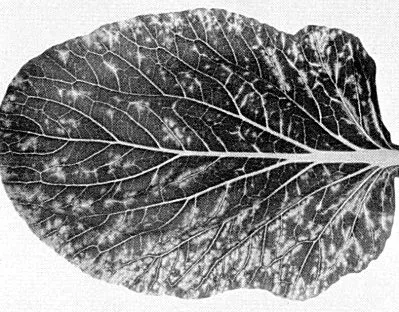
The most prominent sign of infection is a mosaic pattern on the leaves, characterized by alternating patches of light yellow and dark green tissue. In advanced stages, the foliage often shows severe chlorosis.
Infected plants display significant morphological changes, including leaf deformation, curling, and a reduced overall leaf surface area. Stunting is a hallmark of the infection, leading to a visible difference in size compared to healthy crops.
Flowering and seed formation are negatively impacted, with flowers often becoming malformed or failing to develop properly. For heading vegetables, this results in poorly developed heads or total failure to form a harvestable yield.
In some cases, necrotic spots or vein clearing may appear, indicating a breakdown of vascular integrity. These symptoms are most visible during periods of active plant growth and warm temperatures.
- Yellow mosaic mottling on leaves
- Leaf distortion and curling
- Stunted growth and reduced vigor
- Failure to produce market-grade heads
- Significant yield loss
Pathogen
The causal agent of the disease is the Erysimum mosaic virus (scientifically known as Tymovirus erysimi), a member of the Tymoviridae family. This virus is characterized by its specific affinity for plants belonging to the Brassicaceae family.
The virus functions as an intracellular pathogen, disrupting host metabolic pathways. By invading plant cells, it interferes with the production of chlorophyll and the formation of chloroplasts, leading to the development of mosaic symptoms.
Transmission occurs primarily through biological vectors such as beetles and aphids, which ingest the virus while feeding on infected sap. Additionally, mechanical transmission through contaminated tools remains a frequent cause of spread.
Tymovirus erysimi exhibits high environmental stability, surviving in infected crop residues and the root systems of perennial weeds. Seed transmission has also been documented, making the use of clean planting stock critical.
As a systemic pathogen, the virus colonizes the vascular system of the host, ensuring that viral particles are distributed throughout all developing plant organs, which maintains the infection cycle throughout the growing season.
Conditions for development
Disease progression is heavily linked to the activity of insect vectors. Warm, dry weather conditions provide an ideal environment for the multiplication of aphids and leaf-eating beetles, which accelerate the spread of the virus.
Higher planting densities increase the risk of rapid spread through mechanical contact between plants. If an infected plant is touched by a healthy one, especially when tissues are damaged, the virus spreads efficiently.
Weedy reservoirs, particularly wild brassicas, serve as perennial sources of inoculum. Insects move from these weeds to cultivated crops, effectively introducing the virus into the production field.
Mechanical injury during agricultural activities, such as weeding or thinning, poses a major risk. Contaminated blades or tractor implements can serve as a vehicle for the virus if not properly cleaned.
Nitrogen-rich environments that encourage succulent growth may inadvertently attract more insect vectors, creating a favorable situation for the virus to enter the plant population and establish an outbreak.
Why it matters
The economic impact of the Erysimum mosaic virus is severe, with yield losses frequently exceeding 50% in heavily infected fields. The damage affects both the quantity and the aesthetic marketability of the produce.
Nutrient uptake and photosynthetic efficiency are severely compromised, leading to lower sugar and vitamin content in edible portions. This significantly reduces the quality and shelf life of the harvested crops.
Plants weakened by the virus become highly susceptible to secondary pathogens, such as soft rot bacteria or fungal infections, which further accelerate the deterioration of the crop in the field.
Seed production is particularly harmed, as infected seeds often show reduced germination rates and low seedling vigor, which causes long-term problems for the farming operation's productivity.
The necessity for long-term crop rotation to break the infection cycle restricts farmers' ability to grow profitable brassica crops on their land, leading to significant land-use management challenges.
Protection
Management focuses on vector control. Applying systemic insecticides effectively limits the populations of aphids and beetles, which are the primary drivers of viral transmission within the field.
Good sanitation practices are essential. The removal of cruciferous weeds from field edges and surrounding areas reduces the primary inoculum source available to insect vectors early in the season.
Spatial isolation between new crops and existing infected fields is a recommended practice. Separating plantings by time and distance helps to reduce the likelihood of virus transmission via mobile insects.
The use of certified, virus-free seeds and the adoption of resistant or tolerant cultivars are the most sustainable strategies for long-term disease management and yield protection.
Implementing strict hygiene protocols for equipment is crucial. Disinfecting tools with alcohol or appropriate chemical agents between rows significantly reduces the mechanical spread of the virus.
Discussion
No discussions yet — be the first.