
Dichorhavirus
Dichorhavirus
Dichorhaviruses (genus Dichorhavirus) are a group of plant-pathogenic viruses belonging to the family Rhabdoviridae. These are double-stranded RNA viruses characterized by a unique bacilliform particle shape.
What the section contains
Dichorhavirus
This genus is described as binary, meaning their genome is segmented into two separate RNA components, each packaged within its own viral envelope. This sets them apart from most other rhabdoviruses.
Natural transmission of the pathogen is mediated primarily by specific insect vectors. The most prominent vectors are mites of the family Tenuipalpidae (flat mites), particularly the species Brevipalpus yothersi.
Unlike many other viral pathogens, Dichorhaviruses are not transmitted mechanically via plant sap or standard agricultural tools. The vector must feed on an infected plant for a specific duration to acquire and subsequently transmit the virus.
The virus moves systemically through the host plant's phloem, causing significant metabolic disruptions that lead to a systemic infection throughout the entire organism.
Symptoms of Dichorhavirus infection often manifest as chlorotic spots, mottling, or mosaic patterns on the leaves. A hallmark sign is the deformation of the leaf lamina and significant stunting of the plant.
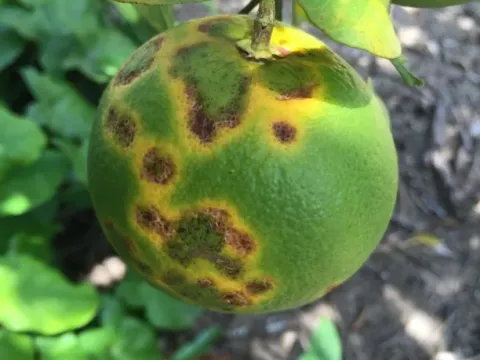
On the fruits of infected plants, one may observe necrotic rings, blotches, or discoloration, which render the produce unmarketable and unsuitable for retail.
In certain crops, such as solanaceous plants, symptoms may mimic those caused by other viral diseases, necessitating laboratory PCR testing for accurate diagnosis.
Early infection signs may appear localized, but as the disease progresses, the virus colonizes all plant organs, often causing premature leaf drop and twig dieback.
- Vein yellowing on leaves.
- Development of ring spot patterns.
- Stunting and shortened internodes.
- Reduced flower fertility and fruit set.
- Deformation and necrosis of fruits.
Disease development is closely correlated with the activity of mite vectors. High temperatures and low relative humidity favor the rapid proliferation of Brevipalpus mite populations.
Viral spread within agroecosystems is accelerated by the presence of weeds in or around the field, which act as primary reservoirs for both the mites and the virus itself.
In greenhouse settings, disease outbreaks can occur throughout the year unless strict control measures for insect vectors are implemented in the protected environment.
Infected planting material is the primary vehicle for spreading the virus to new regions, as the virus can remain latent in the tissues of perennial plants.
The migration of mites between adjacent fields via air currents or on the clothing of farm personnel plays a critical role in the epiphytotic process.
The economic impact of Dichorhavirus lies in drastic yield reductions, which can exceed 50% in heavily infested areas. Marketable quality often drops to unacceptable levels.
Plants infected at early growth stages often fail to develop viable fruits, leading to the total loss of the productive harvest on the affected plots.
The accumulation of viral load in perennial plantings leads to a gradual decline in plant vigor, rendering the host more susceptible to secondary fungal and bacterial infections.
Financial losses are also compounded by the constant costs of monitoring and chemical interventions needed to keep insect vector populations below the economic injury level.
The current lack of resistant cultivars for most Dichorhavirus species poses a significant challenge for breeders and growers worldwide.
The primary control strategy involves managing mite vectors through the timely application of broad-spectrum acaricides during periods of peak mite activity.
It is critical to use only certified, virus-free planting material that has undergone mandatory phytosanitary quarantine procedures.
Regular rogueing and destruction (via burning) of infected plants showing symptoms helps to contain primary infection foci and slows the spread of the disease.
Agrotechnical measures include field sanitation, specifically the removal of weeds that can serve as alternative hosts for the virus and its vectors.
Maintaining spatial isolation between new plantings and already infected fields is an effective barrier against the migration of insect vectors.