
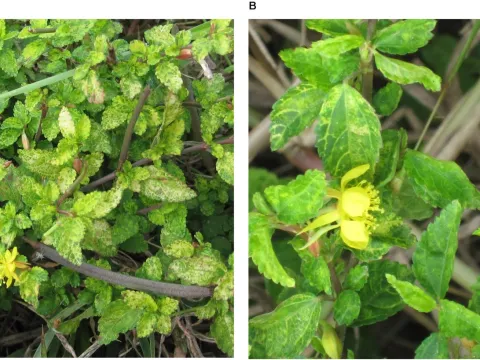
Desmodium mosaic
Begomovirus desmodistortionis
The primary symptom of Desmodium mosaic is a characteristic mottled pattern on the foliage, with alternating shades of light and dark green.
What the section contains
Desmodium mosaic
Leaves often exhibit noticeable deformation, curling, and a roughened surface, which negatively impacts the plant's overall appearance and vigor.
Stunting is a common sign of infection, as the virus significantly inhibits the normal growth and development rate of the affected legumes.
In the reproductive stage, there is often a reduction in flower count and pod set, which leads to a direct loss in yield for the farmer.
In severe cases, systemic chlorosis occurs, potentially followed by necrotic spotting as the plant's physiological functions continue to decline.
The causative agent of this disease is the Begomovirus desmodistortionis, a virus belonging to the Geminiviridae family.
It is a single-stranded DNA virus that replicates within the host plant cells, disrupting normal metabolic pathways and protein synthesis.
Transmission occurs through insect vectors, most notably whiteflies, which acquire the virus while feeding on infected sap from host plants.
The virus is known for its ability to persist in perennial weed reservoirs, allowing it to survive between growing seasons in the field.
Molecular studies indicate that the virus utilizes complex mechanisms to circumvent the plant's immune response during the infection process.
Disease outbreaks are closely linked to the population dynamics of the whitefly vector, which thrives in warm and dry environmental conditions.
Extended periods of high temperature accelerate the reproduction rate of these insects, leading to faster virus spread across the cultivation area.
Proximity to uncultivated land containing wild legume species serves as a primary source of primary inoculum for nearby agricultural fields.
Poor agricultural practices, including inadequate weed management, provide stable habitats for both the virus and its insect vectors to proliferate.
Migration patterns of whitefly populations from edges to the center of the fields typically mark the onset of widespread symptomatic expression.
Desmodium mosaic poses a significant threat to legume production, causing yield losses that can range from moderate to severe levels.
The disease reduces the nutritional quality of the grain, making it unsuitable for high-grade market requirements or seed production purposes.
Infected plants display decreased photosynthetic activity, which leads to weak growth and increased susceptibility to other environmental stressors.
The economic impact involves not only the loss of yield volume but also the increased costs associated with vector control and crop replacement.
If not managed correctly, the disease can lead to total crop failure in highly susceptible varieties, impacting the regional agricultural economy.
Sanitation is critical; farmers should prioritize the removal of weed hosts along field borders to eliminate the virus's overwintering sites.
Systemic insecticide treatments are necessary to manage whitefly populations, effectively interrupting the transmission cycle of the virus.
Utilizing resistant or tolerant cultivars remains the most sustainable and efficient strategy for mitigating the impact of the Begomovirus.
Maintaining proper spatial isolation between new crops and existing perennial vegetation is an essential preventative measure.
Early detection through frequent field scouting allows for the quick identification of hotspots and the timely application of necessary control measures.