
Benyviruses
Benyviridae
Benyviruses (family Benyviridae) are a group of plant-infecting viruses characterized by their rod-shaped virions and a divided genome consisting of single-stranded positive-sense RNA molecules.
What the section contains
Benyviruses
The most economically significant member of this family is the Beet necrotic yellow vein virus (BNYVV). These viruses are not mechanically transmitted; they rely strictly on a specific soil-borne vector, the plasmodiophorid protist Polymyxa betae.
The virus particles survive within the resting spores of Polymyxa betae for many years, allowing the infection to persist in the soil indefinitely, even in the absence of a host crop.
Infection occurs when the zoospores of the vector colonize the root hairs of the plant, injecting the viral RNA directly into the host cells and initiating the viral replication cycle.
The biological nature of these viruses makes them extremely difficult to eradicate, as they are permanently associated with the lifecycle of the soil-borne vector found in almost all agricultural fields.
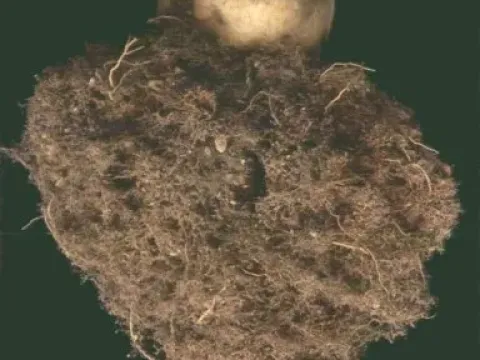
The hallmark symptom of Benyvirus infection, particularly in sugar beets, is "rhizomania," which refers to the proliferation of fine, lateral root hairs, resulting in a stunted and fibrous root system.
Above-ground symptoms include systemic yellowing or chlorosis of the foliage, accompanied by a characteristic upright, wilting appearance of the leaves even when soil moisture is adequate.
Cross-sections of infected roots typically reveal vascular necrosis, manifested as darkened, brown rings inside the root tissue, which restricts the transport of water and nutrients.
Infected areas in a field often appear as irregular patches that expand over time, reflecting the localized spread of the Polymyxa vector in the soil profile.
- profuse growth of small lateral roots (root bearding);
- yellowing and chlorosis of leaf blades;
- stunted growth and overall reduction in plant biomass;
- darkening of internal vascular tissues in roots;
- reduced sugar content and low quality of the harvested crop.
The development and spread of Benyviruses are heavily dependent on environmental conditions that favor the vector Polymyxa betae, particularly high soil moisture and poor drainage.
Optimal temperatures for the vector's activity and subsequent viral infection range from 15°C to 25°C, corresponding with the peak growing season of the host plants.
Soil structure is a critical factor; compacted soils or those prone to waterlogging significantly increase the risk of infection by facilitating zoospore movement.
The persistence of the virus in the soil is enhanced by intensive monoculture, where the host plant is grown repeatedly, providing a continuous food source for the vector.
Field management practices that involve moving soil via farm equipment are the primary cause of long-distance dissemination of the virus to previously uninfected areas.
Benyviruses cause severe economic losses by drastically reducing both the yield and the technological quality of crops, making them unsuitable for processing.
The inability of infected plants to efficiently absorb water and nutrients leads to a significant decrease in sugar accumulation, rendering the crop economically non-viable.
Because the virus remains in the soil for decades, land affected by Benyviruses often requires a fundamental shift in agricultural practices or the permanent abandonment of traditional varieties.
The presence of the virus suppresses the plant's natural defense mechanisms, making it more susceptible to secondary infections and opportunistic root pathogens.
Producers facing Benyvirus outbreaks incur high costs due to the necessity of purchasing specialized, virus-resistant hybrid seeds and implementing costly soil sanitation strategies.
The primary control strategy is the use of genetically resistant or tolerant crop varieties, which can maintain production levels even when the virus is present.
Crop rotation is essential, though its effectiveness is limited by the long-term survival of the virus; however, alternating with non-host crops can help manage vector populations.
Improving field drainage is a critical cultural practice to eliminate the waterlogged conditions required for the vector to infect the roots effectively.
Strict sanitation protocols, such as cleaning tractor tires and implements after working in infested fields, are necessary to prevent the further spread of contaminated soil.
Integrated pest management, including balanced fertilization and maintenance of soil health, helps plants maintain a robust root system, thereby mitigating the impact of viral infection.