
Begomovirus stanleyi
Begomovirus stanleyi
Description
Symptoms
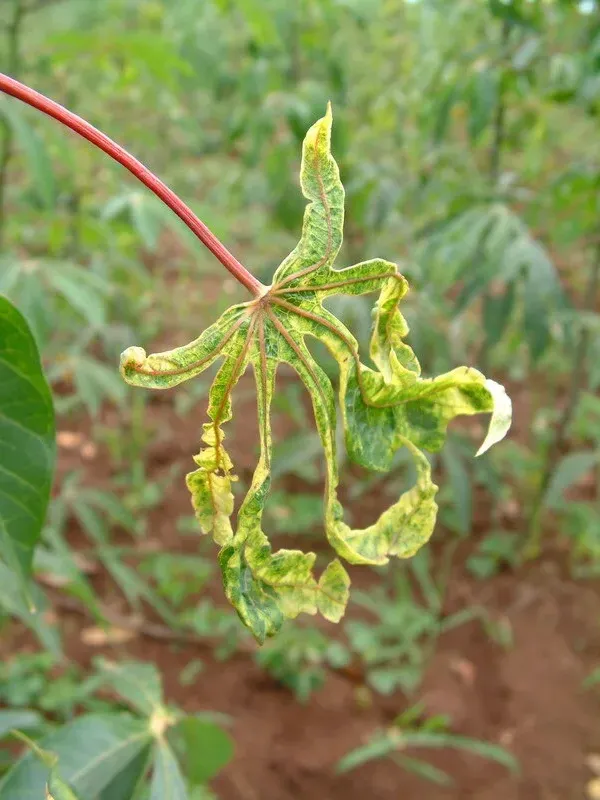
Symptoms of infection typically manifest as yellow mosaic, chlorotic patches, and severe leaf deformation. The leaves often appear crumpled or curled due to irregular tissue growth.
Stunting is a major clinical sign. Infected plants exhibit significantly reduced internode lengths and overall diminished size compared to healthy specimens in the same environment.
The reproductive development is severely hampered. Infected plants may display flower abortion, reduced fruit set, and abnormal fruit morphology, often characterized by spots or necrotic lesions.
Vein clearing or yellowing of the veins is frequently the first observable symptom before the more severe curling and systemic symptoms develop.
- Yellow mosaic or chlorosis;
- Severe leaf curling and crinkling;
- Stunted growth and dwarfism;
- Flower abortion and fruit deformation;
- Reduced plant vigor and yield loss.
Pathogen
Begomovirus stanleyi is a plant pathogen belonging to the Geminiviridae family. It consists of a circular single-stranded DNA genome enclosed in twin icosahedral capsids.
The virus is exclusively transmitted by the whitefly Bemisia tabaci. The relationship between the virus and the vector is persistent, meaning the insect remains infectious for its entire lifespan.
Once injected into the plant by the whitefly, the virus enters the phloem tissues. It subsequently moves systemically throughout the plant, hijacking host resources to replicate its genome.
The pathogen is known for its high evolutionary potential. Frequent recombination events within the Begomoviridae group can lead to the emergence of more virulent or resistant strains.
Because the virus is restricted to the vascular tissues, it induces chronic physiological changes that disrupt the transport of nutrients and hormones within the plant body.
Conditions for development
The spread of Begomovirus stanleyi is intrinsically linked to the population dynamics of the whitefly vector. High temperatures and high humidity create optimal breeding conditions for the vector.
Greenhouse environments often provide a year-round shelter for the whitefly, allowing the virus to persist and spread even during off-seasons when outdoor crops are not present.
Weed hosts in the surrounding areas act as natural reservoirs for both the virus and the whitefly population, serving as a continuous source of primary inoculum.
Excessive use of broad-spectrum pesticides can eliminate natural enemies of the whitefly, leading to population explosions and subsequent rapid viral transmission.
Poor sanitation practices in the nursery or field encourage the buildup of the pathogen, especially when symptomatic plants are left in the field without timely removal.
Why it matters
The economic impact of Begomovirus stanleyi is severe. It can render an entire field of produce commercially unviable, leading to significant financial losses for farmers.
The reduction in photosynthetic capacity due to leaf damage causes a sharp decline in plant metabolic rates, ultimately leading to poor crop quality and low yield.
Infected crops are highly susceptible to secondary attacks by opportunistic pathogens, as their natural defense mechanisms are weakened by the viral infection.
The necessity for frequent insecticide applications to control the whitefly vector adds significant costs to the production cycle and risks environmental damage.
Long-term consequences include the potential for local extinction of susceptible varieties, forcing producers to seek out resistant but often less productive cultivars.
Protection
Integrated Pest Management (IPM) is the most effective approach. This includes the use of selective insecticides that target the whitefly vector while preserving its natural predators.
Cultural practices, such as the use of fine-mesh insect screens in greenhouses and the implementation of strict crop-free periods, are vital for breaking the disease cycle.
Rigorous weed management around the perimeter of fields is essential to reduce the reservoir population of the vector and the virus itself.
Breeding and planting resistant or tolerant crop varieties remains the most sustainable way to minimize damage caused by this virus in endemic regions.
Prompt rogueing (removal) of symptomatic plants is highly recommended in early stages of an outbreak to limit the spread of the virus to nearby healthy plants.
Discussion
No discussions yet — be the first.