
Begomovirus sidaureidis
Begomovirus sidaureidis
Begomovirus sidaureidis is a plant-pathogenic virus belonging to the Geminiviridae family. It is characterized by its bipartite, twin-capsid structure and a single-stranded DNA genome that replicates within the host's nuclei.
What the section contains
Begomovirus sidaureidis
Transmission occurs exclusively via whiteflies, specifically Bemisia tabaci, in a semi-persistent manner. The virus is acquired by the insect during feeding on infected sap and transmitted to healthy plants.
Upon entry, the viral DNA enters the host cell, where it hijacks the transcription machinery to produce viral proteins. This process leads to physiological disruptions within the plant's vascular system.
Because the virus relies on its insect vector for spread, its biological cycle is inextricably linked to the population dynamics and migratory behavior of whiteflies in agricultural landscapes.
Genetic studies indicate that these viruses are prone to rapid evolution, allowing them to expand their host range and overcome the natural resistance of many wild and cultivated plant species.
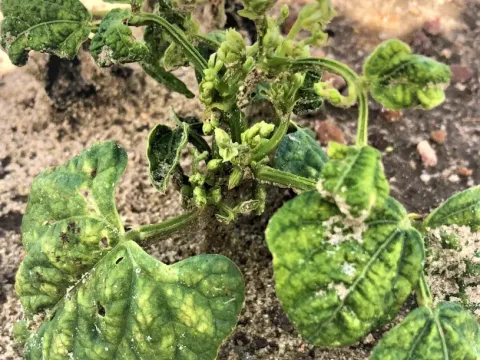
Infected plants typically exhibit mosaic symptoms, characterized by chlorotic patches, yellowing, and mottled leaf surfaces. These patterns often follow the leaf venation, creating a distinct network.
Severe leaf deformation is a hallmark of this virus. Leaves may curl upward or downward, become crinkled, or show reduced leaf area, significantly limiting the plant's photosynthetic capacity.
Stunting is clearly visible, as infected plants show reduced internode length compared to healthy controls. This dwarfing effect is more pronounced if the infection occurs at an early vegetative stage.
Reproductive failure is common; infected plants frequently drop flower buds and immature fruits, leading to a drastic reduction in the final harvest weight and fruit quality.
In advanced stages of infection, plants may show symptoms of yellow vein banding, which is a direct consequence of the virus interfering with the translocation of nutrients through the phloem.
The virus thrives under warm and humid conditions, which are also the optimal environmental parameters for the rapid proliferation of the whitefly vector.
High temperatures during the growing season accelerate the metabolic rate of the vector, leading to shorter life cycles and increased frequency of feeding, which maximizes viral transmission.
Weed hosts play a critical role in the virus's survival during off-seasons. Many wild plants serve as asymptomatic reservoirs, ensuring a constant inoculum supply for the next cropping season.
Poor agricultural practices, such as overlapping planting seasons or failing to manage weeds in adjacent fallow lands, create continuous bridges for the virus to move between hosts.
Water-stressed plants or plants suffering from poor soil management may exhibit higher susceptibility to infection, as their defensive mechanisms are already compromised.
The economic impact of Begomovirus sidaureidis is significant, often resulting in total crop loss if infection occurs early in the growth stage of susceptible varieties.
Beyond yield loss, the virus diminishes the shelf life and market value of the harvested produce, as infected fruits often have distorted shapes and poor coloring.
The systemic nature of the disease makes it impossible to cure once the virus has established itself within the plant's vascular tissue, necessitating expensive removal and destruction protocols.
The virus acts as a stress factor, making plants more susceptible to opportunistic fungal and bacterial pathogens, which complicates the clinical picture and increases the cost of crop management.
Global trade and the movement of infected seedlings pose a constant risk of introducing the virus into new, previously unaffected agricultural regions.
The primary control strategy involves the exclusion of the virus, which is achieved through the use of high-quality, virus-free seeds and certified planting material.
Strict management of whitefly populations through a combination of chemical insecticides, biological control agents, and systemic insecticides is vital for reducing transmission rates.
Sanitation is key; clearing weeds and volunteer plants from the farm perimeter is essential to reduce the viral reservoir and break the disease cycle.
Using physical barriers such as fine-mesh insect-proof netting in greenhouses is a highly effective way to prevent whitefly ingress and protect high-value crops.
- Frequent monitoring of crop fields for early detection of viral symptoms.
- Immediate rogueing and destruction of symptomatic plants to limit primary spread.
- Implementation of crop rotation cycles to avoid host plant sequences.
- Use of yellow sticky traps for monitoring and reducing adult whitefly populations.