
Gray leaf spot of citrus
Zasmidium citri-griseum
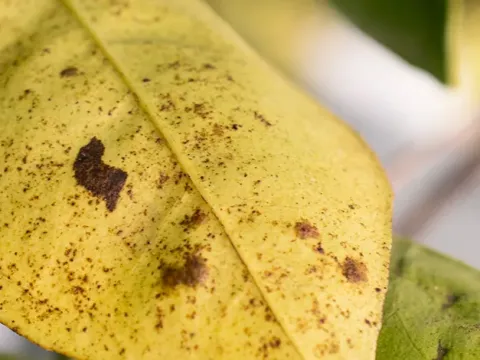
The primary symptom of this disease is the appearance of gray or light brown spots on the leaves. Over time, these spots enlarge and may develop a dark, necrotic halo around their periphery.
What the section contains
Gray leaf spot of citrus
Small, black, dot-like fruiting structures (pycnidia) often appear in the center of the lesions. These structures are the sites where the fungus produces spores to perpetuate the infection cycle.
As the disease progresses, these individual spots can coalesce, covering significant portions of the leaf surface. This frequently leads to yellowing (chlorosis) and premature dropping of the affected leaves.
Initial symptoms are often found on the undersides of the leaves. Because they are initially subtle, the infection is often overlooked until the damage becomes widespread and more visible.
In cases of severe infestation, the pathogen may also affect young stems and petioles, resulting in dieback and overall loss of tree vigor and canopy health.
The causal agent of this disease is the fungus Zasmidium citri-griseum. It is a well-known pathogen that primarily attacks various citrus species, thriving in humid, subtropical regions.
The fungus survives the off-season within decaying leaves, twigs, and other plant debris remaining on the soil surface or attached to the tree, acting as a primary source of inoculum.
Dissemination of the pathogen occurs through windborne spores and splashing rain droplets. These environmental vectors allow the disease to spread rapidly throughout an orchard during periods of active growth.
Infection typically occurs when spores land on susceptible leaf tissue and enter through stomata. Once inside, the fungus colonizes the mesophyll, eventually causing the characteristic spotting.
The biological cycle of Z. citri-griseum is highly dependent on environmental conditions, allowing the fungus to rapidly produce multiple generations of spores during warm and wet months.
High humidity and moisture are the most critical environmental drivers for the development and spread of gray leaf spot. Prolonged leaf wetness is essential for successful fungal germination.
Temperatures ranging between 20°C and 28°C provide the optimal thermal environment for the growth of the fungus. Increased metabolic activity at these temperatures accelerates disease progression.
Poor orchard management, such as planting trees too closely, creates a microclimate with stagnant air and high humidity, which significantly increases the risk of a disease outbreak.
Overhead irrigation systems that keep the foliage wet for extended periods at night significantly contribute to infection, as the leaves cannot dry out effectively before temperatures drop.
Stressed trees, whether from nutrient deficiency or pest attacks, exhibit a lower resistance threshold and are more susceptible to colonization by Z. citri-griseum compared to healthy plants.
The most significant impact of this disease is the premature defoliation of the tree. The loss of healthy leaves directly reduces the tree's photosynthetic capacity, which is vital for growth and fruit production.
Reduced photosynthesis leads to smaller fruits with lower sugar content, negatively affecting their market value, taste, and overall quality for consumers and juice processors.
Persistent infection weakens the overall health of the citrus tree, making it more susceptible to other biotic and abiotic stresses, such as cold temperatures, drought, and secondary pests.
In nursery environments, severe gray leaf spot can lead to significant economic losses due to stunted growth of seedlings and potential mortality of young, fragile trees.
Management costs represent a major financial burden, as growers must invest in repeated fungicide applications and increased labor to mitigate the spread of the pathogen.
The most effective strategy for managing gray leaf spot is strict orchard sanitation. This includes the regular removal and destruction of fallen leaves and infected debris to reduce inoculum load.
Pruning is essential to improve canopy air circulation and light penetration, which helps keep the foliage dry and creates a less hospitable environment for the fungus.
Chemical control usually involves the application of copper-based fungicides. Timing these applications before predicted periods of heavy rain or high humidity is critical for prevention.
Integrating systemic fungicides into the spray program can help control established infections. It is important to rotate products with different modes of action to prevent the fungus from developing resistance.
Maintaining strong tree vigor through balanced fertilization and proper water management is an essential component of a long-term integrated pest management (IPM) strategy for citrus.