
Olive peacock spot
Venturia oleaginea
The causative agent of this disease is the fungus Venturia oleaginea (formerly known as Spilocaea oleaginea), a pathogen specific to olive trees.
What the section contains
Olive peacock spot
This fungus develops primarily in the cuticle layer of the olive leaves, which acts as a protective shield for the pathogen against external environmental factors.
It reproduces through conidia, which are disseminated by rain splashes and wind, facilitating the rapid spread of the disease throughout the canopy.
The fungus can survive during adverse conditions within infected leaf tissues and debris, making sanitation an essential part of the life cycle management.
The pathogen is highly specialized and does not affect other tree species, but it can cause severe damage within commercial olive orchards.
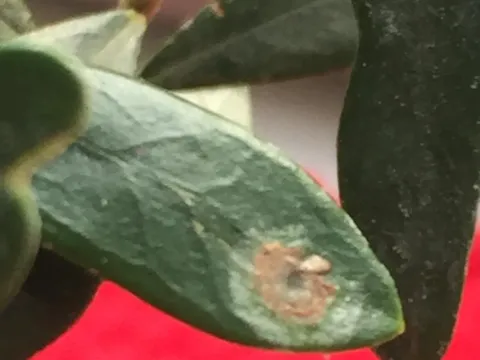
The primary symptom is the appearance of dark, circular spots on the upper leaf surface, which can vary in color from brown to black.
Frequently, these spots are surrounded by a yellow or light-colored halo, creating a pattern that distinctly resembles the eyes on a peacock's tail.
In humid conditions, a fine, velvety dark fungal growth may appear on the lesions, representing the conidiophores of the pathogen.
Infected leaves eventually turn yellow and experience premature abscission, leading to significant defoliation, especially in the lower parts of the tree.
- Circular dark leaf lesions
- Characteristic yellow halos
- Premature leaf drop
- Reduced overall tree vigor
- Sparse canopy in severely affected trees
Development is heavily dependent on moisture and moderate temperatures, with spring and autumn being the peak periods for infection in most climates.
Optimal fungal growth occurs when the temperature ranges between 12 and 20 degrees Celsius, provided there is sufficient leaf wetness.
Orchards with dense foliage and poor air circulation maintain high humidity within the canopy, providing the perfect environment for spore germination.
Frequent rainfall or persistent foggy conditions significantly increase the risk of disease outbreaks as they facilitate the spread of spores.
Management of the canopy microclimate is crucial, as restricted airflow prevents the leaves from drying out after rain or dew.
The disease causes significant damage by reducing the total photosynthetic area of the tree due to heavy defoliation.
Continuous leaf loss weakens the tree, leading to reduced vitality and poor nutrient accumulation, which directly impacts fruit yield.
Severely affected trees may suffer from branch dieback, as the loss of leaves affects the plant's ability to maintain its basic physiological functions.
In commercial operations, the aesthetic damage and loss of productivity translate into direct economic losses for the olive oil or table olive production.
The disease also makes trees more susceptible to secondary stressors, further exacerbating the long-term impact on orchard health and productivity.
Preventive application of copper-based fungicides is the standard and most effective method for controlling the spread of peacock spot.
Pruning is vital to ensure adequate sunlight penetration and improved air circulation, which helps keep the foliage dry and prevents fungal growth.
Strict sanitation measures, including the removal and destruction of fallen leaves, are necessary to reduce the primary inoculum load in the orchard.
Implementing an integrated disease management strategy, which includes monitoring weather patterns, allows for timely fungicide applications before infection periods.
Selecting resistant olive cultivars is a highly recommended strategy for new orchards, especially in regions prone to high humidity and frequent rains.